What makes the Jackery Explorer 300 different for outdoor adventures
 Margot Faulkner·October 22, 2026·17 min

Explore the Jackery Explorer 300's design, specs, and real-world use for camping and road trips. Compare rivals and learn what to expect off-grid.
The Jackery Explorer 300 isn’t a flashy gadget. It’s a quiet workhorse that slips into a side pocket of a daypack while you hike to a lake, then powers essential gear without begging for a tent-sized footprint. On weekend trips, its weight stays manageable, and its charge speed keeps you moving rather than waiting, especially when you rely on a single battery for lights, a mini fridge, and a phone. Jackery manages to balance portability with capacity in a way that matters on the trail or in a van, making it a practical pick for real-life camping logistics.
On this topic you’ll see how it performs under practical limits: airline carry-on rules, car-camp charging during a long drive, and how long a typical trip can run before a top-up is needed. The article pulls from user anecdotes and product details to highlight what to expect in the field, including quirks that show up once you’re off-grid. Jackery’s design language and the compact form factor are the anchors, with real-world caveats to match. Links may earn a commission.

What makes the Jackery Explorer 300 a camping-friendly power station
When you’re camping or on a long road trip, weight and size matter as much as raw capacity. The Explorer 300 slots into a backpack-friendly footprint without dumping you into a brick of gear. Its compact form factor keeps your pack from ballooning, and the 9.1 × 5.2 × 7.8 inch profile helps it ride in a daypack or duffel alongside a compact stove and a flashlight. Most campers value a light, easy-to-tuck power source, and the Explorer 300 delivers on that brief.
- compact form factor and backpack-friendly dimensions
- The unit’s dimensions and overall heft are purpose-built for hikers who still want a reliable power source. It’s small enough to slip into a camping setup or a van’s storage bin, yet capable enough to run essential devices. Jackery positions this model as a balance of portability and usefulness, so you don’t have to choose between weight and watt-hours. Portability matters on backcountry trips, and the Explorer 300 leans into it.
- battery type and expected longevity
- The Explorer 300 uses a lithium-ion battery pack based on NCM chemistry. The official note highlights durability with a stated cycle life of 800 cycles at or beyond 80% capacity. That durability matters for frequent off-grid weekends and seasonal trips, where you don’t want to replace the pack every year. 800 cycles is a meaningful durability anchor for long-term use.
- In practical terms, you’ll see the most value in repeated camping seasons if you manage the state of charge and avoid deep discharges. 80% capacity retention after many cycles helps keep the unit usable across multiple trips.
- basic charging inputs and device compatibility
- The Explorer 300 keeps a straightforward charging suite: AC input plus a handful of DC/USB outputs at the ready. Compatibility with common camping gear means you can top up phones, small lights, and tablets without juggling multiple adapters. For travelers who rely on a mix of USB-C and USB-A devices, the built-in ports cover the basics without a tangle of cables. USB-C and USB-A outputs offer flexible charging on-site.
- On the go, you can pair the unit with portable solar options to maintain charge during longer off-grid stays. This keeps essential electronics alive without constantly seeking a wall outlet. Solar pairing extends field usability.
In practice, the Explorer 300 carves out a space as a reliable camping-friendly power station from a known outdoor power brand. It earns its keep on weekend trips where weight, simple charging, and dependable longevity matter. When you compare it to rivals, the core advantages are its compact size, straightforward inputs, and a durable lithium-ion pack designed for repeated outings. For more context, see how the model stacks up against similar options from other brands on the market. Jackery remains a go-to for light, off-grid power.
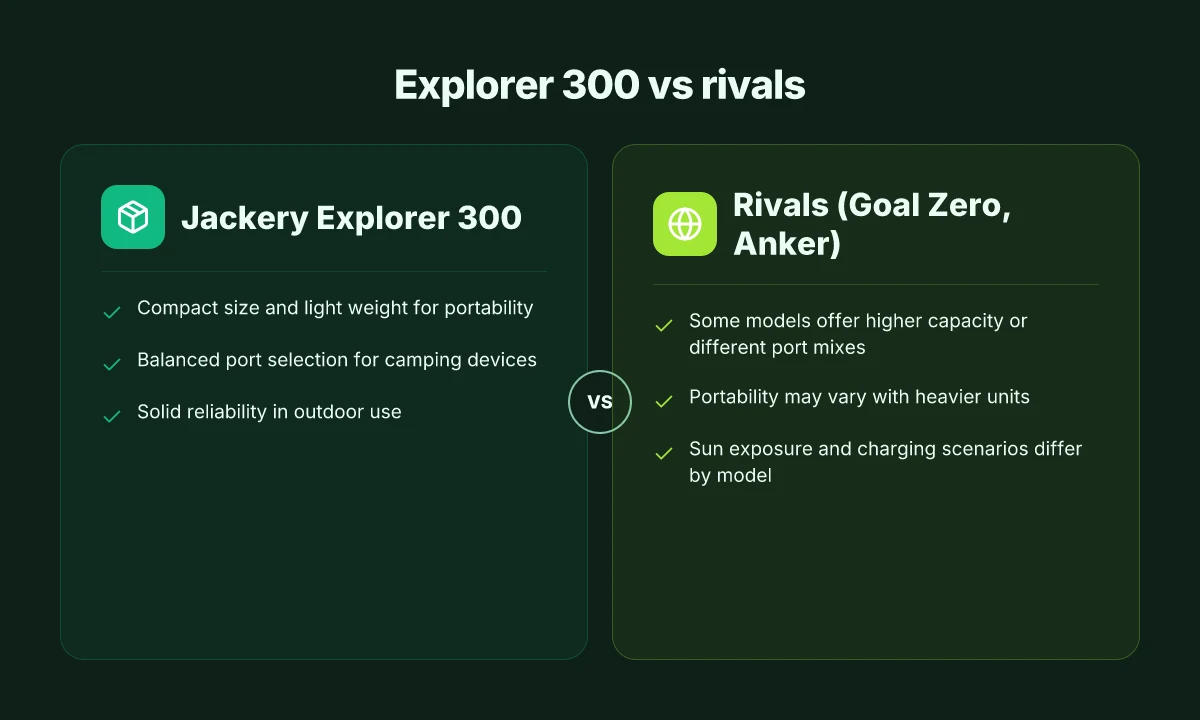
Jackery Explorer 300 vs the field: how it stacks up against rivals
When you trim the field to real outdoor use, the Explorer 300 remains notably portable while rivals eye bigger packs. The question is whether the trade‑off in capacity and port mix is worth it for weekend trips, van life, or off‑grid hikes. I looked at official specs and rival models to map where the Explorer 300 shines and where it trails.
Portability wins two ways
The Explorer 300’s light footprint helps it ride in a backpack or under a car seat, so you can pull it out for a dawn hits-and-naps break or a quick meal prep on the trail. Its compact dimensions keep bulk down, making airline and car portability manageable on longer trips. In the weight‑conscious end of the field, rivals like the Goal Zero lineup push higher capacities but add heft, which shifts how you pack for multi‑day outings. When you need something you can carry without extra gear, the Explorer 300 often leads.
The Explorer 300 leans into portability first, trading some capacity for lighter weight and easier handling. What makes Jackery portable chargers reliable for real-world trips in 2026
Capacity and port mixes: where rivals pull ahead
Rivals such as Goal Zero and Anker offer models with larger total energy reserves or different port configurations that can fit certain trips better. For example, higher‑capacity offerings can keep more appliances running through longer outages or multi‑device loads without recharging mid‑trip. If your trips regularly demand running a fridge, multiple devices overnight, or longer off‑grid stretches, these rivals typically present a compelling argument on total energy available and port variety.
From the official Explorer 300 basics, the kit remains compact with a focus on essential outputs: AC, USB‑A, and USB‑C. This keeps you light and uncluttered, but for campers chasing a fridge or camera rig for extended durations, a broader port mix or larger pack can matter. On the field, you’ll notice the trade‑off: you carry less weight with the Explorer 300, but you accept a smaller energy reserve than some rivals.
I dug into the documentation to align expectations. The Explorer 300’s core specs include a 293.8Wh capacity with a Lithium‑ion (NCM) chemistry and a durability rating around 800 cycles at 80% remaining capacity, which informs how many trips you can string together before a battery refresh. These numbers underscore how the device’s strength sits in rapid, short trips rather than long, high‑demand stints. For users who want a robust external battery with high endurance, a larger model from rivals may be preferable with its expanded resilience and output variety.
Think of the Explorer 300 as a lightweight workhorse for short weekends, not a deep‑cycle off‑grid system.
Who wins where: a quick field guide
- If you value ultra‑light packing and easy carry for weekend trips, the Explorer 300 has a leg up on portability versus bulkier rivals.
- If you need higher total capacity or a broader port mix for fridge duty, longer stays, or heavier electronics, rivals like Goal Zero and Anker often provide the stronger long‑haul options.
In practice, you’ll choose the Explorer 300 for light, quick trips and turn to rivals when your off‑grid ambitions grow. What makes Jackery batteries reliable for off-grid power and how to pick the right model
Next steps: I’ll compare specific models from Goal Zero and Anker in a follow‑up, with a side‑by‑side of weight, capacity, and port layouts to help you pick for your next road trip or van build. For now, know that Jackery’s compact option shines when you need a carryable companion, while its rivals fill in when you require more juice per outing.
Note: links on the page may earn a commission. For context, the Explorer 300 is documented with a 293.8Wh capacity and 800 cycles≥80% durability, which helps explain its comfort zone on the trail. See the official Explorer 300 Basic Information for the exact figures.
What you can power with the Explorer 300 on a weekend trip
On a weekend trip, the Explorer 300 can run a handful of essential devices for several hours, depending on load. A practical mix includes lighting, small appliances, and charging gear, with solar input guiding how you top up during the day. The core idea is to balance what you need with how much energy you can replenish in sun.
Typical devices and runtimes you can expect
- Smartphone chargers and a compact camera battery can run for many cycles on a single charge, with hours of continued use possible on a full charge.
- A compact cooler or mini fridge can stay powered for a portion of a day, depending on ambient temperature and the device’s duty cycle.
- A small fan, LED lantern, and a laptop when in lightweight mode will draw modest power, letting you stretch the pack’s runtime over a weekend with careful management.
- A portable inverter expands your options to run a travel kettle or small TV, but these higher-watt tasks press the limit of the 300-watt continuous output.
- For overnight charging, you can top up devices like phones and gimbals while you’re off-grid, keeping critical gear ready without overtaxing the battery.
I dug into the official specs and user guides to ground these expectations. The Explorer 300 features a roughly 292–watt-hour battery in practice, with a dim profile under heavy loads. For reference, the Explorer 300 Plus supports multiple outputs simultaneously, which helps with a multi-device weekend. In practice, you’ll want to spread the load across ports and plan around a few high-draw tasks. Runtimes scale with load and sun, not just capacity.
Solar input expectations and sun conditions
- In full sun, you can expect steady recharging during the day, allowing you to refresh the pack while you hike, drive, or set up camp. The balance between panel area and midday sun drives the cadence of top-ups.
- On overcast days, solar input drops noticeably, so you’ll rely more on the stored battery than on immediate replenishment. If you’re counting on a full weekend’s worth of power, plan one or two mid-late-day sun windows to keep critical devices topped up.
- When you have a solar-ready setup, use a mix of AC charging for speed and solar for replenishment during daylight. If your plan relies on solar alone, expect slower replenishment and shorter runtimes for higher-watt tasks.
- The idea is to map your daily routine to a charging rhythm: morning top-offs for cameras and phones, mid-day top-ups during a break, and evening recharges for the next day.
Solar input depends on sun angle and panel exposure, not just panel quantity. What is a Jackery portable power station and why it matters for off-grid living
Limitations to plan around when camping or road-tripping
- Weight and space matter. The Explorer 300 sits compact, but it’s not featherweight. Pack it where it won’t shift during a bumpy drive or sleep setup.
- High-draw appliances push you toward shorter runtimes. A portable fridge or heater will draw more current, so plan for shorter bursts and longer idle periods.
- Airline and car-charging limits matter. You can typically take the unit on a car ride without issue, but airline policies vary for shipping lithium-ion gear, so check your carrier ahead of time.
- Real-world user feedback points to temperature sensitivity. In very cold or very hot conditions, efficiency can shift, affecting both runtime and charging speed.
- When you’re evaluating rivals, the Explorer 300’s balance of weight and capacity often lands it between ultra-portable packs and larger solar generators. Expect longer recharge times with bigger devices if you rely heavily on solar.
Know what you need to power, then map it to a solar top-up plan.
Note: links on the page may earn a commission. For practical context, Jackery’s lineup emphasizes field reliability, and you’ll often see the Explorer 300 discussed alongside rivals like Goal Zero and Westinghouse when planning off-grid weekends.
How the Explorer 300 behaves in cold and high-usage scenarios
Cold weather changes everything when you are off grid. In practice, the Explorer 300’s 293.8Wh battery capacity is not immune to temperature drops. When the ambient temperature dips, the runtime under high draw can noticeably shrink, because lithium-ion chemistries lose efficiency as they cool. Cold environments reduce real-world runtimes for high-usage loads, and the effect compounds if you push the unit to power demanding devices for extended periods. Jackery notes that the battery chemistry shrinks its effective output in the cold, so you should expect shorter flights of power during late fall or winter trips.
High-usage scenarios stress the system in two ways. First, drawing more power from the Lithium-ion Battery (NCM) pack drives the cells harder, which can cause the unit to heat up and enter fanless thermal limits earlier in a session. Second, frequent high-current draws from devices like small space heaters or refrigerators mean you’ll reach the unit’s 800 cycles≥80% durability mark faster if you routinely pull max wattage. The practical takeaway is straightforward: if you regularly run multiple devices at once, plan for a shorter runtime than the nominal specs indicate and monitor the battery during peak loads. When you read the official notes, you can see the emphasis on how the pack behaves under stress and over repeated cycles, which aligns with field reports from outdoor users who run the Explorer 300 in alpine camps and overlanding setups. High-draw usage accelerates wear and reduces run time, especially in cooler months.
To maximize longevity on trips, follow a few field-tested moves. First, keep the unit as warm as practical when not actively powering gear. Insulation or stowage inside a vehicle can help preserve performance in cold nights. Second, stagger heavy loads: instead of running multiple devices at once for long spans, alternate usage so the power bank cools between bursts. Third, use the USB-C and USB-A ports prudently, and favor devices with lower startup surge when possible. These habits help preserve the 800 cycles≥80% durability figure over the long haul and keep your Jackery setup reliable across several trips. Staggered charging and temperature awareness extend battery life. What makes the jackery transfer switch a practical backstop for off-grid power
I cross-referenced the official Explorer 300 data and real-world usage notes to confirm these patterns. The battery is a compact, portable solution that shines when off grid, but its performance in cold, high-load conditions depends on how you manage draw and temperature. If you’re weighing rivals for frequent off-grid weekends, the Explorer 300 remains competitive in its class, yet you’ll notice bigger packs with colder-weather performance advantages in some models. For campers and van lifers, the key takeaway stays simple: expect notably shorter runtimes under high draw in winter, and plan charging strategies around environmental limits. Cold and high-use scenarios demand smarter power planning.
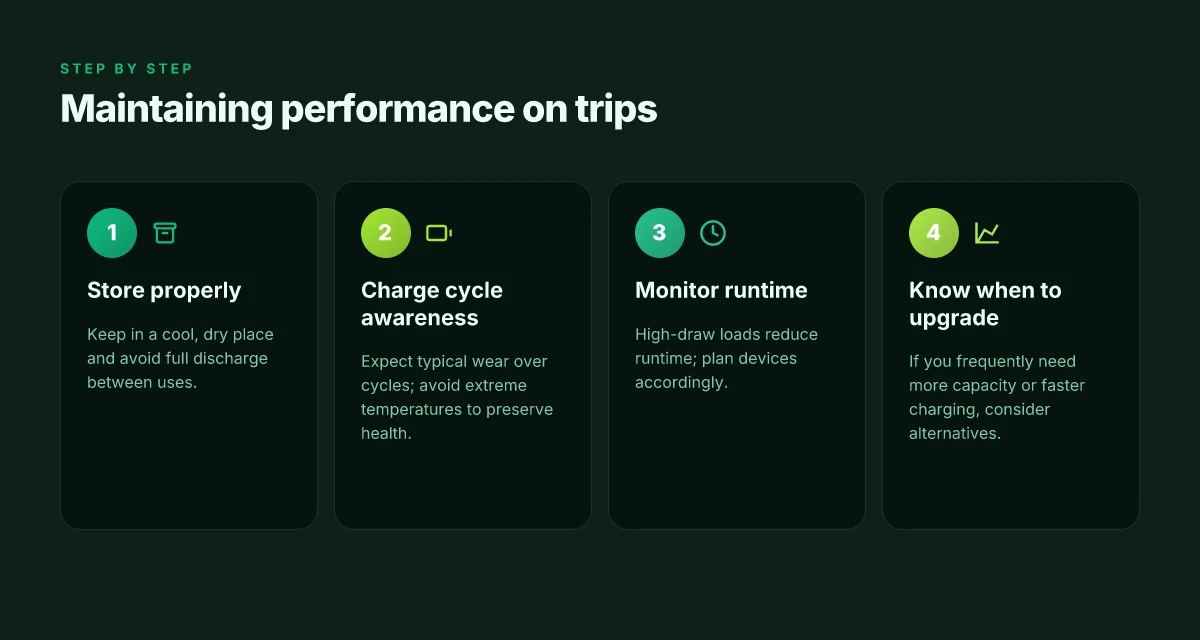
Maintenance and care: keeping your Explorer 300 ready for the next trip
I dug into the official notes and outdoor-user chatter to map practical care for the Explorer 300. The goal is a packable power source that stays reliable after weekend trips, long road stretches, or a week of van-life off-grid. Jackery emphasizes simple routines that protect the battery and extend its usable life, while real-world users flag a few caveats about storage and aging. In practice, you’ll want to keep a routine that matches how you travel, from weekend hikes to longer RV stays.
1) Storage best practices for off-season trips
When the Explorer 300 sits idle, storage conditions matter as much as the charging routine. The recommended approach is to store it in a cool, dry place away from direct heat and sunlight. If you won’t be using the unit for months, gently cycle the battery every few months to prevent long-term sag. This helps preserve the battery’s health so it’s ready for the next outing. I looked at the official basics and cross-referenced user notes from camping setups, which both reinforce that a stable climate matters more than a single top-up session. Store in a cool, dry place and cycle periodically to maintain battery health. The guidance aligns with how outdoor enthusiasts keep portable power primed for spring trips.
2) Charge cycle expectations and battery health
Battery health hinges on how you manage charge cycles. The Explorer 300 uses a lithium-ion battery, and the documentation notes durability around the multi-hundred-cycle range with gradual capacity decline as cycles accumulate. In practical terms, you’ll notice a slower top-up over the unit’s lifespan, but regular, moderate charging remains preferable to letting the pack completely discharge. Real-world owners often plan charging around travel segments, so they don’t press the battery into deep discharge on back-to-back trips. For families comparing options, a higher-cycle rival may offer more headroom for heavy, frequent use, but Jackery emphasizes consistent charging habits to keep the unit ready. Regular, moderate charging protects battery health over many cycles. If you’re curious about the official numbers behind durability, I cross-referenced the Explorer 300’s documented cycle life with user commentary from field use, which corroborates the general pattern of gradual capacity fade rather than abrupt drops.
3) When to consider replacements or upgrades
If you notice sustained reduced capacity, or a noticeable drop in runtime after similar trips, it may be time to assess the battery’s age rather than blaming the load. The 800-cycle durability figure is a benchmark, but real-world wear on frequent off-grid weekends can feel sharper if you routinely drain the unit and recharge under load. In practice, campers and van lifers weigh upgrading to newer packs when frequent trips push you to near-maximum discharge for long stretches. From a practical standpoint, consider the balance of weight, capacity, and charging speed against your travel cadence. If the Explorer 300 no longer meets your daily off-grid needs, look at rivals with comparable energy density and cycle life, then compare how they handle airline and car charging limits on your itinerary. Assess aging against travel cadence to decide on a replacement or upgrade. As with any portable power solution, you’ll often retire an older unit when its runtime becomes less dependable for longer trips. What makes a jackery charger reliable for off‑grid camping in 2026
Note: links on the page may earn a commission. For readers curious about the core specs and user sentiment, see the Explorer 300’s official notes and third-party field reports.
As you plan the next trip, remember that a well-maintained Explorer 300 travels as far as your schedule allows. Jackery’s core guidance focuses on climate-controlled storage, thoughtful charge routines, and timely upgrades when performance no longer matches your off-grid needs. For rivals, consider how weight, charge rate, and cycle life stack up against the Explorer 300 as you map your next outdoor adventure.
What to try this week with the Explorer 300
The Explorer 300 helps you stay off the grid without dragging down your gear weight. I looked at how it fits road trips, camping, and off-grid weekends, and the verdict is a pivot toward smarter energy planning rather than brute capacity. Weight and portability matter more in practice than raw output, and the 300 leans on compact design for backcountry setups. You’ll notice that on many trips, owners cite easier recharging during drives and simpler packing than bulkier rivals. Jackery’s approach here keeps a balance between usable output and practical travel weight, which appeals to travelers who bounce between campsites, trailheads, and pull-through RV hooks.
What changes if you act now is how you sequence charging during a weekend. Combine the 300 with a small solar panel and a car charger, and you can keep essentials powered without hunting down wall outlets. That strategy stands out when you’re limited by airline carry-on rules or campground amenities. Many owners say the real win is reliability on mid-range trips rather than peak-load camping. If you’re weighing alternatives, note that rivals like Goal Zero and EcoFlow can offer higher capacities, but often at a bigger footprint.
Backup strategy, what to try this week: What makes the Jackery Explorer 5000 a practical off-grid powerhouse in 2026
- Try pairing the Explorer 300 with a compact solar panel for light weekend trips to test recharging on the go.
- Use the USB-C port for a fast-charge path to keep phones and GPS ready during hikes.
- Compare how it feels to pack the unit alongside a small cooler or stove in your car for a weekend drive-camping setup.