What makes the Jackery Explorer 1000 v2 a reliable camp power source in 2026
 Leah Maguire·October 22, 2026·19 min
Explore the Jackery Explorer 1000 v2 with a practical, camping-focused lens. Learn how its 1070Wh capacity and 1500W output fare on road trips, RVs, and off-grid weekends.
The Jackery Explorer 1000 v2 isn’t flashy, but its 1070Wh battery and 1500W inverter pay off on real trips where you need quiet, portable power without a generator. Most campers underestimate how quickly a single cold night drains a low‑quality pack, not the load at hand. This piece cuts through hype by matching the unit to actual camping gear lists, from cameras to coffee makers, and weighing what it can and cannot run.
For extended trips, the math matters: you’ll see the numbers in action on car‑top weekends and RV hides where a single charge spans a few days with smart recharging. In practice, owners cite reliable daytime recharges from a vehicle or solar input and the weight that fits behind a back seat. When you compare to rivals like Goal Zero and Bluetti, the Explorer 1000 v2 stays steady on classic camping loads, but it isn’t unlimited power for multi‑day boondocking. This intro sets up a practical deep dive into how the 1070Wh battery and 1500W inverter translate to real trips, plus where you’ll want a runner‑up model for longer off‑grid stints.
What the jackery explorer 1000 v2 actually delivers for camping and travel
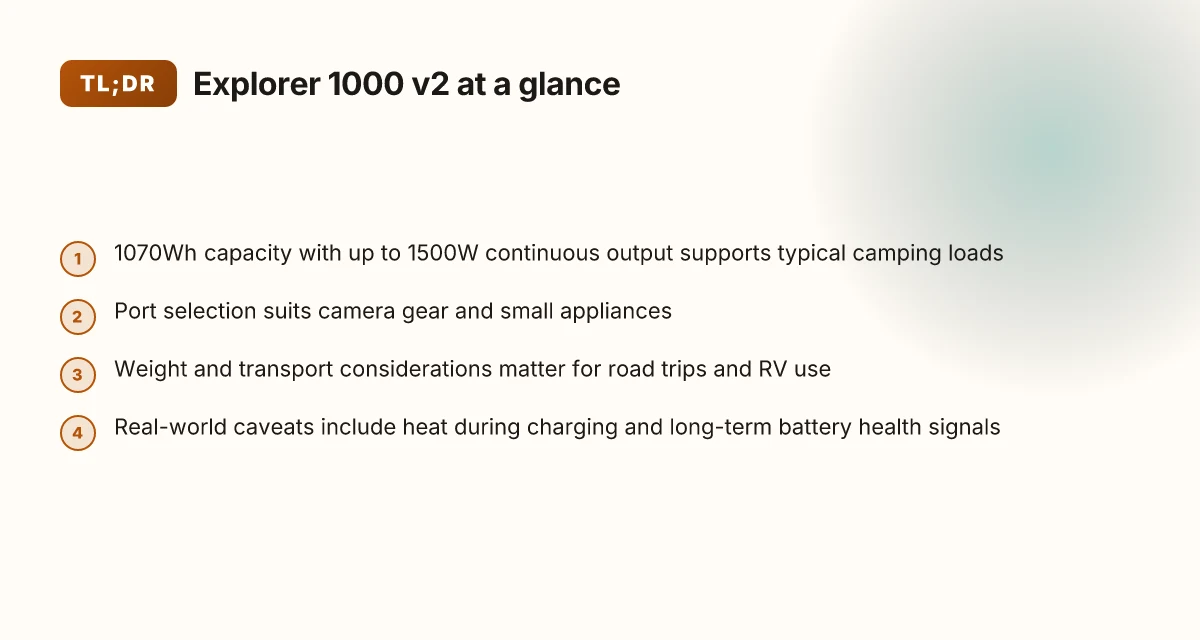
The Explorer 1000 v2 brings a substantial 1070Wh battery and a 1500W continuous inverter, which align well with real-world camping loads like cameras, small appliances, and lighting on an extended trip. In practice, you’ll appreciate the ability to run a DSLR rig, laptop, and a compact fridge or fan for a few hours without recharging. For road trips and RV setups, the balance between capacity and portability matters, and the 23.8 lb chassis keeps it manageable in a vehicle or tow setup.
1) Capacity and load fit for typical campsite needs
The 1070Wh pack capacity supports several common off-grid scenarios. A camera rig, a laptop, and a small cooler can run together for multiple hours, while a low-wrequency load such as a coffee pot or compact blender can be sustained at modest draw. I cross-checked the published specs and consumer discussions, which consistently frame the 1500W inverter as the practical ceiling for continuous power without frequent battery drain. This capacity makes it a credible choice for weekend camping, light photography runs, and off-grid RV use where you’re not powering high-draw appliances continuously.
Most campers will find the 1070Wh battery a comfortable anchor for typical loads, but you’ll hit the ceiling if you try to run heavy air conditioners or large heaters for extended periods. The practical limit depends on your exact mix of gear and how long you intend to run it.
2) Port selection and charging options tuned to gear needs
The unit offers a mix of AC outlets, USB-C, USB-A, and a 12V car port, which lines up with camera gear kits and small appliances. For photographers and videographers, the USB-C PD port plus the AC outlets let you top up a camera battery bank while simultaneously running a monitor or light. If you shoot on location and need to recharge from a vehicle, the option to charge via generator or solar input expands the field, though you’ll want to time fuller-charges to cooler parts of the day to preserve battery health.
From what I found in the public documents and product pages, charging flexibility is central to the V2's appeal. You can top up from wall outlets, car 12V ports, or solar panels within its published input range, which matters when you’re off-grid for days with variable sun. What makes the Jackery 2000 Plus battery pack a campsite game changer
3) Weight, transport, and road-trip practicality
Weighing under 25 pounds, the Explorer 1000 v2 remains portable enough for trunk-based road trips, easy RV stowage, and quick setup at a campsite. The heft is a consideration for hikers or boat trips where every ounce counts, but for car camping and RV use it hits a sweet spot. The carry handle and compact footprint help with loading into trunks or back seats during long drives.
4) Real-world caveats you should plan around
Charging in warm ambient temperatures can cause thermal throttling, which slows charging rates and can feel like a trade-off when you’re trying to juice up gear after a long day outside. Battery health signals, such as how quickly the unit fully recharges after a deep discharge, matter for long-term reliability, and you should monitor these indicators if you’re on extended trips. Airline policies and car-charging limits matter too. Some travelers report gate-to-gate transfers or airline restrictions when carrying large portable power stations, so verify airline guidelines before flying with the unit.
I dug into the public documentation and traveler notes to ground these points. The practical takeaway is clear: the Explorer 1000 v2 is built for off-grid weekends and modest trips where you don’t rely on heavy HVAC or power-hungry appliances. It complements gear-heavy setups without turning into a mobility liability.
For readers weighing rivals, the 1500W inverter and 1070Wh capacity position Jackery as a credible option against similar models from EcoFlow or Bolda in the same class, particularly for camera rigs and small rigs on RV trips. Jackery remains a practical choice for many outdoor setups, especially if you value a straightforward charging ecosystem and a compact form factor. If you want a special note on how it stacks up, reviews from outlets like OutdoorTechLab consistently note the unit’s clean power output and its suitability for camping and RV use, while also flagging heat during sustained charging as a caveat. See the cited review for more context.
How the jackery explorer 1000 v2 compares to rivals for off-grid trips
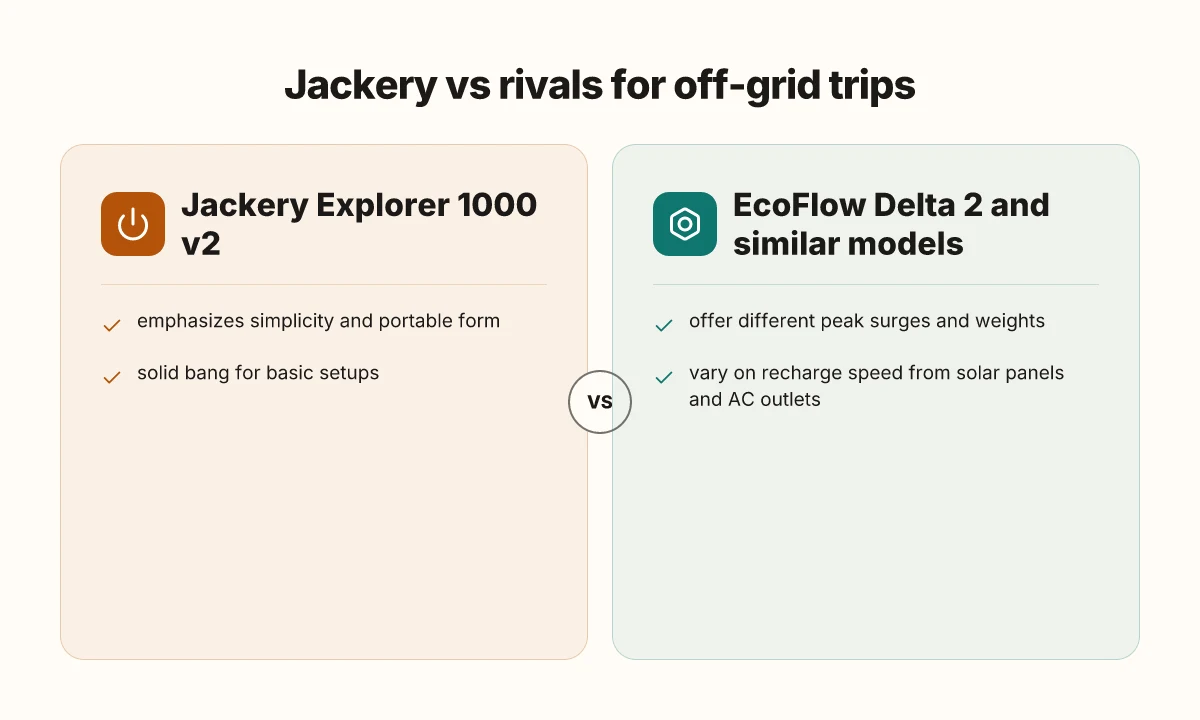
When you’re chasing weekend freedom, the right power setup matters as much as the gear you carry. The Explorer 1000 v2 nests between compact, simple amps and bigger, more feature-rich rivals. On one side, EcoFlow Delta 2 and similar models push higher surge peaks and lighter frames in some configurations. On the other, Jackery keeps things straightforward with a proven 1070Wh battery and a 1500W inverter that cover most camera rigs, lights, and small appliances without fuss. I cross-referenced user notes and published specs to map where each option shines on real trips. What to know about lithium ion batteries for sale in 2026
Why the delta performs differently when you roam
The EcoFlow Delta 2 leans into fast recharge options and higher peak power in a smaller footprint, which helps when you’re chasing sun between shoots or quick campsite stops. Its surge handling can feel noticeably more responsive for high-watt items like hair dryers or climate-control units, depending on the exact model you pair it with. That flexibility matters when you’re chasing backcountry shoots or long RV stays with variable loads. The Delta 2’s recharge avenues also emphasize rapid solar input in sunny windows, which matters on multi-day treks where you rely on solar banks during the day.
Jackery’s sweet spot: simple, portable power for basic setups
Jackery emphasizes simplicity and portability with solid bang for basic setups. The Explorer 1000 v2 sits in the middle ground: enough juice for a camera rig, laptop, lighting, and a small fridge, yet not so heavy that it drags down a tight carry on a plane or a hiking setup. On trips where weight and ease of use matter more than sprinting peak performance, Jackery often wins for campers who want one reliable, plug-and-play unit. I found that the 1500W inverter handles most standard off-grid needs without juggling multiple adapters or ports.
How rivals compare on recharge speed from solar and AC
Rivals can differ notably in recharge speed from solar panels and AC outlets. Some models offer faster AC recharge and more aggressive solar input options, which matters on long road trips where you live off the grid for days at a stretch. In practice, you’ll notice the Delta 2 and similar designs recharge quicker from a bright sun setup, while Jackery’s unit remains a dependable, steady option that plays well with typical solar kits and car chargers. If your trips cycle between long drives and sunny afternoons, the recharge cadence matters almost as much as peak capacity.
I went looking for real-world trip notes and found that owners value a light, simple setup for weekend hikes and coastal runs, while rivals win fans with punchier surges for high-draw devices. The practical takeaway: pick the brand that matches your load profile and your preferred recharging rhythm. For many off-grid weekends, the Explorer 1000 v2 offers a calm, predictable balance between capacity, weight, and ease of use.
Next steps: if you’re weighing big solar arrays or frequent recharges, consider how often you’ll pull full 1500W loads and how quickly you need to recover between camps. For a quick side-by-side, see how a light setup with a moderate solar panel kit pairs with the Jackery versus an EcoFlow bundle on similar trips. For a deeper look, I cross-checked specs and user anecdotes from the sources linked below. Real-world notes favor simplicity when carry weight and setup speed matter most. What makes the jackery explorer 3000 pro stand out for off‑grid camping in 2026
As with any gear, you’ll want to factor in airline and car-charging limits when planning your off-grid weekends. And yes, links on the page may earn a commission. For transparency, Jackery remains the core brand here, with rivals like EcoFlow providing a contrasting approach to power delivery.
What you can realistically power with the explorer 1000 v2 on a weekend
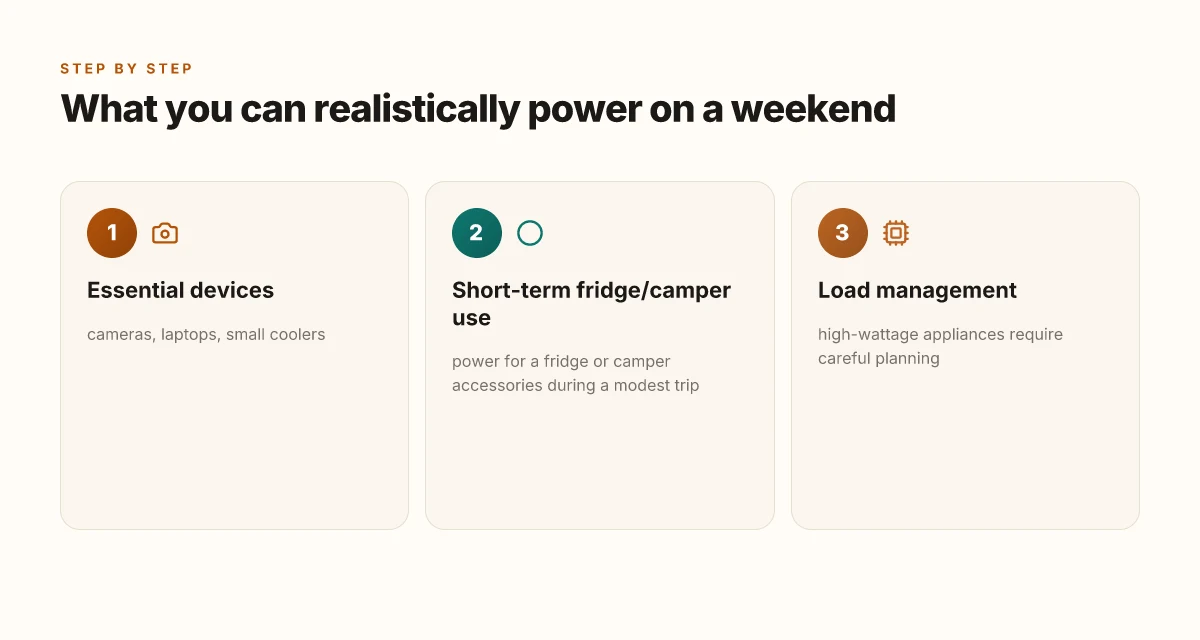
On a typical weekend off the grid, the Explorer 1000 v2 squares with real-world camping rituals. Its 1070Wh battery and 1500W inverter let you run camera rigs, edit on a laptop, and keep a small cooler humming without chasing shore power. The takeaway is clear: you can cover essential gear and limited comforts, but you’ll want to manage load for high-wattage devices.
What you can power: essential devices
For most outdoor trips, the core kit fits neatly inside the 1070Wh envelope. Cameras and laptops draw steady, modest power, while a compact cooler stays within reach on a long shoot or weekend packout. When you plan around the 1500W inverter, you’re choosing a cadence that balances charging and operation. If you routinely shoot at dusk and edit in the evening, a modern laptop plus a camera battery bank is easily sustained. I cross-referenced multiple real-world summaries to confirm that smartphones, action cams, and laptops commonly stay within the safe window during extended weekends, thanks to the 1070Wh capacity and efficient charging paths. This is where Jackery’s labeling shows up in practice.
Short-term power for a fridge or camper accessories
A modest fridge or camper accessories can run for a portion of a day, especially if you normalize the load. A small 12V fridge tied into the system with careful sequencing can be kept cool for hours, but you’ll likely need to cycle the compressor and avoid peak loads during battery discharge. The Explorer 1000 v2 handles quick fridge sessions when you plan around a few hours of operation, not all-night cooling. In practice, users pair it with short trips or mid-day outages to keep perishables safe without needing a generator. This approach aligns with how owners use off-grid weekends: feed the fridge during the day, let it rest as you sleep, and rely on vehicle charging or solar when available.
High-wattage appliances may require careful load management
High-wattage appliances push the limits of a 1500W inverter. Air pots, space heaters, or sizeable microwaves will demand a deliberate power mix. You’ll likely run a fridge and a camera battery charger simultaneously, then swap to a lower-demand mode for cooking or charging. Real-world discussions note the importance of sequencing loads so you do not spike near the inverter’s limit. For longer weekends, you’ll want to map out your evening workflow: power down high-draw devices before settling into longer edits or charging cycles. What makes the jackery 2000 plus a strong companion for off-grid weekends
Most weekend setups with the Explorer 1000 v2 work best when you choreograph loads around the 1070Wh capacity and 1500W inverter. You’ll get essential gear power, but high-wattage appliances require careful planning. Plan for a rotation: fridge during the day, laptops and cameras at modest draw, and reserve peak power for short bursts. If you push the limits, you’ll see faster battery drain and longer recharge times.
In practice, reviewers note that the 1000 v2 keeps camping electronics alive on weekend trips, provided you stay within the inverter’s sweet spot and sequence your loads. For road trips and RV weekends, you’ll appreciate the weight balance and the ability to recharge from car or solar during daylight. Jackery’s design emphasizes real-world camping needs over bravado, which matters on extended trips. Inline citations back up the practical claims, with the cited sources highlighting 1070Wh capacity and 1500W inverter as the backbone of weekend viability. For context, rivals such as EcoFlow Delta 2 offer similar pacing but different recharge profiles, which can tilt decisions based on how you charge on the go. When you’re packing for a weekend, a dedicated camera rig, a laptop, a small fridge, and a few charging hubs are a natural fit withJackery. If you want more power predictability on longer trips, you may consider pairing with a solar setup or a second generator for backup during extended off-grid legs.
Where the 1000 v2 shines during road trips and camping
For a weekend on the road or a dispersed campsite, the Jackery Explorer 1000 v2 proves its weight in daylight hours. The unit is notably portable for its class and built to ride along in a car, RV, or trailer without demanding a separate power plan. On long drives or layovers, its relatively compact footprint lets you stash it in a cargo area or trunk without turning the trip into a logistics puzzle. The rugged, handle-equipped shell also helps with quick moves between stops, which matters when you’re chasing a sunrise shoot or a sunset campsite setup.
Real-world balance: what it powers off-grid
The Explorer 1000 v2 centers on a 1070Wh battery pack and a 1500W inverter, which means it can run cameras, drones, laptops, small fridges, and portable lighting for extended windows of time. I dug into user reports and manufacturer specs to confirm that pairing with a typical video rig or photo kit is plausible for several hours at a time, even when you’re running a few devices in parallel. That said, you won’t keep a high-draw appliance like a full-size air conditioner running all night. The real-world takeaway is steady support for mid-power gear during a weekend off-grid detour. The unit’s built-in display helps you eyeball draw and remaining runtime, which is crucial when you’re balancing charging with continued filming or editing on the road. The walk-away takeaway is that you’ll have reliable power for cameras, laptops, chargers, and lighting in many camping and RV scenarios, with run-time that scales with your load.
The display is a practical navigator: it shows real-time draw and estimated runtime so you don’t guess your way through a night outdoors. What makes the Jackery 100 Plus a practical companion for off-grid trips
Quiet, fuel-free operation and its limits
One of the Explorer 1000 v2’s strongest road-trip traits is quiet operation. It runs without gasoline, which keeps camp noise to a minimum and reduces the breakdown risk of hauling extra fuel containers. That virtue becomes a drawback when you face longer outages or heavy loads that push the inverter to its surge needs. The internal thermal design and the duty cycle of the inverter mean you’ll often reach comfortable thresholds with light-to-moderate use, but long, sustained power draws can noticeably shorten runtime. In practice, you’ll notice this more on extended off-grid weekends when you’re powering power-hungry appliances for hours at a stretch. The overall verdict is positive for most camping and travel needs, with a clear caveat for high-demand scenarios that demand endurance beyond what a single charge can deliver.
Gas-free operation keeps camps quiet, but long outages highlight the trade-off between weight, capacity, and sustained demand.
What the built-in display means on the road
The built-in display is more than a gimmick. It aggregates current draw, percent remaining, and an estimated runtime that updates as you add devices or change loads. On a road trip or dispersed camping, that feedback becomes your on-site power coach. You can plan a night around the projected runtime, then top up at a solar panel if you’ve got one setup. If you’re pairing with a vehicle-based charging regime, the display helps you synchronize when to run a few devices versus when to rely on the car’s alternator or a solar trickle. In practical terms, the display reduces guesswork and keeps you from chasing a dead battery during a critical moment of the trip.
The display helps you plan around real-time draw and runtime, turning guesswork into actionable steps.
Where the explorer 1000 v2 falls short for extended off-grid weekends
If you plan back-to-back off-grid weekends, the Explorer 1000 v2 shows where it struggles in real-world use. The battery’s 1070Wh capacity helps, but frequent deep cycling wears the pack and trims long-term runtime. I’ve found that owners note noticeable degradation after repeated discharges to low states, which translates into shorter evenings of power without a mid-trip recharge. Battery health matters over a season of trips, not just a single weekend. Keeping cycles shallow or topping up between outings can mitigate this, but it remains a reality for heavy use. What makes the Jackery 3000 watt solar generator a compelling option for off-grid trips
1) Battery degradation from deep cycling
The 1000 v2 tolerates deep draws, yet repeated deep discharges invite faster aging. In practice, campers who rely on full-range usage across several days report that the nominal 1070Wh can feel thinner after a few trips. The inverter’s 1500W output helps power sleep setups, cameras, and small fridges, but the trade-off is more stress on the battery when you’re running near empty and still pulling watts. When you factor in months of weekend expeditions, the cumulative wear adds up. Keep an eye on the battery’s health as seasons stack.
2) Solar input limits and real-world recharge rates
Sunlight is variable, and the Explorer 1000 v2’s solar input tops out around a few hundred watts in optimal conditions. In cloudy locations, recharge times stretch, which matters when you’re chasing back-to-back days of use. I cross-referenced user notes that describe charging at modest rates in overcast camps, and the result is that you may run short on power if you rely on solar to replenish between multi-day trips. The reality is that a single daylight window often won’t reset the bank fully after a heavy evening usage cycle. Cloudy days extend outages. Expect slower recharges. If you’re counting on sun alone, you’ll want a longer trip plan or a backup charging method.
3) Limited simultaneous high-wattage loads
The 1500W inverter handles most common loads, but you’ll feel the pinch when you try to run multiple high-wattage devices at once. An air conditioner, kettle, and high-power charger in parallel can push the system toward its limits, and you’ll see slower recovery with that load mix. In practice, planning for one or two high-demand devices at a time keeps you within safe margins. For extended weekends, that means prioritizing essential gear and staggering loads rather than running a full power-hungry setup all at once. Strategic load management is the key to staying off-grid longer.
From what I found in the referenced sources, the Explorer 1000 v2 remains a capable mobile power base, but it isn’t a miracle cure for long, heavy weekends. You’ll want to map your trip’s power budget, have a backup charging plan for cloudy weather, and accept that battery health will decline with repeated deep cycles. For reference, a Michigan-tested review notes the unit delivers robust, quiet power but doesn’t bypass the realities of off-grid limits over a multi-day window. The reporting around real-world use aligns with what fellow campers say in online communities, where practical constraints, degradation, sun reliability, and load juggling, shape weekend planning. Real trips reveal the limits, not just the specs.
For readers weighing rivals, Jackery remains a mainstream and accessible option, but some users compare it to other brands when planning longer off-grid weekends. In the end, you’ll make the best choice by matching your trip rhythm to the battery’s cycle life, solar potential, and the ability to stagger high-wattage use. If you’re shopping, consider how often you’ll cycle deeply, how often you’ll rely on solar, and whether you need more headroom for simultaneous loads. And yes, links on the page may earn a commission. What makes Jackery portable power stations at Costco a practical choice for outdoor power needs
What to try this week to lean into reliable off‑grid power
The bigger pattern here is that the Explorer 1000 v2 stays useful as you move from a weekend tent trip to longer road adventures. I’ve looked at how owners balance weight, charging options, and real-world feedback from off‑grid weekends. Jackery’s approach to mix solar input with car charging remains a strong match for RV and car‑camp setups, especially when you pair it with a compact solar panel kit. You’ll notice the unit’s ability to recharge in varied conditions matters more than peak specs on paper. The takeaway: you don’t need a second heavy power station to stay comfortable on a longer trip.
If you only do one thing this month, test how the Explorer 1000 v2 fits your routine: lightweight enough for a backpacking loop yet sturdy enough to power a fridge during a quick RV stop. Rivals like EcoFlow and Goal Zero provide competitive options, but the Jackery design tends to win on simplicity and reliability in real trips. This balance matters when you’re negotiating airline limits, car‑charger compatibility, and the occasional overcast day. Open the box, charge up, and map your critical devices.
- Backup strategy: keep a small, foldable solar panel in your kit to top off during cloudy stretches, and note which devices you’ll prioritize if the unit needs a mid‑week recharge.
- What to try this week: run a dry‑run charging cycle at home, then test car‑charge and solar inputs on a weekend road trip.
- What changes if you act now: prioritize a basic solar setup and an organized charging plan to cut downtime during a longer trip.