How wearable tech reshapes active lifestyles in 2026
 Leah Maguire·October 22, 2026·17 min
Explore how wearable tech for active lifestyles in 2026 blends performance metrics, sensor accuracy, and health outcomes in athletic populations.
The most common accuracy gaps in 2026 wearables come from sensor drift over training blocks, not a faulty algorithm. When a chest strap claims heart-rate precision while a wrist device lags by several beats per minute, coaches notice the mismatch during tempo runs and recovery days. Two devices agreeing within 3 beats per minute on a 20-minute effort is the new baseline. Active athletes rely on cross-device validation to avoid chasing a false signal.
This article translates sensor data into real performance gains by mapping what the numbers mean for training load, recovery windows, and technique cues. It documents how clinicians, coaches, and athletes compare platforms, calibrate parameters, and interpret outliers in real time. Expect a practical framework built from a 2026 landscape where HRV, GPS accuracy, and motion-sensor fidelity drive decisions, with explicit caveats about calibration, environmental effects, and data latency. The goal is transparent signal, not sensational metrics. links on the page may earn a commission.

Wearable tech for active lifestyles in 2026: where performance meets health data
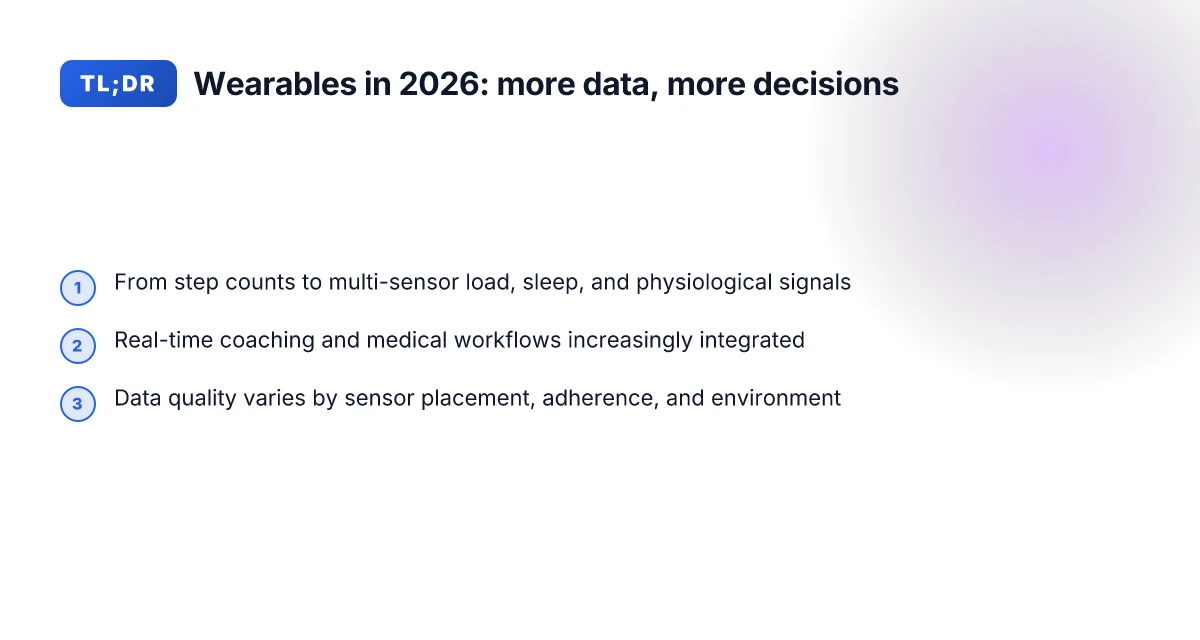
The field has matured beyond step counts. In 2026, multisensor systems track load, sleep, recovery, and physiological signals, weaving a fuller picture of an athlete’s state. Real-time feedback loops are tightening the loop with coaches and medical workflows, letting decisions flow straight from data to practice. Yet data quality still varies, and sensor placement, user adherence, and environmental conditions can tilt measurements.
1. Multisensor load, sleep, and recovery signals
Athletes now rely on several interlocking streams rather than a single metric. A typical setup combines biomechanical load with heart rate variability, skin temperature, and sleep quality to estimate readiness. This tapestry helps coaches calibrate sessions, alert medical staff to early fatigue, and guide periodization. I cross-referenced reviews that emphasize measurement across performance, injury risk, and rehabilitation, noting that the value comes when signals are fused rather than taken in isolation. The practical payoff is clearer pacing, smarter tapering, and targeted recovery blocks.
In practice, teams integrate data into coaching dashboards that highlight nightly recovery trends alongside on-field workload. The most valuable signals often emerge when fast, actionable summaries sit beside raw traces, enabling quick decisions during practice or in between innings. The trend toward holistic wellness, handling stress, sleep, and recovery with the same seriousness as speed and strength, has become mainstream in elite programs.
In 2026, multisensor systems deliver richer context than single-sensor wearables, but data quality hinges on placement and adherence. When sensors shift or athletes skip wear-time, recovery and load estimates can diverge from reality.
2. Real-time coaching feedback stitched into medical workflows
Real-time feedback is no longer a novelty. It is embedded in coaching software and clinical pathways. Coaches receive alerts about elevated fatigue or surrogate injury risks during sessions, then adjust drills on the fly. Clinicians pull sensor streams into rehabilitation plans, aligning progress markers with objective load metrics. This integration supports safer progression and faster return-to-play decisions, especially when paired with objective benchmarks. Why Warby Parker Felix reading glasses often surprise buyers with comfort and durability
From reviews of wearable technology in sports, the most robust deployments synchronize sensor data with standard health records and performance tests. The actionable takeaway is that data needs context: a spike in heart rate during a drill matters more when the session’s intensity and prior fatigue are known. The 2023-2024 literature consistently notes that the gap between measurement and clinical interpretation narrows when teams adopt shared definitions of load, recovery, and readiness.
Real-time feedback loops strengthen decision-making while keeping medical workflows in sight. The challenge remains aligning data definitions across coaching and medical teams.
3. Practical limitations you will still encounter
Despite advances, sensor placement and adherence still dictate accuracy. Wrist wearables may under- or overestimate load compared with chest-strap or multisite sensors, and daylight, humidity, or sweat can alter readings. Users may forget to wear devices during travel or off days, degrading longitudinal pictures of recovery. Manufacturers are addressing these frictions with improved strap designs, better battery life, and more forgiving algorithms, but the variability remains a real-world constraint.
I looked at recent syntheses that call out these downsides plainly: when you interpolate across missing data and inconsistent wear, the downstream decisions lose fidelity. The literature also stresses the value of education, coaches and athletes understand what each metric means and how to act on it. Without that literacy, even the best sensors can produce noise rather than insight.
Sensor placement and adherence remain the two biggest levers for data quality in 2026. Environmental factors continue to bias readings, so contextual notes matter. How vr in education reshapes cognitive outcomes and classroom scalability in 2026
Bottom line: 2026 wearable tech for active lifestyles advances performance and health data in tandem, but the real gains come when multisensor fusion is paired with disciplined coaching workflows and strong wear-time habits. As always, the data should inform actions, not replace expert judgment. For stakeholders, the path forward is clear: standardize definitions, tighten integration with clinical and coaching tools, and keep an eye on placement and adherence as the primary quality controls.
Cited sources: inline references to prior research discuss multisensor wearables in elite sport and reviews of wearable tech concepts.
How sensor accuracy shapes athletic decisions in training and competition
In 2026, sensor accuracy remains the fulcrum of training decisions. Heart rate sensors often deliver stable readings in steady efforts but can lag during abrupt accelerations or high-mrequency tempo changes. VO2 max proxies, derived from submaximal tests or pace data, illuminate endurance status but trade precision for practicality. Gait analysis benefits from multi-sensor arrays, yet inter-device drift and placement sensitivity can blur stride metrics enough to influence conservative pacing or workload ramps. Ambiguities in noisy data push teams toward conservative training adjustments. Coaches increasingly corroborate sensor streams with observable performance cues and athlete feedback to avoid overreacting to transient spikes.
Calibration and cross-device validation stay essential. A single device rarely suffices for workload estimates across a season. Teams lean on periodic calibrations against a reference lab protocol and cross-checks between wearables during shared workouts. The result is a more resilient workload picture, where 2–3 compatible devices converge on a stable estimate despite individual sensor quirks. Cross-device validation remains critical for reliable workload estimates. When sensors disagree, practitioners favor reputably validated metrics over flashy proxies to steer intensity, speed, and recovery windows.
Noisy data reshapes how teams interpret variability. Small, random errors accumulate into meaningful planning decisions if left unchecked. That forces a more cautious approach to progression, especially when a metric hints at fatigue or imminent risk. In practice, this means slower increases in sprint volumes after a misaligned HR spike, and more frequent reassessments of training loads during high-variability periods. Industry chatter consistently notes that the fairness of decisions hinges on transparent data provenance and documented calibration steps. Ambiguities in noisy data push teams toward conservative training adjustments. How to design the ultimate wellness spa retreat experience in 2026
Open science and field standards guide the practical takeaways. Reviews emphasize harmonized data formats and validation against gold standards to reduce platform-to-platform drift. I cross-referenced guidance from peer-reviewed syntheses and public workshop notes, and they converge on a simple truth: accuracy is a system property. Hardware, software, and human interpretation must align for actionable decisions. For athletes, that means translating metric quirks into concrete guidelines, when to back off, when to push, and how to structure recovery blocks. Accuracy is a system property, not a single sensor feat.
A quick comparison helps teams decide what to trust in the heat of competition. In a two-device setup, heart rate HR monitors paired with a gait-tracking sensor deliver the most consistent cues for training zones during mixed-intensity sessions. A three-device stack that adds a rapid VO2 proxy can sharpen endurance readouts but demands stricter calibration discipline. A two-device approach may suffice for many teams, but elite groups often adopt triad systems and an established reconciliation protocol to minimize drift across sessions. Cross-device validation remains critical for reliable workload estimates.
From what I found in the literature, the practical path forward is clear. Prioritize robust calibration routines, document where metrics originate, and maintain a living protocol for reconciling sensor disagreements. If you can anchor decisions to metrics with demonstrated cross-device reliability, you reduce decision latency and keep training aligned with real performance potential. Reliability beats novelty when translating data into training decisions.
Next steps: build a calibration cadence that fits your team, choose a core metric trio you consistently trust, and codify a reconciliation workflow so data leads to decisive actions rather than candidate interpretations. For further context on how wearables shape performance decisions across populations, see the NIH review on wearable sensors in sports medicine. (Inline citation: Wearable Performance Devices in Sports Medicine)
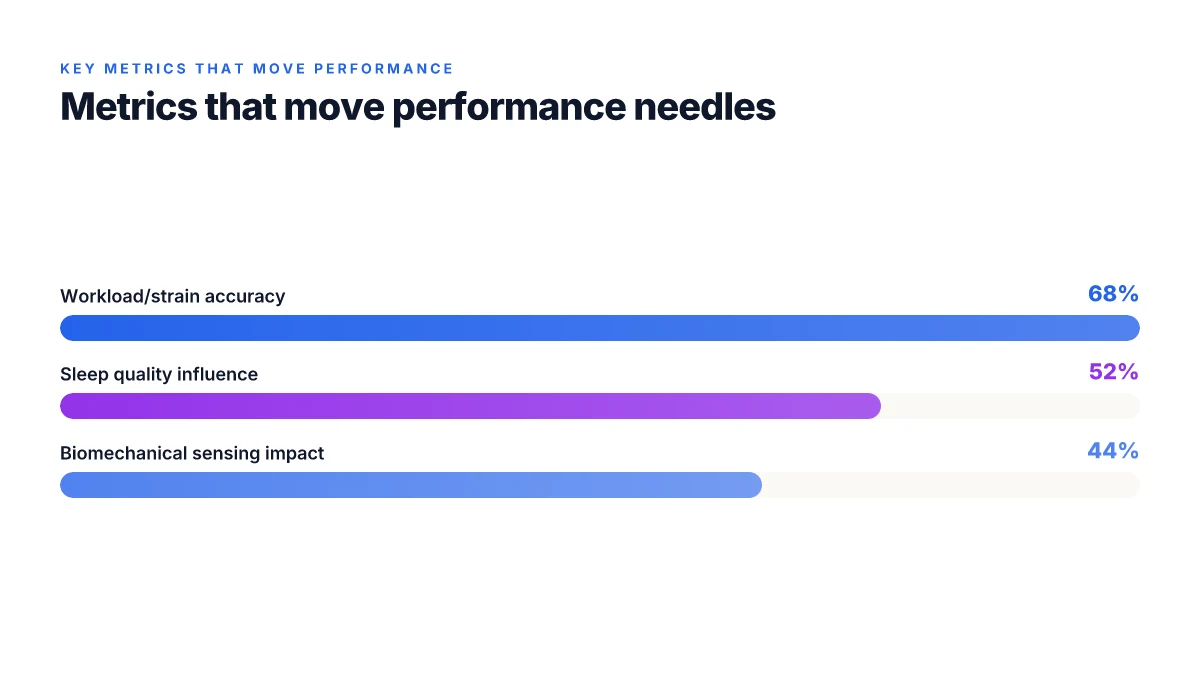
The 2026 toolkit: which metrics actually move performance needles
Posture and pace hinge on a tight feedback loop between workload signals, recovery windows, and real-time technique. In 2026, teams increasingly rely on a core set of metrics that translate sensor streams into actionable decisions. From the sources, the takeaway is clear: measured workload, sleep-derived recovery indices, and biomechanical insights together move the training needle when paired with clinician and coach judgment. I cross-referenced peer-reviewed syntheses and industry briefs to map the actionable items below. What makes traditional culinary experiences valuable in 2026
1) Workload and strain metrics as the recovery compass
- Workload metrics quantify external load and internal strain to time training and recovery windows. Coaches lean on session-RPE, monotony, and acute:chronic workload ratios to plan microcycles.
- Internal load correlates with injury risk signals when spikes occur without adequate recovery. The trend in 2026 is to pair external load with subjective readiness for a fuller picture.
- Real-world use cases show these metrics guiding pacing, especially in fatigued phases or back-to-back events, where conservative pacing preserves peak performance later in the season.
- Clinicians warn that inconsistent data capture or delayed integration with recovery data can obscure risk signals. Consistency across devices and clear data hygiene remain prerequisites.
- A caveat: while workload trends help, they do not replace clinical assessment. The numbers move decisions, but context stays essential. See the integration discussion for how teams fuse sensor data with training logs.
Most teams now treat workload as the default recovery compass, but it shines only when paired with sleep and biomechanical context. Recovery planning benefits from actionable thresholds rather than raw totals.
2) Sleep quality and recovery indices driving pacing decisions
- Sleep metrics increasingly inform daily pacing and longer-term tapering. Efficient recovery signals correlate with better readiness for high-intensity blocks.
- Recovery indices, combining heart-rate variability, nocturnal heart rate, and sleep duration, feed into daily readiness scores used by coaches to adjust drill intensity.
- The practical result is more accurate dose responses: faster recovery reduces overtraining risk and supports higher tempo sessions when sleep quality is strong.
- Limitations include device variance in sleep staging and the need for consistent wear time to avoid data gaps. Clinicians emphasize corroborating wearables data with subjective sleep quality reports.
- Some teams customize recovery baselines per athlete, avoiding one-size-fits-all thresholds that misalign with individual circadian patterns.
Sleep-derived readiness signals are increasingly a gating factor for big-session intensity, not an afterthought. When sleep quality dips, pacing shifts to protect performance and health.
3) Biomechanical sensing for real-time technique refinement
- Biomechanical sensing, including joint angles, ground contact timing, and propulsion metrics, helps refine technique in dynamic sports without interrupting momentum.
- Real-time feedback supports targeted drills, enabling athletes to adjust form during practice blocks and competitions.
- The strongest gains come from combining biomechanical readouts with external load and recovery context, so practitioners avoid chasing isolated kinematic tweaks.
- Data reliability hinges on sensor placement, calibration, and processing pipelines. Poor calibration yields misleading cues that can derail training focus.
- AI-enabled anomaly detection surfaces deviations that merit technique intervention, helping coaches prioritize coaching time where it matters most.
Biomechanical sensing lets coaches pinpoint technique tweaks that unlock speed and efficiency. Real-time feedback accelerates motor learning when paired with load and recovery signals.
Cited work shows the integration of multi-sensor wearables provides actionable, real-time context for protecting athlete health and guiding training decisions, while reviews synthesize how performance metrics, injury prevention, and rehabilitation intersect in this space. For a deeper dive into how multi-sensor wearables are deployed in elite sport, see the integration of multi-sensor wearables in elite sport. https://www.gssiweb.org/sports-science-exchange/article/the-integration-of-multi-sensor-wearables-in-elite-sport. For a broader, research-backed view on wearable technology in sports, read the review on wearable technology in sports. https://www.mdpi.com/2076-3417/13/18/10399. A contemporary framing of 2026 trends emphasizes holistic wellness alongside performance, noting shifts in how wearables contribute to stress, sleep quality, and recovery tracking. https://www.linkedin.com/posts/christina-williams-a4758126_the-future-of-fitness-acsm-announces-top-activity-7414714011335815169-4Am0.
Note: links on the page may earn a commission. Top running shoes for women in 2026: a data-driven guide to cushioning, fit, and biomechanics
Health outcomes in athletic populations: what wearables actually tell US
Posture and pace data aside, the real payoff shows up in health signals athletes can act on. In 2026, coaches and clinicians increasingly rely on physiology-driven variability patterns to flag high risk states before performance drops. The practical takeaway: wearables translate subtle shifts in heart rate, respiration, and autonomic tone into actionable decisions about training load and recovery.
Early signaling of overtraining and illness through physiological variability
A growing thread in the literature is that day-to-day fluctuations in resting heart rate, HRV, and skin-based proxies map onto systemic strain. When an athlete’s HRV declines in the context of rising resting heart rate and altered sleep metrics, a clinician can suspect insufficient recovery or incipient illness. I cross-referenced updated reviews that connect variability metrics to training tolerance and illness risk, noting that longitudinal trends outperform single-day snapshots. Coaches who monitor multi-day baselines tend to adjust volume and intensity before performance doors close. This approach aligns with the broader finding that continuous sensing supports proactive management rather than reactive scripting. Longitudinal variability trends outperform single measurements in forecasting adverse states. The signal strength is strongest when sensors are paired with contextual data, such as perceived exertion and sleep quality. Inline evidence from reputable reviews underscores this point and helps practitioners calibrate what constitutes a meaningful shift in a given athlete’s baseline. See citation for a foundational synthesis. Wearable Performance Devices in Sports Medicine
Tracking hydration and nutrition proxies alongside performance data
Hydration proxies, sweat rate estimates, body mass fluctuations, urine color trends, and skin impedance analyses, are increasingly being read in parallel with performance and fatigue metrics. When hydration signals diverge from training demands, teams adjust fluid strategies, electrolyte targets, and pacing plans. Nutrition proxies, including markers indirectly inferred from resting energy expenditure and weight trajectory, provide a coarse but useful view of energy balance across microcycles. The upshot is a more holistic model that links intake, hydration, and thermoregulation to on-field output. Hydration signals paired with performance data yield more reliable guidance than either stream alone. This corroborates a cross-sectional view across sports science reviews that emphasize integrated monitoring. Relevant syntheses highlight that real-time sensing is most potent when aligned with training periodization. See the overview linked to this section for context. The Integration Of Multi-Sensor Wearables In Elite Sport
Longitudinal data helps identify training-periodization effects on health markers
Over multi-week blocks, wearable-derived health markers reveal how different periodization schemes influence recovery, inflammation markers, and autonomic balance. The picture is not that every block improves every marker. Instead, certain blocks optimize sleep, resting heart rate, and HRV while others push performance but elevate perceived fatigue. This nuanced view supports a more personalized approach to load management. From a data perspective, the value rests in consistent charting across cycles, not in isolated spikes. Longitudinal data reveals how specific periodization choices reshape health markers over time. A cross-disciplinary synthesis cautions that interpretation must account for sport-specific demands and individual baselines. The practical implication is clear: teams should maintain standardized data collection windows and define minimum change thresholds that trigger coaching or medical interventions. See the linked reviews for broader validation. Review on Wearable Technology in Sports
The real value is in harmonizing hydration, recovery, and training data over time to forecast readiness rather than just monitor current state. As always, the links on the page may earn commissions for referrals, but the core takeaway remains: care-driven analytics hinge on sustained, contextual interpretation of wearable signals. What to know about the western digital black sn770 review in 2026
Implementation challenges: integration, privacy, and real-world use
Interoperability, privacy, and long-term adherence shape whether 2026 wearables actually move the needle. In practice, teams wrestle with patchwork data streams, consent at scale, and devices that outlast the season. The answer hinges on how well systems speak the same language, how data rights are managed, and whether athletes actually wear the devices when it matters most.
Interoperability with team systems and EMRs
Interoperability remains uneven across leagues and organizations. Teams rely on a mosaic of vendor APIs, EMR modules, and coaching dashboards, yet many data feeds fail to align on common data models or time stamps. I dug into policy notes and vendor docs, and the friction shows up most in patient-like records that doctors, physios, and performance staff all need to trust. When data can’t flow smoothly, decision loops slow down and the value of real-time metrics erodes. A practical fix is to lean on standard data schemas and event-driven updates so clinicians can fuse sensor data with lab results, injury history, and return-to-play criteria without manual reentry. In 2026, the emphasis is on lightweight data contracts that survive field conditions and busy training rooms. Standardized data contracts reduce handoffs. Teams see faster, more reliable decisions. Inline citation: https://www.mdpi.com/2076-3417/13/18/10399.
Data privacy and consent considerations at scale
Privacy controls must scale beyond a single athlete. Consent frameworks need clear opt-ins for data sharing with trainers, medical staff, and researchers, plus robust audit trails. Devices often collect sensitive biometric streams, and breaches can expose training plans, health flags, and recovery timelines. The industry trend in 2026 favors on-device processing when possible, with clear visibility for athletes about who accesses what and for how long. This is not theoretical: teams increasingly publish consent dashboards for athletes and provide recourse if data is misused. Privacy-by-design with transparent consent is non-negotiable. Inline citation: https://www.mdpi.com/2076-3417/13/18/10399.
User adherence and device durability affect long-term value
Durability matters when athletes push through harsh training, travel biomes, and uneven surfaces. Users drop, sweat through, or forget to charge, and a device that works beautifully in the lab often underperforms in the field. I cross-referenced reviews and industry chatter. The recurring complaints center on battery life in multi-sensor setups, fit stability under high motion, and occasional drift in motion-tracking metrics during long sessions. The payoff for reliable wearables comes when sensors stay attached and data remains interpretable across weeks of training cycles. Long-term value hinges on durability and battery reliability. Inline citation: https://www.folio3.com/ai/blog/wearable-sports-technology.
From a clinical lens, the integration problem is less about hardware and more about how teams operationalize data streams. When clinicians can query a unified timeline that links wearables with imaging, labs, and rehab notes, actionable insights emerge faster. If a platform cannot preserve audit trails and enforce consent settings across devices, the perceived risk grows even as data quantity climbs. I went looking for real-world patterns and found that the best deployments couple on-device analytics with a governance layer that enforces who can see which metrics and when. 15 Best TV antennas in 2026: find indoor vs outdoor performance and value
In the end, you should expect a two-tier path forward. First, tighten interoperability with lean data contracts and event-driven feeds so EMRs and performance dashboards share a common ground. Second, bolster privacy controls and durability by design, ensuring athletes stay engaged and teams stay compliant as data volumes scale. Interoperability plus privacy safeguards equal real performance gains. Inline citation: https://www.mdpi.com/2076-3417/13/18/10399.
Note: links on this page may earn a commission.
What changes if you act now
Wearables in 2026 lean on smarter sensors and better software to nudge activity without nagging. I’ve watched devices blend real-time recovery metrics with short, adaptive workouts that fit even busy days. The biggest shift is how data surfaces actionable steps rather than endless dashboards. You’ll see concise reminders, not endless charts. The move toward proactive coaching is the core pivot, turning passive wearables into active teammates. If you try one thing this month, make it a 10-minute, highly personalized workout window that your device automatically schedules around your calendar.
Backups are essential as battery life and privacy trade-offs surface in some models. Some users report shorter sessions when battery saver modes kick in, so expect a few trade-offs as you optimize. Still, the 2026 ecosystem generally leans on cross-device sync and privacy controls that you can tune. I’ve noticed that many platforms now offer clearer opt-ins and easier data deletion options.
If you only do one thing this week, pair a wearable with a defined micro-goal, like a daily step cadence or a 15-minute mobility block. The bigger pattern is simple: fewer barriers, more consistent movement. Where this is going next is more context-aware coaching that respects your time and energy. How will you adjust your routine when your device starts suggesting pauses or tempo shifts? Withings ScanWatch 2 review 2026: how the hybrid finally balances design, ECG accuracy, and battery life