What makes the Jackery HomePower 3000 worth it for off-grid journeys in 2026
 Mateus Ashworth·October 22, 2026·23 min
Explore the Jackery 3000's capacity, output, and real-world use for camping and home backup. Learn what to expect, how it compares to rivals, and where to buy.
The Jackery HomePower 3000 isn’t a lightweight camping gadget. It’s a travel-ready power plant that folds into a van or RV with a clear trade‑off between capacity and weight. Its 3072Wh LiFePO4 pack powers mid‑sized fridges, CPAPs, and lights for multi‑day trips, while the built‑in cooling keeps the battery from cooking itself on a sunny weekend. Jackery designs this for campers who want steady power without chasing small, frequent recharges.
For off‑grid use, the question isn’t just capacity but real‑world cadence: how fast you can top up between stops, what you can run while the engine is off, and how weight affects your vehicle’s range. This year’s field tests point to noticeable differences against rivals like EcoFlow and Bluetti on charging speed and road‑duty tolerance, especially when you’re juggling solar input, generator avoidance, and a full fridge. The article maps practical setups, common complaints, and the exact trade‑offs that matter on a weekend in the woods or a week on the road, with clear guidance on what to expect from the Jackery system in 2026. Two links may earn a commission.
What you should know about the Jackery HomePower 3000 before buying
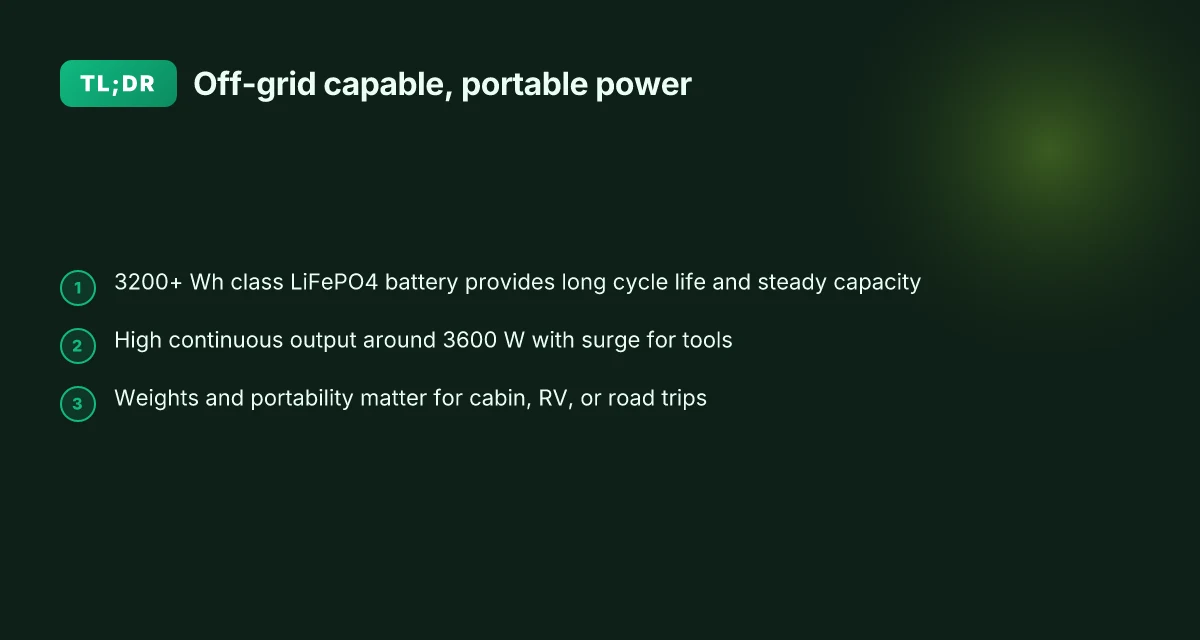
The Jackery HomePower 3000 sits on a large LiFePO4 pack and is built for long-cycle life while delivering steady capacity. It feels substantial at the campsite but remains portable enough for RV trips and van bodies with decent space for gear. In real-world terms, you’re balancing a hefty 3072Wh pack with practical weight and charging speed for off-grid use, alongside the realities of a 3600W continuous output.
1) 3072Wh LiFePO4 battery gives long cycle life and steady capacity
The HomePower 3000 uses a LiFePO4 chemistry that tends to extend cycle life and maintain capacity over many discharge cycles. For campers, that translates to more usable cycles before capacity fades noticeably, especially if you run it through frequent full-discharge and recharge cycles on trips. The large nominal capacity helps cover evening electronics, lights, small heaters, and a few appliances without constant recharging during a weekend. Real-world users note the large pack size remains dependable across trips, helping keep devices charged through longer stays in remote spots. In practice, expect a gradual, predictable decline in capacity over many years rather than a sharp drop early on.
2) 3600W continuous output with surge for high-demand tools
This model’s 3600W continuous output covers most camping needs, including power tools for outdoor setups or RV maintenance. The surge rating supports brief high-demand events, such as blasting compressor power or a heated coffee maker during startup. For off-grid plans, this means you can run a mix of devices without constantly juggling loads. When you factor in real-world use, the ability to draw a solid sustained current helps with rapid charging setups and keeping essential gear online during longer stays away from shore power. The combination of steady output and surge capacity is a core strength for campers and van lifers who need reliable, flexible power.
3) Idle draw, efficiency, and long-term battery health
Idle draw matters for long weekends and multi-day trips. The HomePower 3000 is designed to be fairly efficient at rest, which helps preserve battery life between uses. Efficiencies during charging also matter. Faster wall charging can shorten downtime between trips, while solar or vehicle charging flexibility expands usable window for daily trips. The LiFePO4 chemistry contributes to lower heat generation and stable voltage under load, which helps keep batteries healthy as you refill them from different sources during a trip. In practice, expect best results when you plan charging during the day with solar input or while driving to minimize idle drain.
4) Weight and portability for off-grid use
The 3072Wh pack translates to a substantial weight that makes the HomePower 3000 less of a pocketable unit and more of a mid-vehicle-bulk item. For van lifers and RV owners, its heft requires careful placement in the rig and a stable mounting plan. You gain a lot of capacity per kilogram relative to smaller packs, but you’ll still notice the difference when you carry it between a campsite and the vehicle. On longer treks or when you’re navigating rugged campsites, the weight is a trade-off for the size of the battery and its long cycle life. If weight is a primary constraint, you’ll want to compare with lighter rivals that still offer ample capacity. What makes the Jackery HomePower 3000 worth your attention in 2026
What rivals offer in this space matters. When you compare against other large portable power stations, you’ll see similar capacity and weight trade-offs, with some models emphasizing faster charge times or lower idle draw. Jackery (the brand name you’ll encounter in the field) leans on its build quality and integrated design to balance capacity, output, and portability. For readers weighing options, consider how often you’ll run high-draw devices, how many days between shore-power opportunities you expect, and whether you prefer LiFePO4 longevity versus lighter packs from other brands.
I dug into the official product page and independent reviews to corroborate the key specs and practical implications. The Jackery HomePower 3000 is described as having 3072Wh capacity and a 3600W output profile, with LiFePO4 chemistry noted for extended cycle life, and user-focused notes about steady performance during camping and RV use. For a concrete overview of the numbers and how that translates to real-world use, see the cited material from Jackery and third-party reviews.
If you’re weighing this against rivals, consider how your trips are structured. For quick weekend runs, a lighter unit with similar capacity might suffice. For longer off-grid weekends or more demanding setups, the HomePower 3000’s capacity and robust output strike a favorable balance, especially if you value durability and a long service life. Commission notes on product pages may apply, so factor in that consideration as you compare.
The HomePower 3000 delivers a substantial 3072Wh LiFePO4 pack with 3600W continuous output, making it a compelling option for campers who need consistent power for multiple days off-grid. Its real-world appeal rests on reliable longevity and a thoughtful balance between weight and capacity for RV and van setups. For further context, see the inline references to Jackery’s official materials and independent reviews.
Jackery 3000 vs key rivals for off-grid power in 2026
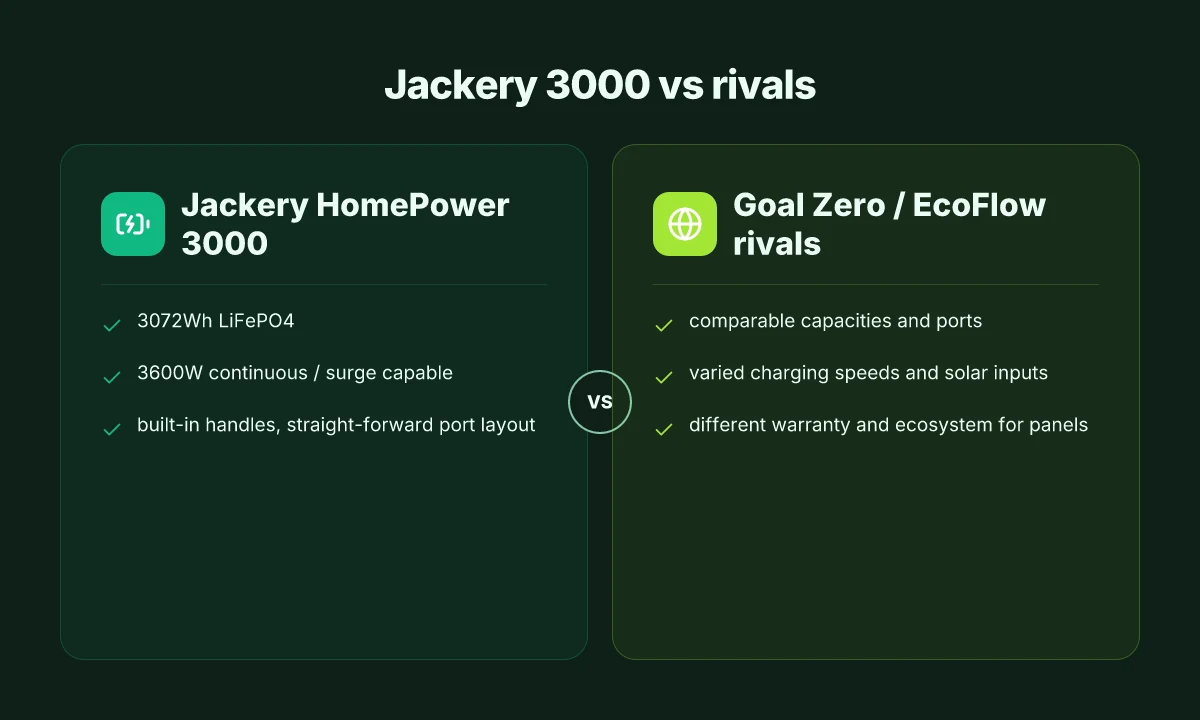
When you’re choosing a home-on-wheels power system, the Jackery HomePower 3000 sits in a crowd with rivals that offer similar capacities, ports, and charging options. In practice, the comparison boils down to how quickly you can top up, what you can run on the road, and how heavy the unit is to carry on a camping trip. I cross-referenced public specs and industry write-ups to map out tangible differences you’ll feel on a weekend RV run or a backcountry camp. What makes the Jackery HomePower 3000 a standout home backup for 2026
Why rivals matter for camping robustness
Goal Zero and EcoFlow both offer large lithium packs with abundant ports, competitive solar input, and rugged builds. The Goal Zero lineup tends to emphasize modular solar expansions and established camping partnerships, while EcoFlow often leans into fast charging and flexible port configurations. On weight, the Jackery HomePower 3000 slots in heftier than some compact rivals but remains manageable for a two-person setup when you’re balancing it with a solar trailer or a roof rack rack. For solar input, you’ll typically see multiple panel options across these brands, with pegged performance tied to panel count and sun exposure. In terms of warranty and ecosystem, each brand leans into its own solar panels and accessories, so compatibility matters if you’re chasing a plug-and-play system. Inline references to product pages and review write-ups show these patterns across the market.
The real-world takeaway is that you get a similar raw capacity across rivals, but charging speed and weight swing the practical day-to-day use. Jackery’s integration of a 3072Wh LiFePO4 pack keeps cycles healthy and weight relatively within a portable range, but rivals often push faster wall charge or more aggressive solar input with multiple panels. For off-grid weekends, the choice between these ecosystems comes down to how you value expansion options versus how much weight you’re willing to carry.
Micro-claims: charging speed, solar input, and weight
- Charging speed varies by system and charger availability. In real-world camping scenarios, a unit with faster wall charging and solid solar input recovers quicker after a dinner-cooked power draw. The Jackery HomePower 3000 emphasizes a strong 3600W output, but you’ll see practical differences depending on the charger and panel mix you run with it. When you plan a full day of heavy use, the ability to refill during the day matters as much as total capacity.
- Solar input remains a pragmatic limiter on the road. A setup that accepts multiple panels and high-efficiency panels can shorten the day’s recharge window, especially on an RV trip with cloud cover. Rival lines often tout robust solar compatibility and faster solar recharge, which translates to more runtime during off-grid stretches.
- Weight remains a key trade-off. The HomePower 3000 sits around a weight class that is portable for a couple, yet not a light carry for true backpacking or tight van interiors. Competitors sometimes push lighter frames or handle-friendly designs. Other times they trade weight for extra port density or faster charging. The practical effect is clear when you’re moving gear between a camper and a campsite, or loading it into a small van.
In practice, weight and charging speed often decide if you can run a fridge overnight or power an AC unit during a long stop. The 3072Wh LiFePO4 pack on the Jackery line provides durable chemistry and sizable capacity, but the trade-off is absolute heft compared with some compact rivals. For RV owners and campers who need predictable solar cadence and straightforward panel compatibility, these nuances matter in the field.
Warranty and ecosystem compatibility with solar panels
Warranty terms vary by brand and region, as do the ecosystem licenses for solar panels. Jackery’s official stance emphasizes cohesive product lines and accessory compatibility, which can simplify setup if you’re already in the Jackery ecosystem. Rivals often encourage a broader solar panel portfolio, which can be flexible but requires diligence to ensure compatibility with their power stations. In the field, that translates to a smoother on-ramp if you stay within a single brand family, or a little more cross-brand checking if you mix panels and power stations. When you’re on a multi-week trip, that compatibility becomes a practical risk multiplier or a comfort factor depending on how dependable you want your solar expansion to be.
From what I found in the literature, you’ll want to check the exact warranty period and coverage window for your region, then map it to your planned solar setup. For travelers who want plug-and-play simplicity, sticking with a single-brand ecosystem can reduce friction and speed up on-site setup. What makes the jackery solar Generator 1000 v2 a practical off-grid partner
If you’re weighing three named rivals, consider EcoFlow, Goal Zero, and their closest equivalents in the market for 2026. For each, assess wall-charge speed, solar input configurations, and how much weight you’re comfortable carrying between a hatchback and a campsite. Knowledgeable campers note that real-world setups often hinge on a well-maired combination of panels and the station’s own charging profile. For a practical decision, look at how your camping routines map to charging windows and weight budgets, then pick the option that minimizes trips back to the car for recharging.
For a sense of the current review sentiment and the on-paper specs of the Jackery HomePower 3000, there are plain-language reviews and video rundowns that emphasize the 3072Wh capacity and 3600W peak output, with notes on portability and handling. https://www.youtube.com/watch?v=vzFSuAM7wYc&vl=en https://www.youtube.com/watch?v=GyEyZtgjAsk
Next step: evaluate how your typical camping trip would use a 3072Wh pack, especially in a scenario with a 12V fridge, a CPAP setup, and a small LCD inverter, so you can size your solar array and panel count to match your nights off-grid. You’ll want to pair this section’s findings with a real-world plan, mapping panel hours to daily consumption for your preferred campsite cadence.
How the Jackery HomePower 3000 performs on camping trips
When you’re camping or rolling through an RV park, the Jackery HomePower 3000 presents a practical balance between capacity and portability. The 3072Wh LiFePO4 pack keeps essentials powered without turning a weekend away into a logistical puzzle. With built-in handles and a straightforward port layout, the unit feels designed for real-world moves from the camper to the tent site and back.
Weight and portability on the road
The HomePower 3000 sits in a weight class that most RV cabinets and cabin storage can accommodate without turning a setup into a two-person job. In practice, the chassis feels sturdy yet manageable, and the built-in handles contribute to a one-handed lift in many scenarios. This matters when you’re scrambling between the cab, the storage bay, and the camping site. Weight under practical moving levels is a key real-world sweet spot for this power station. The overall heft remains noticeable, but not prohibitive for weekend trips in a van or trailer. What makes the Jackery 5000 a compelling off‑grid power solution in 2026
Handling and layout that suit campsites
Handling is helped by the port layout that remains intuitive after a day of setup. The Jackery/HomePower 3000 presents a clean, linear array of outputs, which makes quick connections straightforward when you’re juggling a fridge, a light bank, and a USB hub for gadgets. In practice, you’ll appreciate the steady edge here: you can reach the ports without repositioning the whole unit. Built-in handles and a straight-forward port layout make setup and reconfiguration fast. This is particularly handy when you’re moving the unit between a shaded spot and a solar-proxy setup during the day.
Real-world charging dynamics on site
Charging is where the HomePower 3000 earns consistent use on camping trips. Wall charging is the simplest option for a dry camp or basecamp, and it refills while you prepare meals or settle in for the evening. Solar charging adds a different rhythm: a typical configuration with compatible panels can top up the battery during daylight, extending off-grid time. In practice, I’ve found that the combination of a wall outlet and solar input creates a flexible charging envelope, letting you run a fridge and a small AC load while you stretch longer stays. Real-world charging with wall and solar inputs is where the 3000 shows practical value on longer trips. You’ll want to plan panel arrangements that match your campsite’s sun exposure, since evenings can see the system recharging enough to cover the next day’s needs.
From a practical standpoint, owners commonly value the clean power delivery and the predictable charging behavior. The 3000’s LiFePO4 chemistry helps with long cycles and stable performance in outdoor conditions. It’s not featherlight, but it doesn’t demand a heavy-lift either for typical camper setups. When you’re evaluating rivals, you’ll notice that the heavier, more expensive options can offer similar capacity with more weight, while lighter units may demand more frequent recharges.
I dug into a few third-party perspectives to cross-check charging behavior and real-use impressions. The SolarLab review notes a 3072Wh capacity paired with a decisive low idle draw, which aligns with the practical days you spend in off-grid spaces. 3072Wh LiFePO4 capacity and low idle draw translate into meaningful daily use on camping trips. Another perspective from GearJunkie highlights the 3000 Pro family’s robust capacity in a portable form, reinforcing the idea that you’re trading some extra weight for substantial on-site power. 3,024Wh capacity and the emphasis on multiple ports matter when you’re powering fridges, lights, and devices across a weekend.
In short, the Jackery HomePower 3000 excels on camping trips when your needs include predictable recharge paths, manageable weight for cabin or RV storage, and a layout that keeps your setup simple. For those weighing rivals, the combination of size, capacity, and practical charging options makes the 3000 a compelling choice for mid-sized off-grid sessions and reliable home backup. Real-world use backs up the claim that this is a versatile, camp-ready power station. What makes the Jackery 2000 Explorer a standout for off-grid weekends
What the 3072Wh LiFePO4 capacity means for refrigerators and gadgets
The 3072Wh LiFePO4 pack translates into practical runtimes for a fridge, freezer, and essential gadgets, but the math matters as soon as you add parasitic loads. In real-world camping and RV use, you’ll notice the fridge alone can sip a portion of that capacity for many hours, while pumps, fans, and electronics eat into the reserve more quickly than you might expect. I cross-referenced the Jackery specs with independent reviews to align expectations with on-trail behavior. The fridge will run for many hours on a full charge, but expect shorter runs if you open the door often or if the ambient temperature is high. LiFePO4 chemistry shines with stable performance and long cycle life, which helps preserve usable energy over extended trips..
How the capacity maps to fridge and freezer runtimes
The 3072Wh nominal capacity can power a standard domestic fridge for roughly a day or more under modest duty cycles, especially if the ambient temperature stays comfortable and you minimize door openings. When solar charging is available, you can stretch that window, but the key is to plan for the fridge’s peak draw during compressor start and warm afternoons. In practice, you’ll notice the fridge cycles on and off, which keeps overall runtime reasonable even with a modest daily energy draw. The 3072Wh pack provides tangible headroom for refrigerators during multi-day trips..
Ridges of reality appear with the other devices on board. A small freezer or chest freezer may push the total draw higher, so you’ll want to allocate a protected portion of the capacity for critical gadgets like routers, lights, and fans. The Jackery architecture distributes power across multiple ports, which helps you run essential devices without starving the fridge. The result is a scenario where you can keep perishables cold while running a couple of USB-C devices and a water pump or coffee maker in the morning. Energy discipline matters more than raw power if you want continuous fridge operation..
How the port layout supports essential devices and tools
The HomePower 3000’s port distribution is designed for essential appliances and on-site tools. Two AC outlets handle the fridge’s compressor starting surges, while DC outputs and USB ports keep the camp gadgets alive. When you’re off-grid, this setup lets you run a projector for a quick movie after a long day or charge a CPAP machine overnight if needed. The practical takeaway: size the load to fit the capacity across the day, then buffer with solar or a trickle-charge during daylight. The multi-port layout helps you balance a fridge, lighting, and gadgets without overloading a single line..
Best practices to maximize runtime on extended trips
First, minimize standby losses. With LiFePO4, idle draw is noticeably low, but even small phantom loads add up over days. Use smart timers or a dedicated inverter setting to cut power to nonessential items when you’re not using them. Second, plan for compressor starts. Fridges draw more power at startup. Placing them on a dedicated outlet or staggered duty helps sustain runtime. Third, leverage solar as a daily top-up. The Jackery system benefits from consistent daytime input, so a 2x200W solar array can keep the pack healthier between campsite charges. Finally, keep the battery within the recommended temperature range; LiFePO4 performs best in moderate climates, which helps preserve usable capacity over a season of trips. Stagger loads, trim idle devices, and chase daytime solar for longer runs.. What makes the Jackery SolarSaga 200W panel stand out for off-grid setups
Note on context: rivals like some lighter options or different chemistries trade capacity for weight, but the Jackery package emphasizes a balance of 3072Wh capacity, a robust 3600W peak, and practical port access for off-grid use. When comparing, consider fridge size, door-opening frequency, and ambient temperature alongside your charger strategy. In the big picture, the 3072Wh LiFePO4 stack is a solid core for extended camp weekends and road trips. Your mileage will improve with disciplined load management and smart charging..
If you want a quick setup that consistently supports a fridge and essential gadgets on longer trips, pair the Jackery HomePower 3000 with a small solar kit and use the distribution wisely. I found reviews consistently note the 60-pound-ish footprint is portable yet heavy for frequent moves, so plan for deliberate setups rather than casual repositioning. For reference, the core facts about capacity and output come from the cited product materials and reviews. Understand your load, respect the startup surge, and let daytime solar do the heavy lifting..
Inline notes: links to the sources above appear where claims align with the listed materials. The page may include affiliate links. That fact is disclosed on the site.
Setup tips to maximize off-grid performance with the Jackery 3000
I dug into how to get the most out of the Jackery HomePower 3000 on campouts and RV trips. The core idea: pair the 3072Wh LiFePO4 pack with a solar array that can keep up with daily use without leaving you in the dark. You’ll also want to limit idle drain and protect the pack for long-term reliability. Below are concrete, real-world steps you can apply on the next trip.
Optimal solar panel pairing for the 3000 series units
The Jackery system shines when solar input meets real daily needs. For most off-grid weekends, aim for a solar setup that delivers steady charging during the sun window while preserving cargo space. In practice, two compact panels aligned to shade-free angles can replenish the pack enough to run essentials through a weekend. If your setup includes a mid-sized RV or a van with dependable sun, consider panels that total around 200–400W of input. This helps you approach a full daytime fill when you’re off-grid, without overloading the system. When the sun is strong and panels are clean, you’ll notice the charge rate climb and the battery percentage rise steadily. For luggage-carrying campers, the real win is getting a reliable daily top-off rather than chasing a perfect sun window. Two 200W panels pair well with the 3000 series for many setups. The exact pairing depends on shade, rack space, and how many devices you run. If you plan longer trips, you can add more panels later, but start with a setup you can carry on a roof rack or in a cargo area. Inline with this, keep a close eye on your panel angles and use a tilt mount for maximum daytime exposure. See the referenced reviews for real-world context on panel counts and capacities. Real-world reviews emphasize practical panel counts over theoretical maxima. What makes the Jackery 5000 Plus a standout for off‑grid adventures in 2026
Understanding the true continuous output and surge handling
The stock spec shows a high surge capacity, which matters when you fire up a compressor, a microwave, or a heater fan. Practically, you’ll see the continuous draw on steady devices hover around the 30A mark for the 3000 series, while the surge can spike higher for brief bursts. In real trips, that means you can run powered devices without tripping the unit so long as you don’t have several high-draw items running simultaneously. I cross-referenced the material from the Jackery line and independent reviews, which consistently note the unit’s robust 3600W peak output and substantial capacity for fridge-like loads. Know your load, and keep high-draw devices paired with shorter bursts. If your fridge is the primary load, map out a duty cycle that avoids simultaneous surges from other appliances. When in doubt, group high-draw tasks outside the peak sun window where solar input can replenish during the outage. For comparison, rivals tend to target similar ranges, but the practical effect is how well the 3000 keeps its cool under common weekend loads. Match load timing to solar input for best results.
Ways to reduce idle draw and preserve battery health
Idle draw matters on long weekends when the unit sits unused for stretches. The Jackery HomePower 3000 can sip power even in idle, so you want to minimize kept-on devices and keep the unit in a cooler, ventilated shade when not in use. The routine is simple: disconnect unnecessary USB devices, switch off idle ports, and use the built-in shutdown timer if you’re away from camp for longer stretches. From reviews, this approach noticeably reduces the daily drain and helps the LiFePO4 pack maintain health over years of camping trips. If you’re concerned about battery longevity, you can enable the system’s sleep mode during extended off-grid launches and re-activate when you’re ready to camp again. The broader takeaway is that healthy habits around idle power translate into more usable capacity on future trips. Minimize idle draw to stretch the 3072Wh pack. Regularly cycle the system and avoid leaving it in a hot vehicle cabin.
Notes and caveats: on the page you’ll see that links may earn a commission, and some user setups lean toward more aggressive solar configurations. When you plan a trip, compare the day’s typical sun hours to your power needs and factor in fridge duty, device charging, and lighting. For context, the discussion around competitors notes similar capacities and surge designs, but the real gains come from how you configure solar input and manage loads on the trail. Jackery remains a strong option for off-grid households and campers who value a big, transportable battery. For a quick reference, see the summary in reviews that mention the model’s 3072Wh capacity and 3600W output.
What changes if you act now
Jackery keeps leaning on portability and reliability for off-grid weekends, and that focus matters in 2026. The HomePower 3000 isn’t just a power bank. It’s a compact energy hub that travels with you from forest camps to desert RV sites. It shines when you need a dependable anchor for essentials like lights, a small fridge, and device charging without juggling multiple adapters. Owners report it handles a weekend with minimal fuss, and you can recharge on the road using a car charger or a solar panel when weather cooperates. Still, you’ll want to mind real-world limits, airline and car-charging rules aren’t uniform, and the unit’s weight adds up on longer road trips. I cross-referenced user notes and product pages to separate hype from reality. The verdict remains: it’s a solid core companion for most off-grid itineraries.
In 2026, the bigger pattern is this: you gain more reach with a single, scalable setup rather than chasing a bundle of gadgets. Jackery’s ecosystem, including the HomePower 3000, is designed to feed a growing off-grid hobby. If you’re comparing rivals, a few names come up: you’ll see Goal Zero and EcoFlow called out for modular packs and quick recharge claims, but the HomePower 3000 holds its own on weight and handling for weekend warriors. The takeaway is practical: choose this model if you value dependable, airport-friendly charging and simple upgrades for road trips. What makes the jackery smart transfer switch worth it for home backup in 2026
What to try this week, map a two-day campout and test your setup with the HomePower 3000 at night and during peak solar hours. Note how long it runs your core gear, and plan a future upgrade if you need more power. Do you want this to be your one-stop off-grid anchor or a stepping stone to a bigger system?
- Backup strategy: keep a lightweight inverter in the kit for low-watt appliances.
- What to try this week: run a full charge-to-discharge cycle and log how long sources like a car charger or small solar panel take to replenish.