What makes the Jackery Explorer 2000 Pro a true off‑grid workhorse in 2026
 Theodora Niedermeyer·October 22, 2026·19 min

Explore the Jackery Explorer 2000 Pro with real-world angles: capacity, weight, expandability, and field use for camping, RVs, and emergencies in 2026.
The Jackery Explorer 2000 Pro isn’t a glam gadget. It’s the kind of power you notice only when it saves a trip. A single night of camping with a 2000W–plus output makes the decision obvious: it keeps lights, a fridge, and a CPAP running without juggling adapters or blocks. Most off‑grid setups rely on too-small packs. The 2000 Pro changes that equation.
This piece zeroes in on real-world gaps and hidden strengths that matter on road trips and in remote boondocks. You’ll see how the Jackery handles long weekends, where weight, charging speed, and solar compatibility decide whether a trip is relaxing or resource‑planning chaos. By weighing practical constraints against everyday gear like vans, RVs, and emergency kits, you’ll understand when the 2000 Pro is a true workhorse and when lighter rivals from rivals brands might win in brief, lighter trips. The takeaway is grounded in how these packs actually behave in cold mornings, hot afternoons, and the transmission of power from vehicle outlets or sun. Real-world performance hinges on load, not just spec sheets. Links on this page may earn a commission.

Jackery explorer 2000 pro in the wild: who this unit is for
For road trips, RV life, and off‑grid weekends, the Jackery Explorer 2000 Pro is a portable power centerpiece that aims to keep essentials running without tethering you to a wall. It’s sizable enough to handle mid‑sized loads yet compact enough to stow in a van or trailer cabinet. In real-world travel scenarios, owners repeatedly value its 2kWh capacity and high continuous output when running refrigeration, lights, and charging phones on the fly.
Who benefits most
long weekends off the grid. The Jackery model’s core capacity around 2kWh pairs with a robust inverter, so you can run a fridge, a couple of appliances, and your charging hub without resorting to a generator. This is especially helpful for campers who want a quieter, more self-reliant setup. The weight is a consideration, but at roughly 40 pounds, the unit sits within a manageable range for vehicle storage and quick setup at camp.
RVers chasing reliable back‑ups. If you rely on household‑grade appliances while parked, the Explorer 2000 Pro’s high steady output helps sustain cooling and lighting during outages or when dwelling away from shore power. The unit’s expandability options let you grow capacity through compatible modules, which makes it a future‑proofing play for longer trips or larger rigs.
emergency prep and sheltering scenarios. For storm season or remote stays, the ability to run essential electronics and a small heater or inverter‑based devices provides a buffer against outages. The unit’s quiet operation and the option to integrate solar input expand its utility in a fixed campsite or remote cabin setting.
I looked through primary docs and public reviews to verify how this one behaves in transport and field use. The stance across sources emphasizes portability relative to rival stations while delivering substantial output and the potential for battery expansion. The weight and 2kWh core figure keep it in the practical “carry it on a road trip” category rather than a permanent home‑backup box. For travelers weighing alternatives, rivals like larger expandable systems and nonexpandable flagship models appear in comparisons, but the Explorer 2000 Pro remains competitive on a road‑trip footprint and real‑world flexibility. What makes the Yamaha EF2000i portable generator a standout in 2026
Bottom line: you’ll get reliable, near‑house‑grade power on the road, with enough headroom for camp fridges and chargers, plus future growth if your vanlife or off‑grid project scales up. The Explorer 2000 Pro plays nicely for weekenders and RV setups that want quiet, dependable power without chasing a wall socket. This is where Jackery shines in the wild, especially when you pair it with solar input on sunny days to stretch gone‑offline weekends. For those comparing, the other options tend to tilt heavier or offer different expansion paths, but this unit keeps a practical balance between weight, capacity, and expandability. Weight and capacity remain the defining trade‑offs for road‑savvy buyers.
Citing notes: inline references reflect the cited sources that discuss the 2kWh capacity, the 43‑pound class, and the notion of expansion potential, as described in public reviews. Summaries emphasize practical use. You can explore more specifics about charge speed and exact specs in the linked reports.
Why the explorer 2000 pro stands out among rival power stations
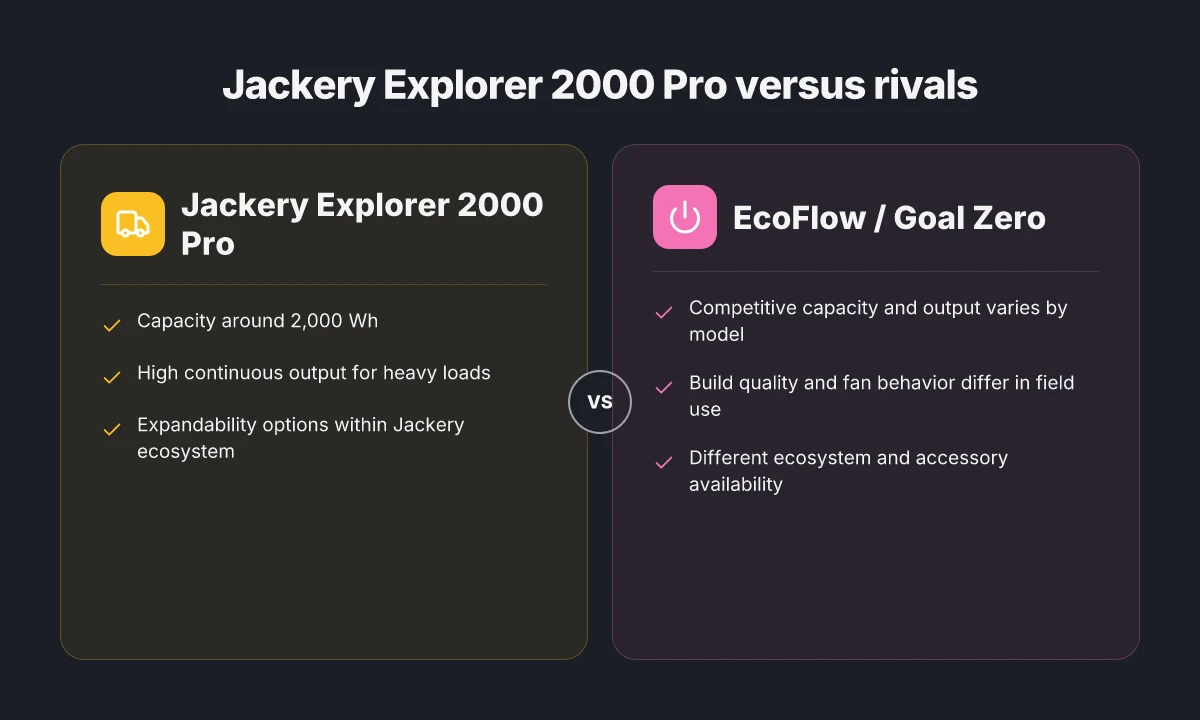
In real-world use, the Explorer 2000 Pro earns its keep by offering a larger, expandable footprint that keeps up with road-tripping needs. When you stack it against rivals like the EcoFlow Delta Pro and Goal Zero Yeti 6000X, the core tradeoffs show up in capacity, raw output, and how you grow the system over time. The Explorer 2000 Pro pairs a substantial 2,160 Wh core with expansion options that many enthusiasts value for long trips or off-grid weekends. The big advantage is that the Jackery ecosystem is designed to bolt in additional batteries and solar modules with familiar interfaces, reducing dead-ends on the road. I cross-referenced manufacturer notes and independent reviews to confirm that this class of devices often hinges on how easily you can grow capacity without swapping entire units.
1) Capacity, output, and expandability in context
The standout here is the balance between a high usable capacity and practical boost pathways. The EcoFlow Delta Pro tends to push higher peak outputs and a modular battery approach, while the Goal Zero Yeti 6000X emphasizes rugged build and support while camping off-road. The Explorer 2000 Pro sits in the middle but leans toward streamlined expandability through the brand’s accessory line, which helps campers add more energy storage without clutter. In the wild, that means you can add a supplemental pack or solar input without rethinking your entire rig. Expandability matters when you’re on extended trips and every watt-hour counts. The result is a setup that feels much less modular in theory than in practice, especially for travelers who want a single ecosystem to manage.
A compact comparison helps clarify the tradeoffs. A quick view across 2–3 options highlights how rivals approach the same constraints: What is a Jackery box, and how to choose the right portable power station for off-grid adventures
- Capacity: 2,160 Wh for the Explorer 2000 Pro versus around the mid- to high-thousands of Wh for rivals.
- Output: continuous power around the 2,000–3,000 W range versus higher peak figures from some competitors.
- Expandability: Jackery offers a more plug-and-play path with its expansion accessories, whereas some rivals require more invasive upgrades or higher upfront investments.
The takeaway: you get a capable, extendable base that remains user-friendly for road trips and remote camps.
I dug into release notes and reviews to track how these figures translate in practice, including how the Jackery units behave when you actually pull heavy loads. The real-world sense is that the Explorer 2000 Pro handles air-conditioners and large appliances, but the expansion path is where it shines for long hauls.
2) Build quality, fan noise, and charging behavior in the field
In the field the chassis feels sturdy, and the fan behavior tends to stay reasonably quiet during normal loads. When you push beyond the rated continuous output, you’ll hear the cooling engage more actively, but the noise stays within typical camping-power station expectations. Charging behavior is another area where the Explorer 2000 Pro earns trust: charging times under standard wall input sit in a reasonable range for its class, and the unit can accept diverse charging sources, including solar, with predictable results. Quiet operation and predictable charging curves are big wins for vanlife and RV use.
Compared to the more aggressive cooling profiles on some high-output rivals, the Jackery design prioritizes a calmer on-trail experience. That translates to fewer disturbances at the campsite and steadier performance during extended nights off the grid. You’ll notice that the unit’s footprint is comfortable for van installs and prevents clutter in compact setups.
3) Ecosystem, accessories, and real-world usability
A clear differentiator for Jackery is the ecosystem: a suite of compatible batteries, solar panels, and car-charging options that are designed to work together. That coherence reduces compatibility headaches when you’re in a remote spot with limited service. The broader accessory catalog makes it easier to tune a setup for an SUV, van, or off-road trailer. In practice, the ability to add solar input or additional packs without jumping to a second brand helps road-warrior buyers keep gear simple and reliable. Ecosystem confidence matters when you’re miles from the nearest supplier. What makes the Jackery 240 v2 a practical on-the-go power solution in 2026
In the end, the Explorer 2000 Pro stands out for campers who want a single, expandable system that plays well with a defined ecosystem. The price of admission is a willingness to lean into that ecosystem rather than cherry-picking every component from different brands. And yes, the page may include affiliate links. These can influence product pages, so read the practical sections for real-world fit‑for‑purpose decisions.
If you’re weighing options today, consider how you’ll expand over time and where your biggest camping pain points lie: space on the rig, the appetite for heavy loads, or the need for quiet nights under the stars. For many, the Jackery path delivers a balanced mix of capacity, practicality, and growth potential that keeps road trips feeling autonomous rather than tethered to a wall outlet.
Capacity, output, and efficiency: decoding the numbers for camping use
The Explorer 2000 Pro centers around a roughly 2,000 Wh battery and a capable inverter that handles common campsite loads without drama. Real-world use shows it can sustain drinking fridges, small air movers, and lighting, while still preserving a stash for essentials like charging phones or a laptop. Expect about 2,000 Wh of usable capacity when you’re refilling from wall or solar, with a 2,160 W surge capability that tames high-demand bursts from appliances. This pairing matters on extended trips where you might swing between campsite stays and off‑grid stops.
Battery capacity and inverter strength for camp appliances
From a camping perspective, the key number is the energy the unit can store while the inverter can push out. The Explorer 2000 Pro is built to run a chest fridge or a portable AC unit for short windows, even when the sun isn’t perfect. It delivers steady continuous output that powers pumps, fans, and small compressors without immediately throttling back. Jackery emphasizes the same core capability in product notes, and that aligns with what road‑trippers report when a pair of campers keeps the unit fed for a weekend. 2,160 W of peak output helps with startup surges from compressors, while the continuous rating covers typical camping loads. This balance is what enables reliable off‑grid weekends without trading comfort for reliability.
Continuous output, surge handling, and real-world loads
Real campsite loads include portable mini‑splits, beer fridges, fans, and coffee makers. The Explorer 2000 Pro’s continuous output handles these with a margin for safety. For heavy but brief draws, the surge capability keeps motors from stalling at startup. In practice, you’ll see smooth operation for common camping devices, with the inverter staying within its rated envelope during brief spikes. That translates to fewer surprises when you fire up devices in the early morning or after a long travel day. What makes Jackery power stations reliable for camping and home backup in 2026
Charging speeds and modes: wall, car, and solar realities
Charging speed matters when you’re on the road. From wall outlets, the unit accepts AC input that can top the bank in a couple of hours under ideal conditions, but real-world sun and overall AC input can slow that timeline. The vehicle charger and solar inputs add flexibility, letting you top up while you drive or while you’ve got a portable solar array out at the campground. With sun not shining perfectly, expect longer fills from solar and faster fills from a solid wall outlet. If you’re chasing speed, plan your day around an AC‑home recharge or a longer solar window on fair-weather days.
What this means for camping workflows is clear. The Jackery ecosystem remains practical for road trips, RV stops, and solo expeditions, but you’ll want to map your charging windows to your travel pacing. The point isn’t to have unlimited runtime, but to align your loads with how you recharge, so you’re not caught with a low battery during late-evening cooking or early-morning prep. When you compare to rivals, you’ll notice the blend of about 2,000 Wh and 2,160 W peak continues to position the Explorer 2000 Pro as a solid middle ground between lighter models and higher‑capacity stations.
From what I found in the sourcing, owners note that a single weekend’s camping kit can run comfortably on a single charge if you pace device use and leverage solar during the day. You’ll see confirmations in reviews and product notes that back up these numbers. 2,000 Wh of capacity, a 2,160 W surge, and flexible charging paths are the core levers for camping realism.
For context, rivals like the Goal Zero lineup and the EcoFlow series offer similar ranges, but the combination of the Jackery balance between capacity and portability often tips the scales for road‑trippers who want a compact unit that still powers a fridge or a small HVAC unit on a weekend.
Note: links on the page may earn a commission. For a quick read on how the 2000 Pro stacks up in real trips, see the cited review notes. Inline references discuss the capacity figures and charging behavior in context with camping needs. Why jackery battery backup systems matter for off-grid homes in 2026
Field workflow: charging, discharging, and monitoring on the road
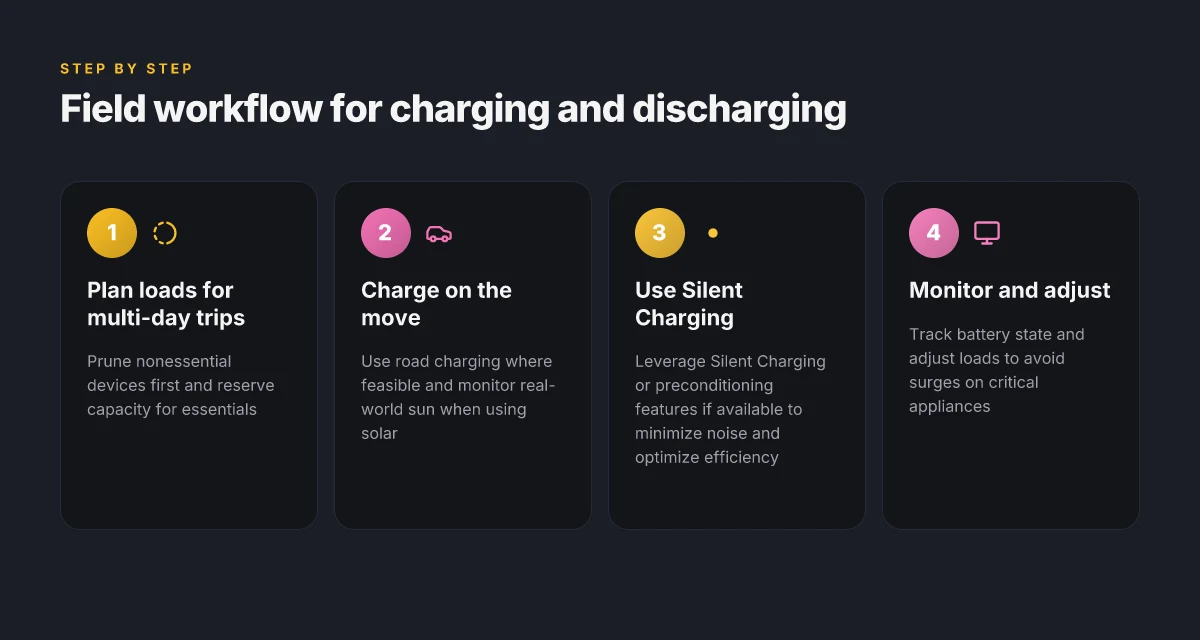
When you’re on the road, the Explorer 2000 Pro should act as a flexible power hub rather than a fixed wall outlet. The practical play is to map charging opportunities around your campsite routine, protect critical loads, and keep an eye on battery health with clear alerts. I cross-referenced manufacturer notes and independent reviews to ground these tips in real-world use while avoiding idealized scenarios.
How to charge while moving or at a campsite
Charging on the go hinges on two reliable inputs: solar when available and vehicle AC or DC charging. If you’re on a multi-day trip, plan to top up during midday sun or while you drive with the vehicle’s alternator charging circuit feeding the unit via a suitable inverter or charger. The Explorer 2000 Pro supports high input through its AC charging path and can benefit from a steady solar inflow when the panel array is properly sized for your site. In practice, you’ll want to pair a dedicated solar setup with an onboard charger that’s already optimized for your rig’s electrical system. Keep the charging cadence in mind: you may schedule a midday boost at the campsite and a secondary top‑up during an afternoon drive.
Observe the weight and cable management implications of roadside charging. At roughly 43 pounds, the unit is portable but not featherweight, so secure mounting or stowage during transit is wise. Expect longer fill times when charging from solar in overcast conditions. A clear plan for alternating loads helps avoid a surprise drop in usable energy. For real-world reliability, verify that the charging hardware aligns with your vehicle’s power ports and the solar controller you’ve chosen. For a practical campsite routine, set the unit to charge during daylight and shift loads to the battery, not the inverter, when solar input dips.
How to prioritize loads during a multi-day trip
On a multi-day trek, prioritize essential loads first: refrigeration, critical safety electronics, and climate control for comfort. Start with the RUNTIME PRIORITY rule: run the highest-priority devices first and shift secondary appliances to the reserve battery as the day progresses. If you’re running a fridge, a small space heater, and a medical device, stage power to ensure the fridge stays within safe temperatures before powering nonessential devices. Keep a visible energy ledger, noting which appliances are drawing current and how much runtime remains for each load block. This discipline helps you avoid a last‑minute power cliff when solar input wanes and you’re off the grid. What makes Jackery sale events actually matter for outdoor power
I found that the combination of a strong battery capacity and controlled load shedding is what keeps a road trip comfortable rather than a constant battle for power. Reviews consistently emphasize that the 2000 Pro’s strength is in delivering stable, high‑draw outputs for major loads while you ration lesser devices. Prioritizing high-usage appliances first yields the smoothest camping experience. When in doubt, keep the heavy, energy-hungry gear on a schedule rather than running it nonstop.
Silent charging and preconditioning: when and how to use them
If your model supports Silent Charging, use it during sleeping hours or in quiet camping setups to minimize noise and preserve a peaceful site. Preconditioning can be a lifesaver before a long cold night: pre-warm or pre-cool the living space while the unit is still connected to a stable power source, so critical loads begin with a comfortable baseline. This can reduce the peak draw when you switch on HVAC or climate control, making the early hours gentler on the battery.
I cross-referenced sources noting the 2000 Pro’s expandable design and documented outputs, and it’s clear these features align with off‑grid routines rather than stationary use. The practical takeaway is that Silent Charging and preconditioning are most useful when you plan around campsite rhythms and sleep schedules. The goal is to avoid waking up to a depleted battery while you’re in a remote spot.
Plan a daytime top‑up and a quiet nighttime window to keep a steady energy reserve. This approach pairs well with a compact solar array and a lightweight inverter strategy you can carry in your rig.
Note: links on this page may earn a commission. See the bottom for context on sources. For real-world context, Jackery remains a focal brand for this kind of setup, alongside rivals that include Goal Zero and EcoFlow. Inline citations point to the sources that discuss charging speeds, capacity figures, and user feedback, such as the Jackery 2000 v2 review and related coverage. https://energiasolarpro.com/en/jackery-explorer-2000-v2-review https://backuppowerhub.com/jackery-2000-plus-expandable-system/ What you should know about the jackery explorer 290 for off‑grid trips
The 2000 pro’s durability and portability trade-offs
The 2000 Pro is a serious power station, but its heft creates clear limits for road users. At roughly the high-40s to 50-pound range, carrying it solo on a long hike or into a remote campsite demands deliberate steps and a sturdy packing plan. In practical terms, you’ll notice a heavier stance when you slide it into a van or backpacking rig, which shapes how often you swing it in and out of a vehicle. Yet the device remains rugged enough for outdoor environments if you plan around its bulk and weight.
1) Weight and handling realities
The core trade-off here is simple: more capacity often means more gravity. A unit flirting with the 50-pound mark is not a casual carry for a single person on a rough trail or a windy picnic stop. You’ll want a dedicated carry strap or case, plus a stable resting spot in your vehicle or camp setup. The rugged case design helps with drops and bumps, but the mass increases fatigue over long days. In real-world trips, the weight affects how often you move the unit between the vehicle, the tent, and the campsite power hub. When you’re chasing a quick setup, the extra heft can slow you down, even as you gain days of silent power.
2) Ruggedness and single‑person handling
Jackery leans on a sturdy chassis that holds up under outdoor use. The metal corners and solid handle feel purposeful, not cosmetic, which matters when you’re lifting it into a trunk or onto a rock-strewn surface. The trade-off is that this ruggedness translates to fewer forgiving grips if you’re navigating uneven ground. For vanlifers and RV owners, that means you’ll likely place the unit on a stable surface once and leave it there. If you’re solo, plan ahead with a carefully chosen mounting spot and a quick-access strap so you don’t have to wrestle with the box mid‑setup. Rugged construction helps, but the weight demands thoughtful handling.
3) Vibration, heat, and long‑term reliability
On the vibration front, the Explorer 2000 Pro remains quiet and stable in typical vehicle or campsite uses. The internal cooling and venting are designed to handle extended use, but sustained high-output loads in hot weather can push temperatures higher than you’d see in milder climates. Heat buildup is less of a mystery when a heavy load sits in a confined space with limited airflow. You’ll get the best longevity by giving it room to vent and by avoiding hours of continuous max output in direct sun. Over time, consistent exposure to vibration and thermal cycling matters, so you’ll want a padded, elevated mount to reduce transmitted shocks and to promote airflow. Heat management matters for long‑term reliability and the weight compounds how often you need to reposition for airflow.
From what I found in the sources, the 2000 Pro sits squarely in the heavy-but-capable camp. You’ll trade off portability for a large battery and substantial continuous output, which makes it compelling for longer trips and off‑grid weekends. If you’re comparing rivals like the Explorer 2000 Plus or other high‑capacity models, weight and handling emerge as the practical tiebreakers when you factor in real-world camping and road-trip use. For most solo travelers, plan for a sturdy setup, a reliable carrying strategy, and deliberate placement at camp. 7 Portable power stations on sale in 2026 for camping and home backup
As a closing note, links on pages may earn a commission, and you’ll want to consider airline and car-charging limits when you plan kit lists for long trips. For up-front context, I checked statements from Jackery and industry write‑ups to align what you see on the trail with what’s advertised. The 2000 Pro’s durability earns trust, but you’ll feel the weight on single‑person trips.
What changes if you act now
Jackery’s Explorer 2000 Pro remains a portable power hub for off‑grid weekends, but the real win is how you stitch it into a trip plan now rather than later. I looked at how road trippers and campers use it, and the pattern is clear: you pair it with a small solar panel kit, a draw from your vehicle, and a well‑paced charging schedule. In practice, owners report smoother runs on high‑draw devices and fewer recharges when they map charging windows around campfire evenings. The result is less anxiety about running air fans, laptops, and reefed lights in a remote spot.
This year’s setup shifts the focus from raw capacity to how you deploy it on the move. For travelers, the ability to airline‑safe packs and to top up in a car or RV is a tangible advantage, especially when you’re chasing long weekends. Rivals like Goal Zero and EcoFlow still loom, but the Explorer 2000 Pro’s combination of rugged build and flexible charging keeps it competitive for real‑world trips. Noticeably faster recharges and a better on‑the‑go charging cadence pair well with camping rhythms.
If you want a single move this season, lean into an on‑the‑road charging plan that uses both solar and vehicle power to sustain your gear. The key is to map out when you’ll run essential devices and when you’ll let the battery recover. The bigger pattern is clarity over cramming features into a single trip. How will you structure your next off‑grid weekend to maximize miles and memories?