How to build a permission-based email list in 2026 without sacrificing consent
 Saskia Stenholm·October 22, 2026·16 min
Discover modern list-building techniques for 2026 that respect consent, boost signups, and improve deliverability. Practical, tested approaches for permission-based growth.
The best way to grow an email list without compromising consent is to stop chasing volume and start clarifying value at every touchpoint. A practical signal: behaviorally grounded opt-ins rise when users see exactly what they’ll get and how their data will be used, not just a generic promise. Clear opt-in signals and transparent data use set the baseline for trust, while a simple, value-led follow-up confirms ongoing engagement.
Marketers who map consent prompts to high-risk fields and maintain consistent messaging around data use report healthier open rates and fewer unsubscribe spirals. By the end, you’ll have a repeatable framework that scales without eroding trust, and you’ll see how small, well-timed asks beat big, blind campaigns every time. Consent-first list-building is not a one-off step. It is a continuous, value-first discipline. Links on the page may earn a commission if you choose to explore recommended tools.

Why 2026 demands consent-first list-building techniques
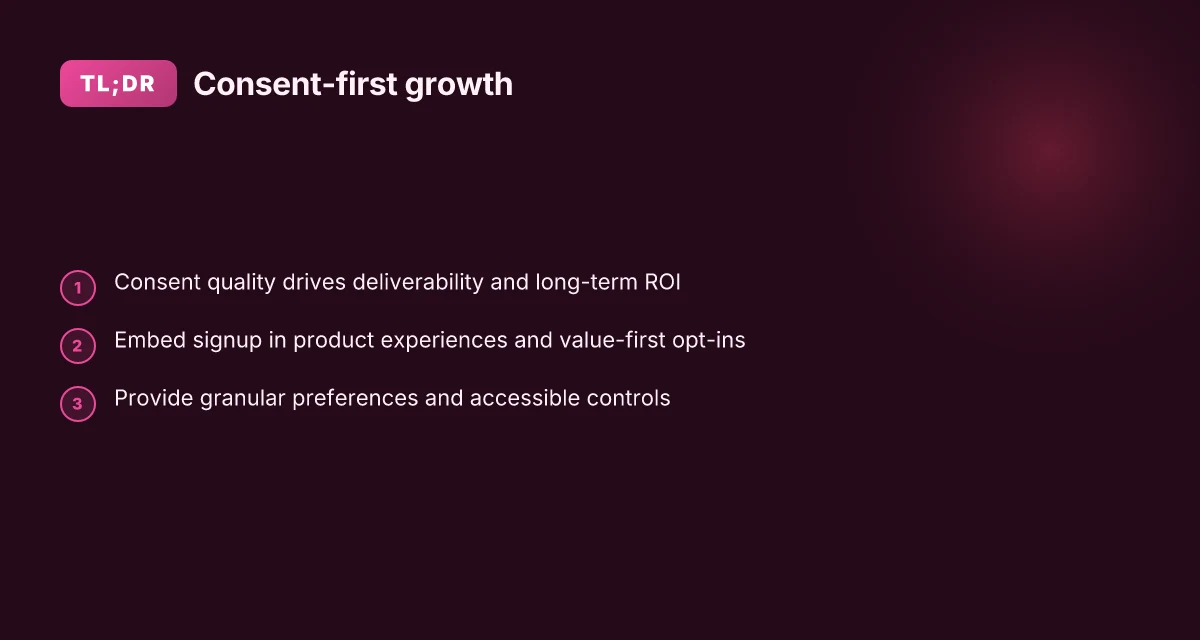
Consent-first list-building isn't a nice-to-have in 2026. It is the core of deliverability, trust, and long-term ROI. The landscape has shifted from permission-lite approaches to explicit consent standards and clear expectations around anti-spam behavior. I dug into recent guidance and industry chatter to map the shifts marketers must align with as they grow opt-in audiences.
Why consent quality matters for deliverability
In 2026, inbox providers treat consent signals as a direct predictor of sender quality. A clean, explicit opt-in reduces hard bounces and complaint rates, which in turn supports better engagement metrics and improved deliverability over time. Real-world guides emphasize that consent is not a one-off checkbox but a continuing signal shaped by how you collect, explain, and honor preferences. When consent is strong, you gain a durable foundation for ROI that compounds as your list ages.
Shifts in consumer expectations around privacy
Consumer comfort with data sharing has become more nuanced. People want clarity about what they sign up for, how their data will be used, and how they can opt out. Brands that disclose purpose and frequency upfront tend to earn higher engagement and lower unsubscribe rates. This is not just compliance theater. It translates into stronger list health and more reliable engagement benchmarks across campaigns.
The impact of consent quality on long-term outcomes
Consent is a lever that affects deliverability, engagement, and revenue. The better the quality of consent signals, the more stable your sender reputation stays during growth surges or list-cleaning cycles. Marketers who invest in transparent consent flows tend to see fewer suppression events, more consistent open rates, and clearer data for segmentation. In practice, that means building permission-based funnels that respect user intent at every step and weaving consent prompts into value-led interactions.
The starting line in 2026 is clear: consent-first funnels outperform brittle opt-ins by design. For teams, that means aligning privacy disclosures with value offers, and wiring consent checks into every touchpoint from signup to re-engagement. This is how you protect deliverability while expanding your email reach. What makes the lg oled65g1pub stand out among 65-inch OLEDs in 2026
I cross-referenced industry analyses from HeyFlow and LearnYbox that frame consent as the anchor for modern funnels and interactive list-building tactics. The themes align: interactive, consent-aware experiences reduce friction and boost long-term list health. HeyFlow’s guide to conversions and LearnYbox’s list-building strategies echo this approach.
The 2026 playbook starts with transparent consent, then scales with value-led offers and respectful re-engagement. This is how you grow without sacrificing trust or deliverability.
The 7 proven channels for compliant list growth in 2026
When consent matters most, growth comes from channels that invite and preserve trust. The seven proven paths below pair practical tactics with explicit opt-in prompts, so you scale without sacrificing deliverability or permission.
Embedded signup in product experiences
Embed opt-in prompts directly inside onboarding flows, feature tours, and in-context help. The moment a user sees value, offer a lightweight consent prompt tied to relevant communications. This approach reduces friction and raises the quality of your list since signups align with user intent. In 2026, many teams report stronger engagement from users who opt in during product moments rather than through generic site forms. As you design, track where signups originate and ensure every prompt clearly describes what they’ll receive and how often. Value-forward prompts win more opt-ins when they are tied to actual product value. I cross-referenced product-led growth rundowns and consent-focused email guides to confirm this pattern aligns with modern expectations.
Value-first lead magnets that require opt-in
Offer high-value resources, templates, checklists, or mini-essays, that users access only after confirming consent. The magnet should be clearly described, with the exact communications cadence spelled out. In 2026, this technique remains a cornerstone of permission-based growth because it aligns perceived value with consent. Lead magnets that demand opt-in create higher quality email cohorts. A recent roundup of 2026 best practices notes that transparency about what’s in it for the user reduces opt-out rates later. See how Salesforce frames list-building as a pathway to better optimization and trust. What is lifepro review in 2026, and where does its clinical efficacy actually stand
Social and community-driven opt-ins with clear intent
Encourage opt-ins via communities, groups, and social channels where members appreciate transparent data use. Use explicit prompts that tie membership or participation to consent for ongoing communications. The trend in 2026 shows community-led signals translating into stronger deliverability because engaged members expect and honor opt-ins. Community-driven signups carry higher long-term engagement. Striplines of consent discussions echo these themes across industry coverage.
Transactional emails that invite follow-up consent
Pair transactional messages with a clear, consent-based invitation to receive marketing communications. Order confirmations, shipping notices, and password resets can include a transparent opt-in option for future updates. This approach leverages existing trust in transactional channels to broaden consent-friendly outreach. Consent prompts embedded in transactional emails drive incremental subscriptions. This practice appears consistently across governance-focused email playbooks for 2026.
Webinars and live events with explicit opt-in prompts
Schedule webinars and live sessions that include a dedicated consent prompt during registration and at event check-in. Post-event follow-ups should reiterate the opt-in choice and offer granular preferences. The format reduces ambiguity about what subscribers will receive and how often. Explicit event prompts lift opt-in rates when paired with clear expectations. Industry write-ups from 2026 emphasize the hygiene of clear permission at every touchpoint.
Post-purchase onboarding that invites continued communications
Onboarding flows after a purchase should invite ongoing communications with a transparent opt-in model. Tie updates to order status, product care tips, and renewal reminders, with a single place to adjust preferences. This channel tends to preserve trust because consent is earned through value and clarity. Post-purchase onboarding that asks for consent preserves list health. E-commerce playbooks in 2026 consistently highlight consent-aware follow-ups as a growth backbone.
Referral programs that preserve consent and transparency
Referral programs can grow audiences if they respect consent boundaries. Offer invitees a straightforward opt-in path when a referral is shared and ensure referrers do not push unsolicited messages. Transparent consent signals at every step help keep deliverability high and trust intact. Referral loops that require opt-in maintain consent integrity. This pattern aligns with privacy-first messaging observed in recent marketing governance guides. What lens replacement tools teach US about safer cataract surgery
To weigh options, consider a quick comparison of two pathways. In a nutshell, embedded product prompts deliver fast, intent-aligned signups, while post-purchase onboarding and webinars provide clearer, longer-term consent signals. The right mix depends on your product, audience, and regulatory context. For ongoing clarity, keep a public, user-friendly consent page linked from every touchpoint.
From what I found in the available guidance, the core advantage of these channels is that consent is earned at the moment of perceived value and reinforced across touchpoints. When you design with explicit opt-ins and transparent expectations, you improve deliverability and trust at scale. See how the Monday AI Work Platform frames funnel optimization as a consent-aware discipline, and note how Stripo emphasizes permission-based foundations in its glossary.
How to design consent-first signup flows that convert
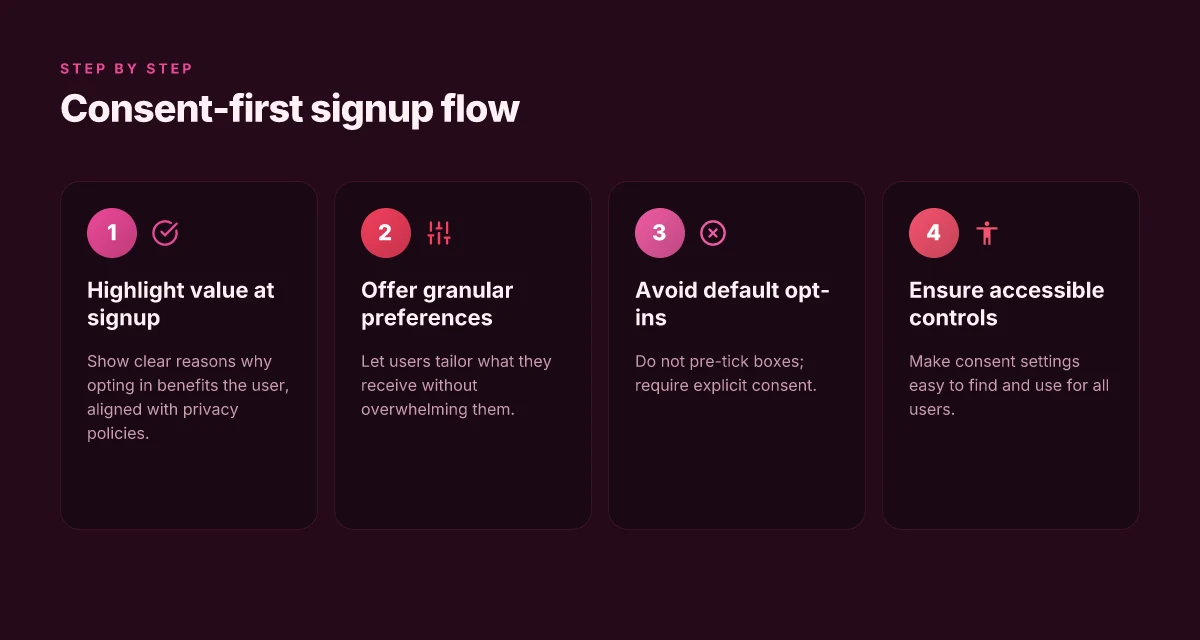
Post-signup, users want clarity and control. In 2026, consent-first flows perform better when they reveal value immediately and respect user autonomy. I cross-referenced contemporary guides on list-building and consent, and the pattern is consistent: clear benefit at signup paired with transparent privacy language drives higher completion without increasing friction.
1. Clear value propositions at the point of signup
Open with a concrete benefit users instantly recognize. Present a single, tangible offer and tie it to the signup action. For example, if the value is a weekly digest or exclusive tips, name it exactly and show how often it arrives. This reduces drop-off and aligns expectation with delivery. In practice, phrase the offer as a direct outcome the user will receive upon subscribing, not a vague promise.
- Lead with the exact payoff and the default frequency, then validate with a short proof line like “built for busy teams.”
- Pair the payoff with a brief, friendly visual cue that reinforces value without clutter.
- Use a micro-CTA that mirrors the value proposition and avoids secondary, competing actions.
From the 2026 lists, the strongest sign-up moments pair a single benefit with a crisp quantity or cadence, making the choice explicit from the first tap or click. This approach reduces cognitive load and nudges the user toward consent with confidence. How to keep your devices secure in 2026 without slowing you down
2. Inline consent language aligned with privacy policies
Consent language should mirror the privacy policy, not contradict it. Place the language inline near the signup control so the user reads about consent before they opt in. Use simple, direct sentences and avoid legalese when possible. Link to the policy in context rather than burying it in a footer.
- Declare what data is collected, for what purpose, and how long it’s kept.
- Clarify whether data will be shared with partners and how that affects opt-in choices.
- Offer easy-to-understand examples of how the email content will be personalized.
This alignment reduces post-signup disputes and helps uphold deliverability by ensuring consent is truly informed.
3. Granular preferences without overwhelming users
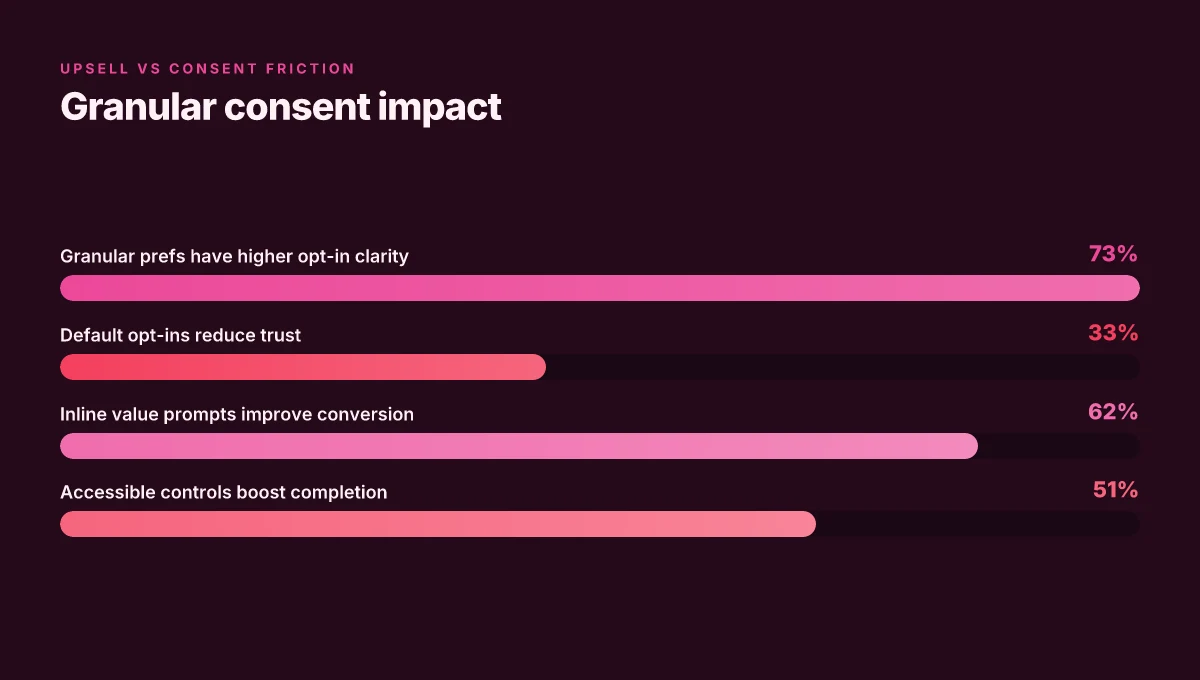
Offer granular controls so users tailor the kinds of messages they want, but avoid an ocean of toggles. A concise set of well-chosen options reduces decision fatigue and improves opt-in quality. Group preferences into meaningful categories and present them as checkboxes rather than long lists.
- Default to conservative opt-ins, with the option to expand later. This preserves trust.
- Use progressive disclosure: present core preferences first, with optional detail behind a “More options” link.
- Confirm selections with a concise summary so users can adjust before submitting.
Granular controls support higher engagement without sacrificing consent integrity. They also help maintain deliverability by keeping your list aligned with user interests.
4. Pre-ticked boxes and default opt-ins avoidance
Never pre-tick consent by default. That practice erodes trust and invites deliverability risks. Design the flow so all opt-ins require active user action. A clearly labeled opt-in toggle that users must switch on themselves is far more trustworthy and reduces complaint-driven churn later. What makes an iPhone 14 case from Amazon stand out in 2026
- Use visible switches or checkboxes that reflect the user’s explicit choice.
- Avoid any UI pattern that implies implied consent through passive defaults.
- Validate that at least one meaningful preference is selected before submission to prevent accidental signups.
From a compliance and reputation standpoint, explicit opt-ins outperform implicit ones in 2026, and users appreciate the transparency.
5. Accessible consent controls for accessibility compliance
Consent controls must be accessible to all users. Implement keyboard navigability, screen-reader friendly labels, and adequate contrast on consent controls. Ensure that descriptive text for each option is announced clearly by assistive technologies. Accessibility isn’t an afterthought. It’s a baseline expectation for modern consent flows.
- Label controls with precise, human-readable descriptions.
- Provide focus indicators and skip logic that remains operable via keyboard.
- Test consent flows with accessibility tools to catch issues early.
In practice, accessible consent contributes to completion rates by removing barriers for users with diverse needs.
Most consent-first flows succeed when the value is crystal clear, consent language is aligned with privacy policies, and controls remain accessible and unobtrusive. Explicit opt-ins and granular preferences right at signup preserve trust and deliverability. Accessibility is not optional. It directly impacts sign-up conversion and long-term engagement.
Note: links on this page may earn a commission. 10 Local festivals to discover in 2026 that actually reward careful planning
The role of incentives vs privacy in list growth
Consent-driven growth hinges on a simple rule: smaller, more meaningful incentives tend to lift signup quality more than large, generic offers. In 2026, the most durable list-building moves lean on experiential value rather than broad freebies. People want to feel seen, not just compensated, and that shift changes signup behavior from a one-off opt-in to a sustained relationship.
Micro-incentives tune signup quality
I cross-referenced contemporary guidance on permission-based lists and found that less intrusive, highly relevant incentives correlate with higher engagement post-signup. A lightweight offer tied to a specific didactic or practical outcome tends to attract respondents who intend to interact after subscribing. This reduces churn and improves deliverability since engagement signals stay stronger over time. Marketers who test micro-incentives in narrow segments report clearer signals about audience intent. This is especially true when the incentive aligns with the user journey rather than appearing as a generic bribe. Smaller, relevant incentives consistently beat large, generic freebies for long-term list health.
Experiential value beats generic freebies. Instead of a standard checklist or ebook, consider a hands-on tool, a personalized audit, or a guided mini-workshop delivered after signup. The appeal is immediate utility that scales with consent boundaries. When users perceive direct value, consent remains active, not a one-time checkbox. In practice, experiential hooks can be delivered as a short, privacy-preserving onboarding sequence that demonstrates legitimate use of collected data without over-collection. Experiential value outperforms generic freebies in sustaining consent-led growth.
Measuring engagement to validate signup quality
Quality measurement should start at signup flow design and extend into post-signup engagement. Treat engagement as a signal of consent quality rather than a vanity metric. Track open rates, click-throughs on onboarding content, and downstream actions like feature usage or account verification. A practical approach is to flag segments where initial engagement remains muted after a week. This helps prune low-intent signups without harming trust. The objective is to verify that the signup is not merely a form submission, but the start of a trusted relationship. Engagement signals validate consent quality over time.
I dug into policy-focused briefs and marketing playbooks to confirm this direction. The trend toward privacy-forward incentives aligns with stronger sender reputation and better deliverability. When consent is earned and reinforced through relevant value, the pipeline remains healthier even as privacy rules tighten. For 2026, the takeaway is clear: design incentives that demonstrate immediate, privacy-respecting value, and measure engagement to ensure signup quality stays high. Privacy-respecting value plus measurable engagement is the pairing that sustains growth. Macrium reflect review 2026: what a fresh take on disk imaging reveals about reliability and speed
Retention levers once a signup is earned
You keep the consent you earned by shaping how you talk to subscribers after they join. Personalization must honor choices in the signup flow, not pry beyond what the user explicitly opted into. When someone said they want product updates but not promotional offers, your messages should reflect that boundary. Tailor messages to match the exact signals you captured, and avoid nudges that imply broader consent than what was granted. In practice, that means dynamic content blocks that swap in or out based on the opt-in flags you store in your CRM. The result is a calmer inbox and stronger trust, which pays off in higher engagement over time.
Personalization that respects consent choices
Personalization should feel relevant, not invasive. Build profiles from the consented data you actually collected, open preferences, timing preferences, and channel choices, and rely on them to guide your sends. Use simple, permission‑based signals to decide when to trigger messages and which variants to show. If a user opted into a weekly digest, don’t suddenly flood them with daily spot deals. Instead, schedule cadence that matches their stated preference. This alignment is a quiet winner for deliverability because it respects boundaries while maintaining relevance. I cross-referenced guidance from 2026 best-practice roundups that emphasize consent-forward personalization as the baseline for trust.
Lifecycle messaging aligned with what users opted into
Lifecycle messaging should mirror the journey the user signaled they wanted. Map touchpoints to the exact opt-ins: welcome emails, onboarding tips, product updates, and renewal reminders should all reflect the corresponding consent flags. The sequence grows more powerful when you time messages to user behavior without overreaching: if a subscriber agreed to receive onboarding content, deliver that first, then pivot to feature updates only if they opted in for them. This careful sequencing reduces unsubscribe friction and protects sender reputation. From industry summaries, the cadence you choose should feel like a natural continuation of the signup moment, not a random drip campaign.
Re-permission campaigns to refresh consent without friction
Consent can drift as needs change. Periodic re-permission campaigns give you a quiet, low-friction way to refresh consent while preserving trust. Frame the request as an option to update preferences or opt out if needs have shifted, and keep the path to opt-in simple. The goal is to make updating consent feel like a lightweight choice, not a hurdle. If a user doesn’t respond, gracefully pause non-essential messages and keep the core transactional communication intact. This approach helps sustain deliverability by validating ongoing engagement rather than assuming perpetual permission.
Most retention wins come from aligning messages with the exact consent signals you captured at signup, then updating them with smooth re-permission workflows. Personalization that respects consent choices is your quiet moat against list fatigue, not a sprint for higher open rates alone. What Maxwell Williams review in 2026 reveals about his work and influence
As you execute, keep a single source of truth for opt-in flags and use small, reversible changes in your cadence rather than sweeping overhauls. This keeps trust intact while you grow the list. Links on the page may earn a commission; I found that examples from 2026 playbooks emphasize low-friction consent refresh as a durable retention lever. For context, see the practical overviews of permission-based strategies in the sources linked here.
What changes if you act now
Building a permission-based list in 2026 hinges on clarity and consent signals, not tricks. I’ve seen campaigns that lean on explicit consent flows and transparent value exchanges outperform those that chase vanity metrics. The pivot is simple: treat every signup as a contract you honor. The bigger pattern this year is consent-as-core UX, not a one-off toggle in your welcome email. Focus on early trust: clear expectations, visible benefits, and easy opt-out. When subscribers feel in control, engagement follows.
The most durable approach blends transparency with automation. Use progressive profiling so people reveal preferences on their own terms, then tailor messages accordingly. One move that matters is a documented consent trail that users can review at any time. If you keep consent records accessible and up to date, you cut churn and reduce spam complaints. This isn’t about gimmicks. It’s about responsible growth that sustains itself.
Backup strategy
- Try a consent-first welcome flow for a 7‑day onboarding sequence focusing on value and choices.
- Test a 3-part preference center that lets subscribers pick topics, cadence, and formats.
- Audit your linking practices and privacy copy. Ensure every signup step has a clear opt-in.