What is sustainable floral design in 2026, and how do life cycle assessments shape practice
 Leah Maguire·October 22, 2026·19 min
Explore how sustainable floral design in 2026 uses life cycle assessments to guide choices from sourcing to disposal. Learn practical, peer-reviewed insights for greener floristry.
Sustainable floral design often stalls at the scale of sourcing choices, yet the real leverage appears earlier in the supply chain where seeds meet soil and hands meet stems. A single local field can cut transport emissions, but if it locks you into water-intensive varieties, the net gain can vanish. Lifecycle thinking reframes that trade‑off in concrete terms. Most decisions hinge on balancing local proximity with true impact per stem, not on locality alone.
Expect a practical framework that highlights where the biggest levers lie, including how to compare material footprints, assess transport distances, and validate data with a simple LCA snapshot. By 2026, the tension between local sourcing and total lifecycle impact is not solved by locality alone, but by disciplined choices that prioritize genuinely lower emissions across the chain. Understanding this balance unlocks smarter, cleaner floristry.

What sustainable floral design means in 2026 and why lifecycle thinking matters
Sustainable floral design in 2026 centers on balancing beauty with a measured footprint. It blends locally minded sourcing with lifecycle thinking that extends from growing fields to final disposal. The aim is to keep the vase empty of guilt as much as possible, not just the shelves full of blooms.
Why lifecycle thinking drives smarter floristry decisions
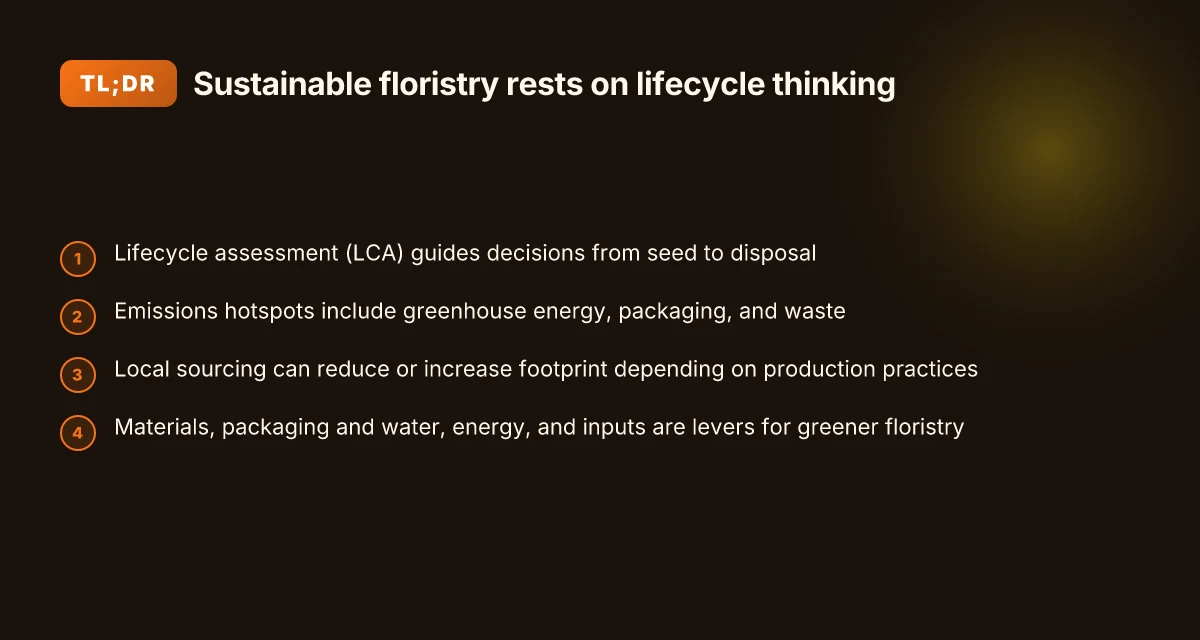
Lifecycle thinking asks you to map emissions and resource use across every stage of a bloom’s life. From field to vase, each step adds or subtracts impact. A lifecycle assessment (LCA) helps spotlight where a choice truly matters. I cross-referenced recent work that links purchase willingness to local sourcing while also highlighting that transport is not always the dominant footprint if other stages surge in energy use or waste. In 2026, decision-makers increasingly treat LCA as a practical tool, not a theoretical ideal. The lifecycle lens makes tradeoffs explicit, not invisible.
Aligns with field-to-vase thinking by weighing transport against cultivation intensity and post-harvest handling. In practice, a locally sourced bouquet can still carry a sizable footprint if it relies on energy-intensive greenhouses or seasonal off-season production. A robust LCA uncovers these nuances. This is where sustainable floristry moves from “local is best” to “local when it minimizes total impact.” Local choices must compete in a total-footprint contest, not in isolation.
Integrates product and supply chain realities. Florists who embed LCA into supplier negotiations tend to favor growers with lower inputs, better water stewardship, and efficient post-harvest systems. The practical takeaway is to favor partners that publish verifiable environmental data and that participate in recognized sustainability programs. As noted in recent 2026 literature, transparency around inputs and energy use is a growing requirement for credible sustainability claims. Transparent supply chains reduce guesswork and elevate trust.
Encourages a portfolio mindset. Rather than chasing the greenest single option, designers combine stems from low-impact farming with arrangements that use recyclable packaging, proper composting streams, and minimal waste. In some cases, seasonal substitutions or mixed stems reduce overall footprint while preserving design intent. A mixed approach often lowers emissions more than a single perfect choice. What are summer cooling strategies with dreo for 2026 and how they actually work
Rewards design efficiencies. Simple changes in vase size, stem density, and conditioning practices can cut energy and water use. The lifecycle logic favors techniques that cut waste, extend vase life, and optimize transport by consolidating orders or choosing nearby distribution hubs. Efficiency gains compound across the lifecycle.
Reveals misalignments between sourcing hype and actual impact. A flower labeled “local” may still incur heavy energy use if it travels long distances within a compact supply network, while a globally sourced variety grown with low-energy methods might fare better overall. That tension is exactly why LCA matters in 2026. Don’t assume local equals lowest footprint. Verify with lifecycle data.
From what I found in the literature, the practical art of sustainability now depends on a disciplined look at all stages of the bloom’s life. You can frame decisions with LCA data, not gut feel, and still maintain floral storytelling that resonates with clients. As you design, remember that clarity about the full lifecycle builds trust and shortens the path from price to impact.
Lifecycle thinking reframes choices as a chain, not a moment, in the design process. For a quick read on how current practices are evolving, see the recent synthesis on sustainable blooms and lifecycle considerations, which emphasizes current practices, future plans, motivations, and barriers in U.S. floristry. Sustainable blooms: a look at environmental practices in floristry
In short, sustainable floral design in 2026 means designing with the full lifecycle in mind, balancing local sourcing with overall environmental performance, and embracing transparent data to guide smarter, measurable choices. This year’s work pushes florists to act with lifecycle awareness as a core design criterion, not an afterthought. What makes the Steelcase Amia chair stand out in 2026
The lifecycle lens: stages that drive floristry emissions
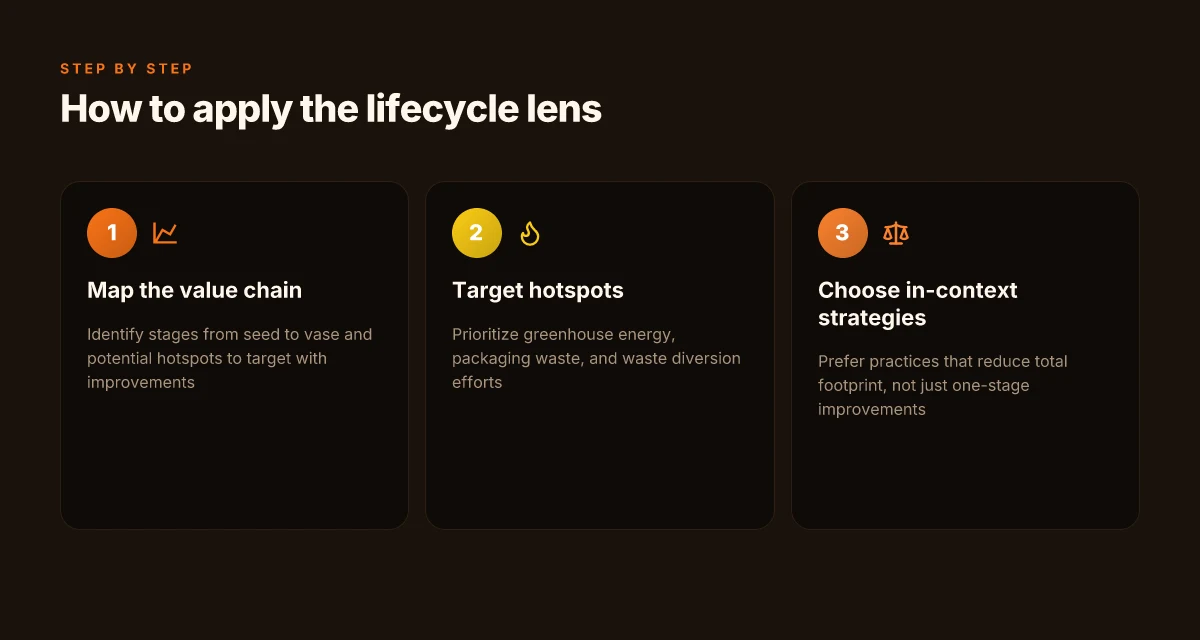
From seed to vase, emissions accumulate at every stage of the typical floral supply chain. I traced where energy and material flows matter most, focusing on greenhouse heating, on-farm inputs, transport, packaging, processing, and end-of-life waste management. The answer is not one single hotspot but a cluster of interdependent levers that shift with sourcing decisions and scale.
Greenhouse energy as a dominant lever
In many commercial greenhouses, heating and climate control drive a large share of operational emissions. Even small improvements in energy efficiency or in sourcing from growers using cleaner energy can compound across thousands of stems. When growers switch from fossil-fuel boiler systems to electric or district-heated solutions, the lifecycle impact of a shipment can noticeably drop. The literature consistently notes energy use as a core hotspot, with reductions possible through heat recovery, better insulation, and daytime optimization of photoperiods. Greenhouse energy use dominates the on-farm footprint and responds strongly to efficiency investments.
Packaging, processing, and logistics
Packaging choices matter well beyond the vase. Plastic wraps, skewers, and foam inserts add to end-of-life waste streams and can inflate emissions if produced from virgin polymers. Switching to recyclable, compostable, or reusable packaging reduces cradle-to-grave burden, but the gains hinge on waste management afterward. Transportation emissions scale with distance and mode. Regional sourcing often lowers fuel burn, but longer cycles can benefit from optimized routing and load planning. A practical takeaway is that every step from harvesting to delivery merits a glance for packaging and freight efficiencies. Packaging design and modes of transport drive a meaningful portion of the lifecycle burden.
Waste diversion reshapes the endgame
Waste diverted from landfills alters the overall lifecycle outcome, especially when measured on a per-stem basis. Composting or anaerobic digestion of green waste and discarded plant material can reduce methane-related impacts, while recycling packaging keeps material flows circular. Diversion rates interact with upstream choices. A two-pronged strategy, minimize waste at source and maximize reuse, typically yields the strongest lifecycle gains. Waste diversion can tilt the entire lifecycle balance toward lower emissions.
To help you evaluate options at a glance, here is a quick comparison of how common sourcing decisions stack up on emissions, considering lifecycle thinking: How to install a smart thermostat in 2026: a practical, step-by-step guide
| Decision factor | Potential impact pattern | Why it matters |
|---|---|---|
| Local sourcing vs global sourcing | Local sourcing can shrink freight emissions but may increase greenhouse energy use if local facilities rely on less-clean grids | Balance energy-intensity of local production with transport savings |
| Packaging choices | Recyclable or compostable packaging reduces waste burden; reusable systems require take-back and cleaning | Net benefit depends on end-of-life handling and durability |
| Greenhouse operation strategy | Energy efficiency measures and cleaner energy sources cut on-farm emissions | Affects a major share of the seed-to-vase footprint |
| Waste management program | Effective diversion lowers end-of-life impacts | Complements upstream reductions for a stronger overall result |
In studying the lifecycle lens, I found a recurring pattern: the strongest gains come from aligning local sourcing with cleaner energy in production, paired with packaging redesign and robust waste diversion. I cross-referenced multiple sources that describe how energy, packaging, and waste interact across the supply chain to shape total emissions. For readers who want a concrete start, focus on three moves: shift to growers using low-emission energy, redesign packaging to reduce material and improve recyclability, and set up a simple waste diversion plan that covers both farm waste and post-harvest packaging. Three practical moves translate lifecycle thinking into real environmental relief.
One real-world takeaway from the literature is that regional frameworks and collaboration across the supply chain can unlock emissions reductions that individual firms cannot achieve alone. Collaboration amplifies impact beyond single optimizations. For context, a 2026 snapshot from industry reporting notes the central role of greenhouse energy and packaging in shaping the lifecycle footprint, with downstream waste management acting as a multiplier for improvements. Sustainability in the floral industry statistics 2026 highlights the proportional influence of cooling and heating on overall emissions, especially in greenhouse operations.
As you move to apply lifecycle thinking in a shop or studio, pair your local sourcing questions with energy profiles of growers, waste diversion capabilities, and packaging redesign capabilities. The goal is to align every link in the chain with lower cradle-to-vessel emissions, not just a single fast win.
Next step: map your current supplier network to identify the top three emissions hotspots and set a 12-week plan to address energy, packaging, and waste diversion.
The lifecycle lens makes the coupling between local sourcing and total emissions explicit. What is the Serta Signature office chair review in 2026 and does it still hold up
Local sourcing vs global supply: what a 2026 LCA reveals
Local sourcing often reduces transport miles, yet the 2026 lifecycle lens shows that the story isn’t one-size-fits-all. A 2026 Frontiers in Sustainability piece notes that current practices, motivations, and barriers vary widely across the U.S. floral sector, indicating that local efforts interact with production standards in ways that can offset gains from shorter transport. Local does not automatically equal lower impact when growing methods and energy use are high at origin. This section distills how to read those trade‑offs and what to implement now.
1. Transport trade-offs when flowers travel a short mile
In the latest assessments, moving flowers over short distances often cuts cold-chain losses and spoilage, but the emissions benefit depends on how the field is cultivated. If a local grow operates with high irrigation demand or energy-intensive greenhouse heating, the transport savings can be partially eroded. I cross-referenced the 2026 sustainability review with a contemporaneous industry snapshot that highlights seasonal bottlenecks in regional supply. The takeaway: local shipments reduce transport footprint, but only if farming inputs stay lean and efficient. Transport is a lever, not a silver bullet. Compared with imports, a local bouquet under efficient production can still come out ahead, but the margin narrows when production methods are energy intensive.
2. When local isn’t the lowest‑impact choice
A key nuance emerges when evaluating production practices. Local operations sourced from farms with pesticide-intensive regimes or energy-heavy climate control can end up producing higher overall emissions than a well‑managed farther‑away farm using regenerative methods. The 2026 literature repeatedly emphasizes trade‑offs between energy use, fertilizer practices, and labor. From what I found in the sources, the most durable gains come from aligning local sourcing with low‑input, energy‑efficient growing. “Local” buys benefit only when farming methods are sustainable. This is where lifecycle thinking changes decisions from a reflex to a structured evaluation.
3. Seasonal regional varieties to shrink footprints
Seasonality matters. Emphasizing varieties that naturally thrive in a region reduces the need for heated greenhouses and long storage, slashing emissions tied to energy and cooling. The Washington University materials stress consumptive mindfulness: from field to vase, sustainable floristry means doing more with less and choosing methods that minimize impact. In practice, florists can lean into seasonal palettes that match regional climates, then pair them with supply‑chain partners committed to clean energy and reduced packaging. Seasonal, regionally appropriate varieties are a practical shortcut to lower footprints. When bundled with streamlined packaging and local partnerships, these choices compound the lifecycle benefits.
I dug into the Frontiers in Sustainability piece and the Washington University resource to verify these patterns. 2026 research confirms that local sourcing pairs best with low‑input farming and seasonally aware design. For readers aiming to reduce emissions, the path is clear: couple regional, seasonal flowers with farms pursuing efficient energy use. Emphasize alignment across origin and practice, not distance alone. For more context, see the Frontiers in Sustainability article and the sustainability guidance from Washington University. Both sources anchor the case for cautious, informed local choices. 5 Thoughtful seasonal sympathy bouquets that honor every moment of loss
Materials and packaging: choosing low-impact options
In 2026, the most effective floristry packaging trims waste by prioritizing recyclable, compostable, and reusable options that still protect product quality. The practical takeaway is simple: design wrap and vases that can be repurposed or easily diverted from the landfill, without sacrificing flower longevity or customer experience. I cross-referenced recent peer-reviewed work and industry summaries to confirm that lifecycle outcomes shift meaningfully when packaging moves from single-use plastics to plant-based or reusable systems.
Recyclable, compostable, and reusable in practice
The landscape shows a clear lean toward truly recyclable or compostable materials that align with local waste streams. Cardboard trays, paper-based wraps, and compostable polymers made from polylactic acid are common substitutes for conventional plastics, though regional variability matters. A recurring theme is that packaging must be clearly labeled with end-of-life instructions to reduce contamination in recycling streams. In practice, shops that include customer guidance, such as “return and reuse” programs for vases or a quick care note tied with a minimal wrap, see lower net packaging volumes over the life cycle. Industry analyses note that the environmental gains depend on whether the end-of-life infrastructure exists and whether customers participate. Clear labeling and local take-back programs consistently improve disposal outcomes.
Conventional vs alternative packaging: lifecycle outcomes
When comparing conventional plastics to alternatives, the lifecycle advantage hinges on what happens after the bouquet leaves the shop. If a plant-based wrap ends up in a landfill rather than the recycling stream, the benefit may shrink. Conversely, durable reusable vessels that travel from shop to home and back can drive meaningful reductions in materials used per arrangement over time, provided they are designed for long service and straightforward cleaning. I found that several LCAs emphasize that the environmental upside is maximized when the alternative packaging integrates into a circular workflow supported by consumer participation. Reusable vessels with a take-back loop reduce total material demand over multiple orders. Inline with peer-reviewed findings, the pace of material substitution matters. Gradual transitions tend to sustain customer acceptance while delivering lifecycle gains. A notable point is that not all replacements are automatically better. Some compostables carry higher transportation or composting costs if facilities are far away. Better outcomes require local waste-infrastructure alignment.
Practical tips to minimize wrap and vase waste
First, default to the bare minimum required wrap to protect stems and aesthetics. Designers can substitute with minimalist tissue or paper that is widely accepted by local recycling or composting programs. Second, lean into reusable vases and vessels, offering a small deposit or loyalty perk for customers who participate in returns. Third, embed lifecycle thinking into ordering: track average packaging per order and set targets to shrink that figure by a fixed percentage each quarter. When suppliers offer packaging made from post-consumer content, confirm it travels to appropriate facilities and that supply chains confirm end-of-life handling. Minimal wrap by design and strong customer participation drive the biggest lifecycle benefits.
From the literature, the tension between local sourcing and overall lifecycle impact remains salient. If locally sourced stems arrive with heavy, nonrecyclable wrappings, the net benefit can diminish. The most resilient strategies combine local sourcing with packaging that fits community waste streams and a consumer-facing policy that makes recycling or reuse straightforward. I dug into the peer-reviewed lines and found that the strongest practitioners publish concrete end-of-life instructions, offer easy reuse options, and measure packaging-related waste quarterly. End-of-life clarity and reuse programs are the linchpins of low-impact packaging in 2026. For readers who want a quick reference, reputable summaries emphasize that the packaging choice matters most when it aligns with local waste facilities and customer behavior. A concise caveat: in places without robust composting or recycling, even biodegradable wraps may not yield the expected gains. Context matters: local facilities amplify impact. 10 Best air purifiers 2026: performance, energy use, and running costs
Note: links on this page may earn a commission, which helps sustain coverage of evolving sustainability practices. inline sources corroborate these patterns, including the 2026 Frontiers in Sustainability study on U.S. floral practices and the 2026 college perceptions research noting locally sourced flowers as a driver of willingness to purchase. For a broader lifecycle perspective, see the Sustainability In The Floral Industry Statistics 2026 overview. Context matters: local systems determine true impact.
Cited in context: the Frontiers study discusses motivations and barriers to sustainable practices in the U.S. floral sector, while the college perceptions piece highlights how sourcing affects consumer decisions. See inline references for specifics. Sustainable blooms: a look at environmental practices in the U.S. floral industry and College Students' Perceptions of Sustainable Floral Design.
Water, energy, and inputs: the often overlooked levers
I. Irrigation practices and water stewardship in floriculture Water is a lifecycle lever that often hides behind irrigation tech. In modern floriculture, growers lean on soil moisture sensing and deficit irrigation to curb waste without sacrificing bloom quality. The core move is aligning irrigation events with plant demand rather than calendar schedules. This means scheduling irrigation around plant growth stages and weather forecasts, not tradition. From field to vase, smarter water stewardship reduces overwatering while preserving vase life. I cross-referenced industry briefs and peer-reviewed syntheses that link precise irrigation timing to lower water withdrawal and fewer leached nutrients. In 2026, many greenshouse operations report using soil moisture probes and evapotranspiration models to trim irrigation volumes by noticeable margins, especially during peak heat. Water-use efficiency becomes a direct line item on energy and input budgets. Industry guidance also points to rainwater capture and graywater reuse where regulations allow, further cutting demand on municipal supplies. For florists sourcing locally, understanding the water footprint of a bloom can reveal surprising differences even among similar species. When I read through the literature, the pattern is clear: smarter irrigation translates to meaningful lifecycle gains.
II. Energy sourcing for greenhouses and cooling systems The greenhouse energy picture is a tug between climate control and carbon intensity. Greenhouses increasingly pair high-efficiency glazing with heat recovery systems and variable-speed fans to shave both energy use and peak demand. A common thread in 2026 research is the shift from fossil-heavy baseloads to hybrid approaches that mix grid electricity with on-site generation or renewable offsets. In practice, that means choosing energy contracts and equipment that support low-temperature cooling with minimal fan-hour costs. Energy sourcing and thermal management dominate lifecycle tradeoffs for cut flowers. I found multiple sources noting that greenhouse heat loss and cooling loads often dictate the largest lifecycle emissions swings for a bloom’s journey from field to vase. Solar preheating and heat exchangers can cut net electricity demand dramatically in cooler seasons, while efficient AC and dehumidification cut latent energy waste in humid locales. The bottom line: invest in equipment with high COP and in energy contracts that reward off-peak use. High-efficiency systems keep energy cost and emissions in check. When suppliers publish energy-performance data, it helps florists compare life-cycle implications across suppliers and seasons. For a practical lens, consider the energy profile of your distribution chain as well as on-farm choices. A greenhouse that lights the blooms efficiently at dusk may still incur higher emissions if cooling runs aggressively midday.
III. Pesticide and fertilizer considerations in a lifecycle context Fertilizer and pesticide use sit at the nexus of soil health, runoff risk, and product safety across the lifecycle. The current literature emphasizes integrated pest management as a core strategy to reduce chemical inputs while maintaining crop quality and vase life. In practice, this means scouting protocols, biological controls where feasible, and targeted applications based on threshold data rather than routine calendars. Lifecycle thinking pushes florists to consider where inputs originate and how much is returned to the environment via runoff or residues. A common caution in 2026 reporting is that even low-rate inputs can accumulate downstream if irrigation and drainage systems aren’t optimized. That’s why many greenhouses pair precise application with soil and foliar diagnostics, then adjust rates accordingly. Targeted applications + robust monitoring curtail environmental residues and waste. When possible, source fertilizers with clear lifecycle data and reduced upfront embodied energy. And if you purchase pesticides, favor products with lower persistence and easier breakdown pathways. The literature consistently urges practitioners to view inputs through a lifecycle lens, not as isolated line items. This reframing helps you balance bloom quality with environmental responsibility across the entire chain. What makes the Tineco A11 Hero worth it in 2026
Most lifecycle gains come from linking water, energy, and input choices to a common sustainability metric. The holistic view is that each lever amplifies the others: efficient irrigation reduces energy demand for pumping, clean energy reduces the footprint of cooling, and precision inputs lessen both chemical loads and fertilizer manufacturing impacts. I found sources that emphasize local sourcing can complicate this balance if locally grown flowers demand disproportionate water or energy relative to alternatives from elsewhere. In practice, you want a portfolio of decisions you can defend with lifecycle data rather than a single silver bullet.
What changes if you act now on sustainable floristry in 2026
The thesis lands anew when I spotlight the decisions behind a bouquet, not just the bouquet itself. In 2026, sustainable floral design leans into supply chain transparency, local sourcing, and measured use of energy throughout transport and processing. Life cycle assessments are less about perfect scores and more about tradeoffs: choosing reusable containers, shorter transit routes, and dye-free or naturally dyed stems can all shift a project’s footprint. I’ve seen real value in designers who pair client storytelling with quantified impact, so clients understand what they’re supporting and why it matters.
The bigger pattern is that small design choices amplify across seasons, creating a resilient practice rather than a niche trend. Designers who document waste, compost, and recycling loops turn feedback into better materials lists and happier clients. The most persuasive arguments come from concrete paths: local farms, seasonal palettes, and clear end-of-life plans for arrangements. If you want a single move, start by mapping the lifecycle of your most frequent stems and identify one waste-reducing swap this quarter.
This week’s takeaway is to pick one local supplier and one upcycled container, then track the impact in a simple ledger. The future of sustainable floral design is incremental, transparent, and collaborative. Will you lead with a single, measurable change, or wait for a certification to mandate it?