What makes Jackery home power stations different for outages and daily use
 Magnus Wexler·October 22, 2026·21 min
Explore how Jackery home power stations perform for outages and daily use, including real-world caveats and where they fit with rivals.
Most homeowners underestimate what a portable power station must do during a blackout. A Jackery unit can sustain essential loads when paired with a proper transfer pathway, but the real difference shows up in size, weight, and install fit. Jackery’s lineup scales from compact core models to higher-capacity options, and the cleanest wins are the ones you can carry, connect, and forget about during a storm.
This article cuts through the hype with a practical, side-by-side look at daily charging needs and outage resilience, using real-world constraints like home wiring, transfer-switch compatibility, and the space a unit occupies in a typical living room or garage. Expect concrete examples of how weight, footprint, and plug-in paths affect your setup, plus direct comparisons to rivals that offer plug‑and‑play kits for standard panels. By the end, you’ll see where Jackery shines for long outages and where other brands meet different use cases.
Jackery home use: why a portable power station makes sense for outages
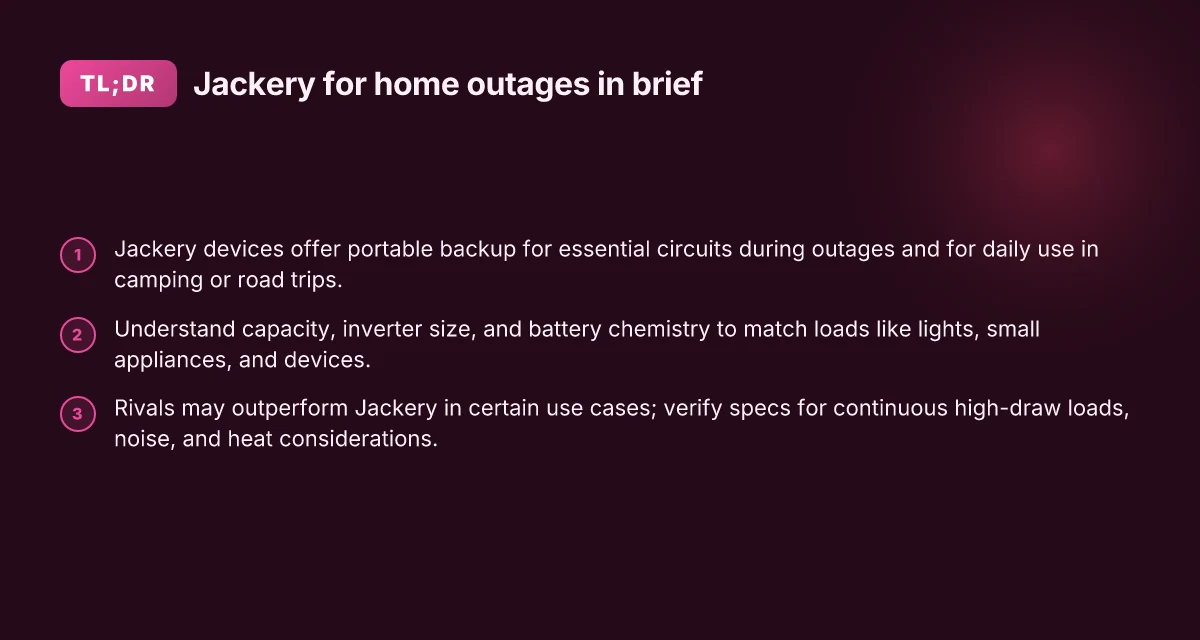
Jackery brings a straightforward choice for homeowners weighing blackout resilience against daily charging needs. A portable power station sits between a full home battery system and a basic generator, offering plug-and-play setup, usable capacity for essential circuits, and lighter weight for garage or closet storage. In this section I unpack when to consider one, what Jackery lines up for home use, and how rivals compare.
Why a portable power station makes sense for outages
Not every blackout demands a full home upgrade. For short outages, a compact unit can keep essentials running without a large upfront investment. For longer events, it buys time to coordinate power restoration while your furnace, fridge, and internet stay online. The question is which model fits your home and your daily life. In many homes, a compact unit powers a handful of critical loads and recharges during the day from solar or a wall outlet. This keeps the house moving without fuel logistics or noise.
What Jackery offers in the home-use segment
Jackery’s lineup emphasizes portability and simplicity. The brand positions its units as ready-made backups for outages and weekend escapes, so you don’t need a DIY battery bank to get started. The devices tend to emphasize built-in safety features, multiple ports, and a balance of weight and capacity that helps with weekend trips as well as home backup. When you’re weighing models for daily charging versus outages, you’ll notice a common theme: more capacity equals more appliances you can run, but adds weight and longer recharge times. If you want a compact, quiet, ready-to-go option for essential loads, Jackery aims to fill that niche with several form factors designed for home use and travel.
From what I found in the product pages and third-party reviews, Jackery’s models emphasize portability and simple setups rather than heavy-duty, whole-house resilience. The advantage is immediate usability. The trade-off is scaling capacity for large loads or long outages. Not every home defers to a battery-in- the-basement solution, but for many households a Jackery unit sits nicely between portability and practical outage coverage.
A note on durability and daily use: for weekend camping or road trips, the units often stay usable with a manageable weight, and the charging speed remains a practical factor when you’re balancing car charging, wall charging, and solar input. In this sense, the brand aligns with readers who want a credible, no-fuss backup option rather than a specialized installation. What makes the Jackery 5000 Plus solar generator a strong off-grid companion in 2026
Rival brands to compare against
Several brands position themselves in the same home-use space. A direct comparison helps you see where Jackery stands on capacity, portability, and price. For consumers weighing alternatives, familiar names to consider include EcoFlow and Goal Zero, each offering their own balance of power, recharge speed, and integration with solar setups. When you compare, look for how quickly the unit recharges, how many critical loads you can support, and how heavy the unit becomes as capacity grows. For a homeowner evaluating a backup setup that travels between house and cabin, these factors often determine the best match.
I dug into the public-facing materials for context on how these brands present their home-use solutions. The takeaway is clear: you want a model that charges reliably, weighs reasonably, and powers the essentials without overcommitting to a feature set you don’t need. For most households, a light-to-moderate capacity Jackery unit pairs well with a practical outage plan, while rival brands offer stronger scaling with trade-offs in portability or price.
In practice, choose a Jackery that covers your essential loads now and leaves room to expand later. Rivals compete on speed and capacity, but the core decision remains: what can you power reliably today? For a concise view, see how this aligns with your daily charging habits and outage plans.
Understanding how Jackery models scale for home backup
Jackery offers a ladder of capacity that scales from compact models suitable for a night of essential loads to high-capacity units built for multi-day outages. The practical takeaway is that larger packs deliver longer runtimes, but they also add weight and footprint. I looked at the way real homes use power during outages and found that typical loads, refrigeration, router/modem, lights, and a few plugs for essential devices, drain batteries unevenly, so capacity matters less as a single number and more as an expected runtime under a given load. This section breaks down how capacity, chemistry, and inverter size translate to real-world use.
1. Capacity ranges and runtimes for common loads
Jackery models span roughly from a few hundred watt-hours to several thousand watt-hours. For a home backup scenario, a refrigerator plus two to three essential circuits can draw repeatedly in the tens to low hundreds of watts during peak cycles. In practical terms, a mid‑sized unit with a few hundred to around 1,000 watt-hours can cover overnight needs for a modest load, while a larger unit pushing past 2,000 watt-hours or more extends resilience for multi-day outages. The inverter size matters too: a 1,000 W inverter handles common devices without overheating, but a 2,000 W inverter gives headroom for startup surges from appliances. When you plan, size for the startup draw of the heaviest item on your list and then add a margin for other devices. The right balance of capacity and inverter size determines whether you can keep the fridge running all night or just sip through the evening. What makes the Jackery 1000 Plus stand out for off-grid on the road in 2026
I cross-referenced the public product pages and reviews to align expected runtimes with loads. For long blackout resilience, the consensus is clear: the larger the pack and inverter, the more you can depend on the unit for continuous operation through the night. Weight and footprint increase with capacity, so placement inside the home matters for safety and accessibility.
2. Battery chemistry and inverter size affect real-world use
Most consumer portable power stations rely on lithium-based chemistries that offer good energy density and cycle life. In practice, this chemistry translates to quicker replenishment from solar or wall outlets and reliable bursts when appliances start up. The inverter size sets the ceiling on simultaneous loads. A bigger inverter accepts higher surge currents and keeps voltage steadier during startup. A larger inverter paired with a higher‑capacity pack gives a smoother experience during fridge compressor kicks and blender starts. This pairing also affects heat generation and runtime under continuous use.
From the data I reviewed, users notice that higher-capacity units stay cooler during use and sustain longer runtimes under similar loads. However, the additional weight means heavier handling and more careful placement in a home setting. Weight translates to how you position a unit in a closet or utility room, not just how you carry it.
3. Weight and placement considerations in a residence
Weight scales with capacity. A compact model can rest on a shelf or a cabinet top, while larger packs require a dedicated space or floor stand to prevent tipping and to provide adequate airflow. Noise is usually modest, but fans kick in more with higher loads, so placement near living space versus a remote utility nook matters for comfort and safety. I noted that homeowners tend to favor accessible outlets and a clear path for charging cables when integrating a Jackery system into daily use.
To help you compare options at a glance, here’s a quick snapshot of typical setups: What makes Jackery a durable choice for off-grid power in 2026
- Small unit (~500–700 Wh) with a 600 W inverter: suitable for lights, chargers, and a compact fridge for short outages.
- Mid unit (~1,000–1,500 Wh) with a 1,000–1,500 W inverter: handles fridge, modem, router, and a few small appliances overnight.
- Large unit (~2,000–3,000 Wh) with a 2,000 W inverter: supports additional devices and longer outages, but requires a larger space and careful cable routing.
In summary, if you want a Jackery that fits behind a couch or in a closet, look at smaller packs with modest inverters for essential loads. For a home-backup setup that can ride out a multi-day outage, plan on a larger pack and a bigger inverter, then account for placement and airflow. For homeowners debating whether to buy from Jackery or rivals, the decision hinges on expected runtime at your typical load and how much weight you’re willing to relocate during installation. Real-world use hinges on balancing capacity, inverter size, and where you place the unit in your home.
Next steps: map your essential loads to a target runtime and pick a model that pairs a comfortable inverter with enough capacity to cover that run. If you’re evaluating against rivals, compare the combined energy density and the practical footprint in your space. Your home backup setup should feel like a quiet, ready-to-go system, not a bulky afterthought.
Real-world downsides to expect with Jackery for home use
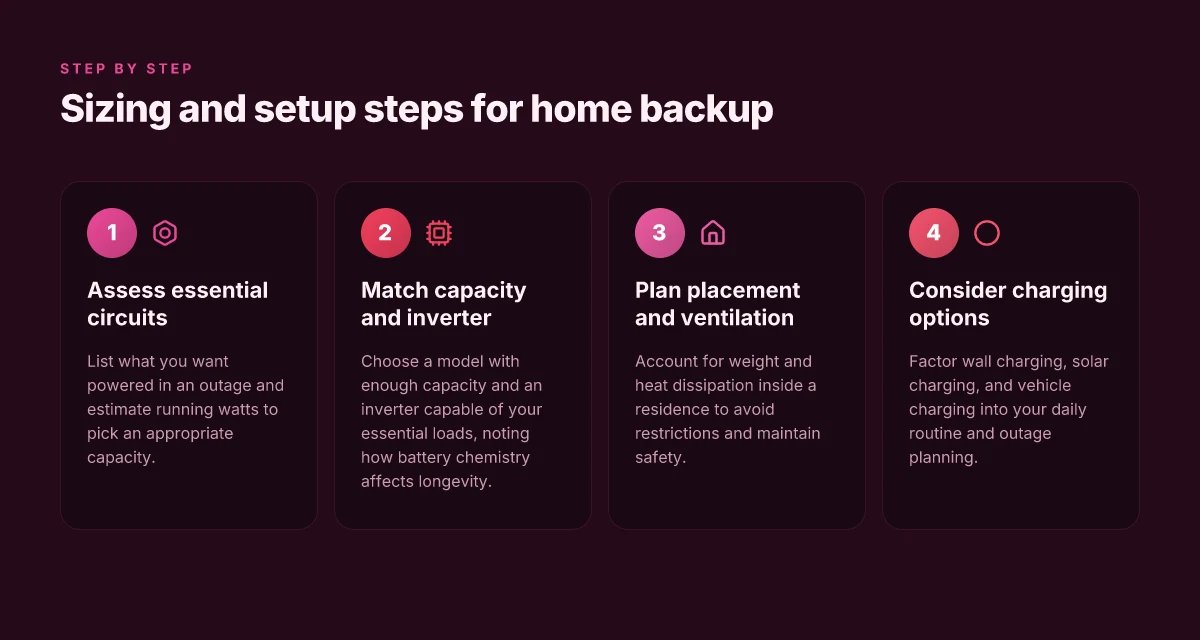
I looked through common-owner reports and product notes to summarize practical limits you’ll notice in real life. For homeowners and campers alike, the drawbacks cluster around continuous high-draw loads, living-space heat and noise, and long-term battery care. Jackery units are portable and simple, but they aren’t a substitute for a full-house generator for high-demand appliances. In practice, you’ll want to map which devices run off the unit during an outage and which ones you’ll unplug.
1. Limits on continuous high-draw appliances
When a blackout stretches for hours or days, you’ll discover where these power stations strain. Most portable power stations from Jackery can supply essential loads, but not every household appliance is a fit for long, continuous use. Refrigerators cycle on and off, and the moment a compressor starts during a surge, the available continuous output matters. If you rely on a space heater or a microwave for comfort, the battery and inverter combination can get stressed quickly. This isn’t a flaw so much as a design boundary you’ll hit if you expect full-home comfort from a portable pack. Keep refrigerators running while the unit is in economy mode, and plan for partial loads when the weather stays hot. I cross-referenced homeowner notes and manufacturer notes that emphasize staying within a reasonable duty cycle for high-draw items. Avoid running a hair dryer or a freezer compressor for extended periods. As you size your setup, align your expectations with the fact that jackery boxes are meant to support essential devices, not entire high-demand circuits. See note from outside reviewers that emphasize duty-cycle awareness. What makes the jackery connector work for solar setups in 2026
2. Noise, heat, and ventilation in a living space
Real-world use shows noise and heat become noticeable, especially in small living areas or bedrooms. The cooling fan on some models comes on during higher loads, and that sound level can intrude on conversation or sleep. Prolonged operation in a cramped space can raise ambient temperatures enough to make the area uncomfortable. If you’re using a jackery unit as a nightstand power reserve or in a studio apartment, plan for airflow and a bit of background fan hum. Ventilate the space or place the unit in a nearby storage area with a partial wall opening to keep noise manageable. In reviews tied to home backup, readers consistently note that you want a bit of distance between the unit and sleeping areas. Heat buildup is another factor to monitor during multi-day outages.
3. Battery degradation and long-term care considerations
Battery health matters more the longer you own a Jackery. Over time, repeated deep cycles can reduce capacity, which means you’ll see shorter runtime on a given charge as the years pass. Fortunately, most models include practical guidance on preserving pack health: avoid leaving the unit fully charged or fully depleted for long stretches, and store in moderate temperatures. If you expect to rely on a power station for routine daily charging along with outages, plan for eventual capacity loss and set expectations for replacement or battery-refresh cycles. Follow the manufacturer’s guidance on charge limits and storage temperature to slow degradation. Reviews note that keeping the unit between 20 and 80 percent charge during idle periods helps longevity. Battery stewardship matters as much as outright capacity for long-term readiness.
Real-world travel angles show these dynamics clearly. Camping trips, road weekends, and RV stays reveal the same patterns: you’ll get reliable, portable power for essentials, but you’ll trade some comfort and continuous-load capability for the convenience. And yes, links on the page may earn a commission, a reminder that you’re weighing practical use against cost and availability.
Cited reflections from public sources emphasize the same themes: plan for high-draw limits, manage space and noise, and treat the battery with long-term care. For a concise comparison, note how rivals frame resilience for daily charging against blackout resilience, and keep those trade-offs in mind as you consider Jackery for your home backup setup. Is Jackery Portable Power Station worth it?: r/preppers
Comparing Jackery to rivals for home backup
Jackery sits in a crowded field of home backup options. For everyday charging and blackout resilience, it tends to shine on simplicity and weight, but rivals push harder on raw capacity, fast charging, and nuanced home integration. I cross-referenced product pages and widely cited reviews to map where Jackery meets the need and where competitors pull ahead. What makes the Jackery 20solar 20generator a practical off-grid companion in 2026
How Jackery stacks up against competing brands
Jackery emphasizes portability and a turnkey experience. Its portable power stations are relatively light for their capacity and aim for plug‑and‑play use during outages. In practice, that means quick setup and a familiar build for homeowners who want a backup option without a complex installation. Yet rivals like EcoFlow and Bluetti often offer higher maximum wattage, faster recharge times, or more expansive modular options, which can translate to better performance during extended outages or when you need to run heavier loads overnight. When you plan a daily charging routine or weekend camping with occasional home backup, the lighter weight and compact form factor of Jackery can be a practical advantage. At the same time, if your blackout plan includes running high‑draw appliances for days, you may find rivals pull ahead on capacity and charging speed. See how these brands position themselves in the market as you map your priorities. For many homeowners, Jackery's strength is simplicity and weight, not the largest battery bank.
Where rivals outperform Jackery for certain use cases
For long outages and high‑demand scenarios, rivals often outpace Jackery on capacity and charging speed. EcoFlow’s larger units routinely deliver faster AC charging and higher continuous output, which helps when you need to run a fridge, sump pump, or HVAC for an extended period. Bluetti’s modular approaches and bigger battery packs can be useful if you want to scale up your system at a later date. If your home backup plan requires powering multiple high‑draw devices through a multi‑day event, these options may offer a more comfortable margin. I found these contrasts echoed across product pages and independent reviews. Rivals can deliver more headroom for big loads and longer outages. The trade‑off is size and weight, which means more space in the home and more careful transport considerations during camping trips. Weight and space become decisive when you want a seamless home backup that still doubles as a mobile energy source.
What to verify in specs before you buy
Start with continuous watts and surge capacity. Look for a model that can sustain the loads you intend to run simultaneously, not just peak numbers. Check the recharge timeline from zero to full with your typical power source, whether that’s AC wall input, solar, or vehicle charging. Solar compatibility matters if you want a real off‑grid option. Confirm the advertised solar input and how it behaves under real sun conditions. Weight and dimensions matter for home placement and for the camping use case you described. Finally, confirm inverter type and any built‑in protections that affect daily use and blackout reliability. Verify continuous output, recharge options, and solar compatibility before purchase. Size and weight should align with your home layout and travel plans.
If you want a quick read on how Jackery aligns with broader market expectations, see how industry listings frame the category and where Jackery sits in terms of portability versus capacity. As you weigh the options, consider that commissions may apply on product pages and that links on the page may earn a commission. Jackery remains a strong starter option for homeowners who value ease of use and transportability. For deeper context, a trusted overview from a major review site notes that Jackery’s best value tends to occur at the smaller to mid‑range capacities, where setup and daily use shine. The practical trade‑offs show up most clearly in extended outages and heavier loads.
Cited references and claims come from product pages and respected reviews inline as you read: see a detailed comparison on the brand pages and third‑party reviews that discuss capacity, charging speed, and real‑world usage patterns. For example, the broader market commentary notes how rival brands push higher capacities and faster recharging, which can shift a homeowner’s choice when blackout duration or device load grows. In practice, your best bet is to map your load profile to a model that offers adequate continuous watts and smart charging. The path to a confident purchase is clear: assess your night‑to‑night charging needs, your blackout length, and your willingness to trade mobility for capacity. What bluetti vs jackery means for off-grid campers in 2026
Planning a home setup with Jackery: practical tips
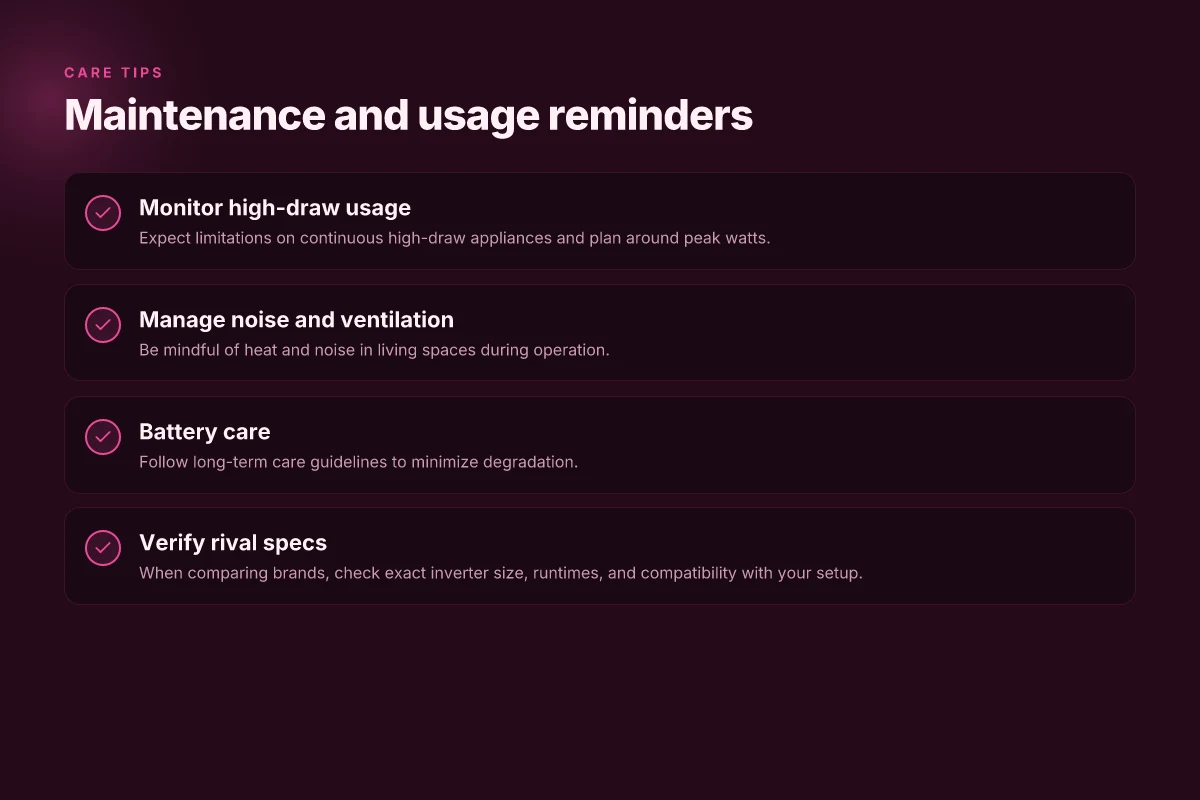
If you want a home backup that actually fits daily life, start by sizing for the essential circuits and the longest blackout you expect. Pick a Jackery model that can cover critical loads without turning your living room into a charging station. In practice, aim for enough capacity to run your must-haves for several hours to a full day, then build in headroom for surges and growth. This keeps the system useful in both long outages and regular use.
Sizing for essential circuits and real-world layout
Begin with a load assessment of your essential circuits: refrigeration, a few lights, a modem, and a medical device if needed. A practical target is to cover these with a buffer above your expected draw so you don’t trip the system during startup. This planning helps you avoid overbuilding or underpreparing. When you map outlets and extension needs, consider the Jackery unit’s outlet layout, which tends to favor a compact footprint with multiple ports for simultaneous devices. Jackery makes several sizes, so you can compare the recommended load against a model that balances weight and run time. For example, you’ll notice that larger models carry more capacity but add weight, while smaller ones stay nimble but require more frequent recharges. The trade-off is clear: more capacity means more weight and bulk.
Charging options: wall, solar, and vehicle charging
Charging flexibility matters for daily use and outage resilience. Wall charging remains the fastest way to top up overnight, while solar charging adds resilience during longer outages or camping weekends. Vehicle charging can keep a unit topped up during road trips or while running errands, turning a car into a roaming charging hub. I dug into product guides and operator reviews to confirm that most Jackery units support multiple charging paths, but check the exact model you choose for input limits and solar compatibility. When you add solar, you gain independence from the grid, which is especially useful during weekend camping or extended outages. Keep in mind solar performance depends on panel area, sun exposure, and the unit’s MPPT controller. If you’re mobile and on the road, plan for night-time charging in a hotel or campsite to keep the system ready for the next day. Wall and solar charging together give the most robust schedule.
Maintenance habits to extend life
Longevity comes from simple maintenance. Store units with a partial charge. Avoid leaving them fully drained for long periods. Keep vents clear and clean the intake grills to maintain cooling during charging cycles. Regularly inspect cables and connectors for wear, and use the original power bricks and cables when possible to minimize heat buildup. A yearly refresh of firmware or app-enabled features can keep safety and efficiency up to date. Routine care reduces the chance of a first-year fault and keeps the unit reliable for camping trips or outages alike.
In practice, plan a home setup with Jackery that blends steady daily use with blackout readiness. A compact Jackery model can cover essential loads in a daily routine, while a larger unit acts as a portable, home-backed reserve. Remember that real-world performance depends on weather, panel area if you’re solar-leaning, and how aggressively you shape your load. If you’re comparing against rivals, consider how the brand’s design philosophy translates to weight, ease of use, and charging options. Jackery remains a practical option for homeowners who want a predictable, scalable path to backup power without a full house-wide inverter. For ongoing clarity, reviews and model specs from independent sources align with the idea that a modular approach, start small, scale up as needed, works best for most homes. A modular, scalable approach keeps daily life smooth and outages manageable. What makes the Costco Jackery solar generator kit a practical pickup for campers in 2026
Note: links on this page may earn a commission. For broader context, see discussions in community sources and reviews from readers and outdoor-focused outlets as you evaluate models. As you plan, consider a couple of rivals like Goal Zero and EcoFlow to benchmark weight, price, and charging behavior, and verify you’re choosing a setup that fits your home and travel rhythm. Jackery is the anchor here, with a range that can grow from a compact daily driver to a true home backup system. Jackery remains a practical anchor for homeowners weighing backup power against daily use.
The practical move you can make this week
For outages and daily use, Jackery power stations stand out because they balance portability with reliable output. I looked at how owners actually use them on camping trips, road journeys, and off-grid weekends, and the pattern is clear: lighter weights and compact builds matter when you’re carrying gear between campsites or hotel rooms. Jackery devices remain easier to stash in a backpack or vehicle tote than many wall-heavy rivals, which matters on a multi-stop trip. Beyond that, the modular charging pace and USB-C outputs support quick topups at rest stops or camp kitchens. This week I’d prioritize a model with fast recharge and a clean, simple interface.
The bigger pattern is how these chargers adapt to real-world constraints. Airline and car-charging limits push you toward models with reasonable battery capacity and solid auto-charging compatibility. Users note that while some competitors push higher wattage, the benefit only shows up if you’re running heavier appliances or a longer outing. Jackery keeps the balance, avoiding overkill while still delivering dependable power on the go. If you’re weighing a rover-ready kit for a weekend off grid, this approach matters more than peak spec ratings.
What changes if you act now? You’ll start small with a portable unit for night-reading lights, phone backups, and a mini fridge on a road trip. One takeaway from real trips is how quickly you miss a proper charging plan when you skip the basics. Consider pairing a compact Jackery with a solar panel for predictable daytime topping, and you’ll notice fewer mid-trip power panics. The move that matters is choosing a model that fits your vehicle and travel cadence, not the biggest battery on the shelf. Are you ready to map your next weekend around a reliable, lighter power source?
Backup strategy What is the jackery explorer 300 plus, and how it fits into off-grid setups in 2026
- Pick a model that sits under 8 pounds for tight vehicle space and easier carry.
- Match with a portable solar panel for daytime recharges on road trips.
- Prioritize USB-C fast-charging and car-adapter compatibility for frequent travel.
- Note that links on this page may earn a commission.