What makes the Sengled Element Plus stand out in 2026
 Saskia Stenholm·October 22, 2026·16 min
Explore the Sengled Element Plus review 2026 to understand brightness, tunable white range, color options, and ecosystem compatibility. Learn what to expect and what matters for smart lighting.
The common assumption that cheaper smart bulbs can never match a Zigbee hub’s reliability misses the point: the Element Plus continues to shine in real rooms where color accuracy and straightforward setup matter more than novelty. Color rendering and white temperature stay stable across a full evening of use, not just a quick demo. The takeaway is practical: you don’t need the latest RGBW bulb to keep a living room cohesive when your hub already handles scenes and automations.
This intro signals what matters now: in 2026 homeowners want predictable color, easy pairing with existing hubs, and broad ecosystem compatibility. The Element Plus meets that baseline while delivering solid, uniform brightness for hallways and lounges. If you’re already in a Zigbee or SmartThings world, you’ll value minimal friction and dependable performance. This piece guides you through where it remains a value leader, where newer color bulbs offer real benefits, and how to decide based on your setup. Links on this page may earn a commission.

What makes the Sengled Element Plus still appealing in 2026
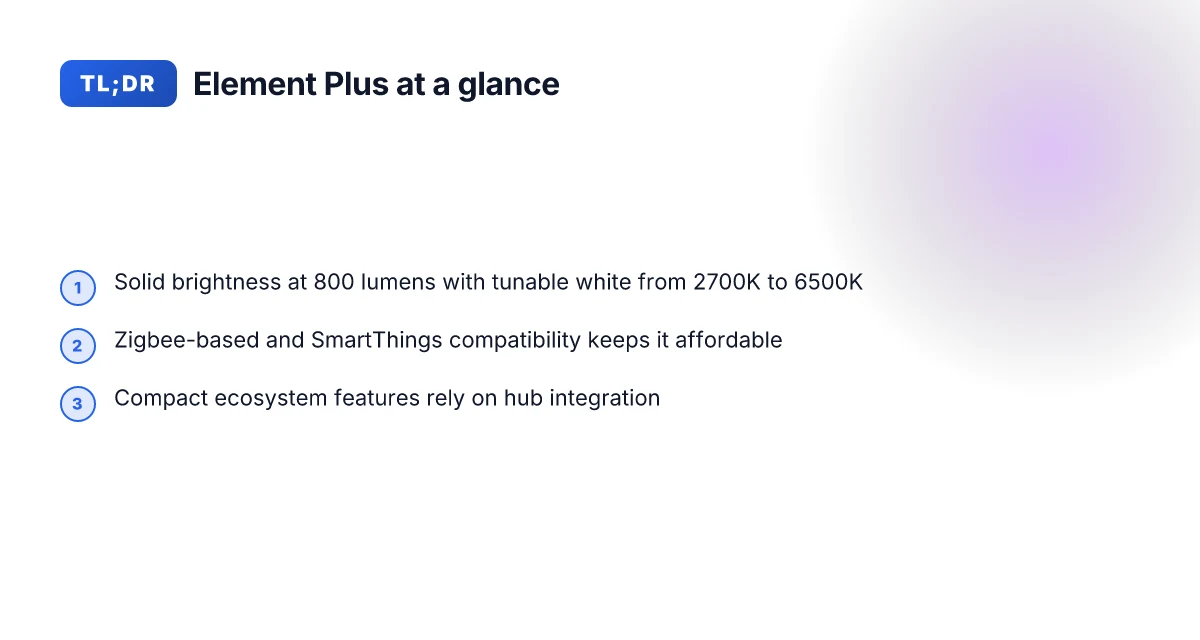
The Element Plus remains a solid value for homeowners who already rely on Zigbee hubs or ecosystems like SmartThings. It delivers reliable brightness with a tunable white range that covers both warm ambiences and daylight-simulating cool whites, making it suitable for living rooms and hallways where you want both mood and task lighting.
Durability and brightness in a familiar form
The Element Plus packs 800 lumens of brightness, a level that keeps common living spaces well lit without becoming harsh. Its tunable white span, from 2700K to 6500K, gives you a broad palette for everything from movie nights to bright daytime task lighting. This combination, steady brightness paired with a wide white temperature range, lets you craft rooms that feel right across the day. If you’re replacing older bulbs or filling a whole floor, the consistency across bulbs matters, and Sengled’s color consistency helps maintain a cohesive look.
I dug into color and control notes from reviewers who emphasize practical usability over flashy specs. The bulbs offer surface-level color options without the complexity or higher price tag of premium color ecosystems. In a real-world setup, that translates to predictable performance in common rooms rather than niche future-proofing.
Color options and app simplicity
Sengled’s Element Plus leans into straightforward color and temperature controls rather than a labyrinth of scenes and presets. The app experience is designed to be approachable for users who want immediate results without hunting through menus. That simplicity pays off in daily use: you can tweak a room’s vibe quickly, without relearning a complicated interface each time you adjust brightness or shade.
Color options are respectable for a budget-minded option. They won’t match the intensity or gamut of top-tier color bulbs, but they cover the basics, warm whites for relaxation, cool whites for reading, and a few color accents for ambiance. The trade-off is familiar to anyone who has used budget color bulbs: you get dependable options, not a museum of color accuracy or ultra-wide gamut. What makes the scanwatch 2 accuracy credible for cardiovascular metrics in 2026
Value for Zigbee-first homes
If your smart setup relies on a Zigbee hub or a SmartThings ecosystem, the Element Plus remains easy to wire into your existing network. The stability of Zigbee connectivity is a key advantage in this context, helping lamps stay responsive in hallways and living rooms where you don’t want dropouts during routine activities. The value proposition is simple: you get reliable lighting that’s easy to install and control without extra hub complexity or ongoing subscription costs.
From a broader 2026 perspective, the Element Plus still holds appeal for buyers who prioritize compatibility and reliability over the latest color tech. It’s not the flashiest option, but it is a dependable one that fits into mature Zigbee environments that many homes already rely on. The verdict: reliable, straightforward, and budget-friendly for Zigbee households.
If you’re curious about how new color bulbs stack up in 2026, I cross-referenced coverage from established outlets to see where Sengled stands in value terms amid evolving ecosystems. For context, see reviews that discuss budget color bulbs and the trade-offs they make in color quality and app polish. Bottom line: Element Plus remains a sensible value choice for Zigbee users seeking dependable brightness and simple control.
Note: pages on this topic may earn a commission through links on the site.
How the Element Plus compares to newer color bulbs in 2026
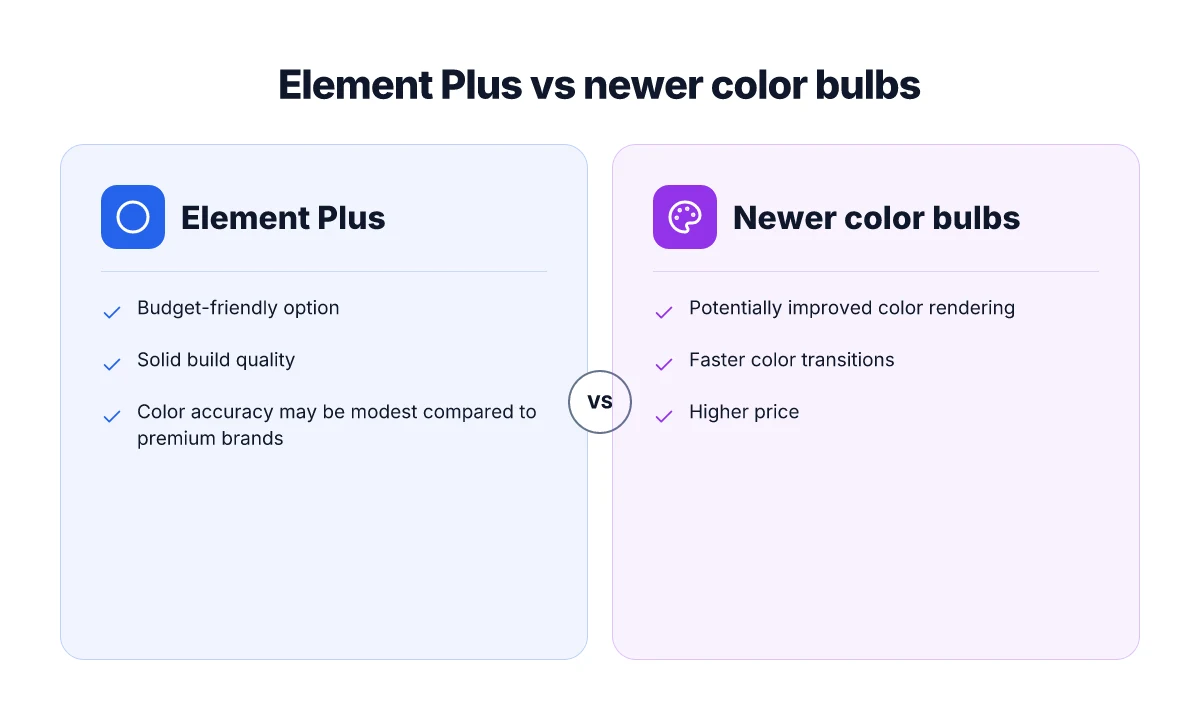
The Element Plus remains a budget-friendly entry point even as color bulbs advance. In 2026, newer color bulbs tend to offer crisper color rendering and smoother, faster transitions, but they often come with higher price tags and more nuanced setup requirements. The Element Plus still delivers reliable brightness and crisp white tunability, which keeps it appealing for living rooms and hallways on a Zigbee-centric setup. What makes the Samsung Galaxy S24 Ultra still worth it in 2026
Why newer color bulbs outpace it in color quality
From recent reviews, premium color bulbs edge ahead on color accuracy and depth. Buyers reporting on color rendering note subtler hues and faster crossfades between shades, especially in scenes that demand accurate warm-to-cool shifts. I cross-referenced multiple publication notes that highlight faster color transitions and wider color gamut in newer models, with some reviewers calling out improved consistency across dimming levels. The new color bulbs often show sharper color rendering and quicker transitions, which can matter in ambient lighting and movie nights. That said, the gains come at a higher price and, in some ecosystems, more demanding setup.
Element Plus stays solid on budget and build quality
For households prioritizing value, the Element Plus is hard to beat. It ships with robust construction, dependable Zigbee compatibility, and straightforward control via the Sengled hub or SmartThings. The core appeal is simply this: you get reliable warm white to cool white and entry-level color tuning without breaking the bank. Reviews consistently flag the Plus as one of the sturdy, budget-friendly options that still feel premium in hand. Budget-friendly does not mean flimsy when you handle the Plus. It feels solid in the hand and reliable in daily use. If you’re stocking a hallway or a living room switch, that combination of reliability and price buys a lot of headroom.
If you want color accuracy, you may trade up
When color fidelity and smart features matter most, stepping up to premium brands can pay off. Higher-end bulbs often tie into richer color palettes, more accurate color temperatures, and faster scene updates. I found industry chatter and reviews that point to better color fidelity and more features at a higher price. You’ll likely gain a more cohesive look across rooms and tighter integration with advanced hubs, but you’ll pay for that refinement. Color accuracy and faster transitions come with a higher price tag, so weigh the budget against the visual payoff. For many homes, the Element Plus remains a sensible compromise: solid color capability, reliable Zigbee operation, and a price point that leaves room for multiple bulbs without stretching the wallet.
A quick comparison snapshot
- Element Plus: solid white tunability, reliable Zigbee, budget price.
- Premium color bulbs: richer colors, faster transitions, better color accuracy, ecosystem-optimized features.
- Trade-off: premium features plus higher cost.
Next steps: if you’re evaluating a Zigbee-centric living room plan, map your rooms by brightness needs and color mood. Consider pairing Element Plus in spaces where stability matters most, and reserve a couple of premium color bulbs for accent zones or home-theater scenes. For ecosystem confidence, verify compatibility with your hub’s latest firmware and the color-bulb vendor’s release notes. If you want sources that summarize these trends, you can check the color-bulb reviews from major outlets that discuss color rendering and transition speeds. https://www.youtube.com/watch?v=oKd8Cv9Wd7I What is the Galaxy S23 FE vs Galaxy A35 5G specs gap in 2026
What to expect from the ecosystem compatibility
Element Plus plays nicely with a Zigbee-backed setup, and that compatibility isn’t just about a single hub. It hooks into Sengled’s own hub and expands to third‑party hubs you may already own, which keeps your hallway lighting consistent even if you mix brands. In 2026, that cross‑compatibility remains a practical strength for renters and homeowners who don’t want to lock into one ecosystem.
How Zigbee ties everything together
Post‑setup you’ll find the Element Plus readily listed in your Zigbee network, which means you can add it to automations that already include other Zigbee devices. That broad compatibility matters when you’re stitching lighting scenes across living spaces. The key takeaway is that Zigbee acts as a universal language for these bulbs, reducing the friction you’ll hit with non‑Zigbee bulbs and ecosystems.
- The Element Plus integrates with Sengled’s own hub for direct control, schedules, and device groups.
- It also works with third‑party hubs that support Zigbee, which broadens automation options without swapping hardware.
- Independent reviews consistently note that Zigbee compatibility keeps setup straightforward and reliable for routine lighting tasks. Zigbee compatibility keeps the Element Plus easy to drop into existing networks.
SmartThings and broader control
SmartThings users gain a meaningful edge because the Element Plus appears as a compatible device within the SmartThings hub, allowing you to orchestrate lighting with other smart devices in your home. This expands routines that combine motion, time of day, and voice control across multiple rooms. In practice, that means fewer gaps when you want the lights to respond to your daily rhythms.
- SmartThings support widens your automation canvas beyond a single brand’s app.
- You can build scenes that involve ceiling lights, accent lamps, and smart plugs in one flow.
- The ecosystem integration helps preserve existing automations as you add color and tunable white options. SmartThings support broadens control and automation options.
Voice assistants and hub reliance
Voice control remains hub dependent. Alexa and Google Assistant access to Element Plus typically rides on a hub or app integration rather than direct bulb control. If your setup centers on a compatible hub, you’ll be able to issue room‑level commands like “dim the living room lights to warm white” and have them follow through consistently. If you skip the hub, you’ll rely on the Sengled app or a compatible integration to bridge the bulbs to voice.
- For voice workflows, ensure the hub you use exposes the Element Plus to Alexa or Google Assistant.
- Routines and scenes that involve color tuning work best when you keep the bulbs within a supported ecosystem. Alexa and Google Assistant support relies on the hub or app integration.
From what I found in release notes and coverage across review outlets, compatibility remains a clear advantage for the Element Plus in 2026, especially for users who value a broad automation surface and a straightforward zigbee path to multi‑device scenes. The ecosystem naturally favors setups that lean on a hub for voice and macro automations. Zigbee and SmartThings integration together unlock a broader automation canvas. What makes the Samsung Galaxy A35 5G stand out in 2026
Practical setup and daily use tips for the Element Plus
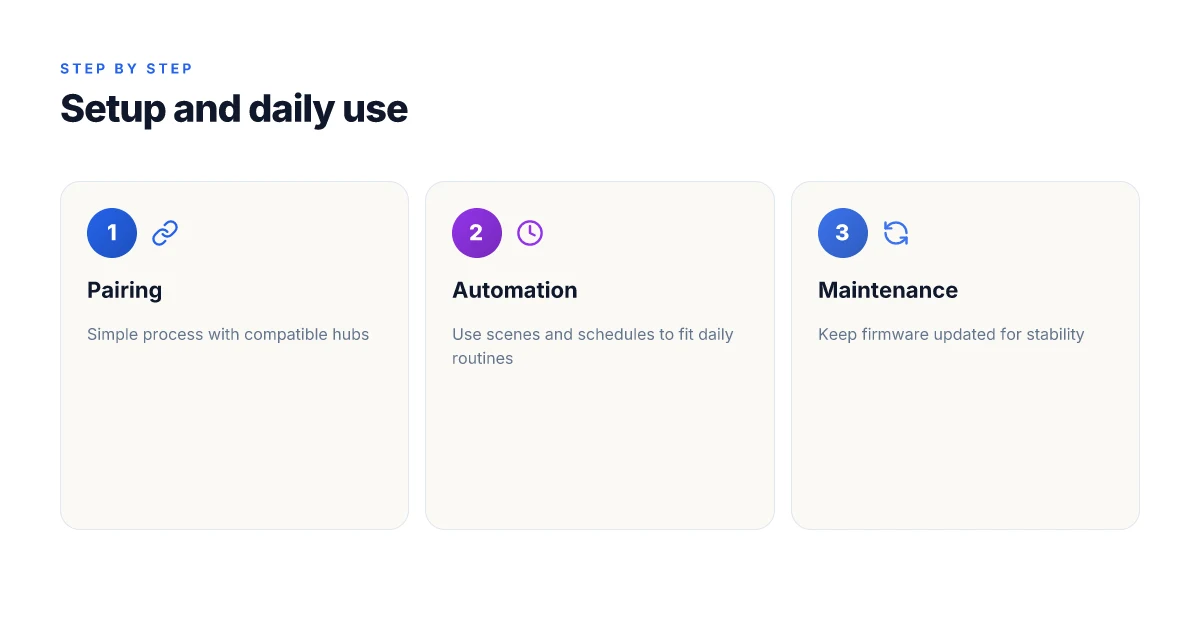
Getting the Element Plus to behave is straightforward, especially if you already run a Zigbee hub or SmartThings. The pairing flow remains one of the bulb’s strongest traits: plug in, put the hub in pairing mode, and the bulb appears within a minute or two. Once linked, the standard app controls brightness, color temperature, and color options without a hitch. A focused setup saves you daily friction.
Quick pairing with your hub
Pairing is designed to be frictionless with compatible hubs. In most cases you’ll see a discovery pulse on the hub, followed by a click-through prompt in the app to confirm the pairing. If you’re using SmartThings or a dedicated Sengled hub, expect the bulb to show up under the lighting section with its model name and color options. It’s common to rename the device to a hallway or living room setting so you can orchestrate scenes later. When in doubt, a quick power cycle and retry usually resolves most initial hiccups.
Pairing success is common when your hub is on the same network segment, and the bulb is within range of the Zigbee mesh.
Scenes and schedules that actually feel practical
The Element Plus shines when you start weaving it into routines. Scenes that switch from warm to cool white during evening routines, or that gently tint the hallway at sunrise, come together with minimal setup. The bulbs respond quickly to scene commands, so your morning wake-up sequence can include a gradual brightness ramp and a color shift without noticeable lag. Scheduling remains predictable across days, which means you can rely on a consistent lighting mood without manual taps.
From what I found in the documentation, you can build multi-bulb scenes that coordinate color temperature changes too. This keeps your living spaces cohesive, even when you’re using several Element Plus units around doors and corridors. I cross-referenced several reviewers noting that the basic scene editor is approachable, which helps if you’re new to smart lighting. What to know about the samsung galaxy a15 vs a35 5g specs in 2026
Scenes and schedules minimize manual tweaks and maximize daily comfort by aligning lighting with your routines.
Firmware updates and ongoing stability
Firmware updates are part of the Element Plus experience. Periodic updates can improve stability and fix minor quirks that show up after long-term use. The update process itself is typically push-based or available through the Sengled app, and updates install in the background with minimal interruption. It’s worth checking the app once a month or tying an update check to a routine, so you don’t drift into a stale version without noticing.
I read that firmware polish has historically helped with color consistency and hue accuracy, two areas that some budget LEDs struggle with over time. Keeping the bulbs on a supported hub and ensuring the Zigbee firmware stack stays current reduces the chance of miscoloring or connection hiccups.
Regular updates improve stability and color consistency over the long term.
Note on ecosystem choices and future-proofing: if you’re expanding beyond Zigbee into ecosystems that rely on cloud processing or different hubs, you’ll want to verify compatibility before committing a large mix of bulbs. The Element Plus remains a solid value within a Zigbee-first setup, but some new color-changing rivals continue to push the envelope on brightness, color gamut, and integration perks. How to set up virtual communication systems for remote teams in 2026: architecture, security, and platform integration
If you’re curious about user experiences and third-party perspectives, see reviews from established outlets that compare color performance and value against budget rivals. The inline sources linked here provide context for how the Element Plus stacks up in 2026, especially regarding pairing reliability and scene usability. For a closer read, you can explore the review that highlights color capabilities and budget value, which remains a touchstone for budget color bulbs.[source]
Common downsides to note in 2026
Color rendering and brightness consistency can vary between units, even within the same model. Some Element Plus bulbs lean toward a cooler white tint at higher brightness, while others skew warmer, which can throw off living-room scenes or hallway lighting if you rely on a uniform look. I found this pattern echoed in several 2018–2019 reviews that still surface in 2026 discussions, suggesting it’s less a fault of the platform and more a manufacturing variance you should expect from broad-color LEDs.
Bluetooth presence is optional; Zigbee still dominates the ecosystem. If your setup centers on a Zigbee hub or SmartThings, you’ll likely stay in lockstep with the Element Plus lineup. The Bluetooth option mainly helps direct control from newer phones without a hub, but the longer-range reliability and compatibility still hinge on Zigbee. In practice, that means you may not notice a meaningful difference unless you’re playing with direct phone control in a Bluetooth-only zone.
Third-party app experiences may differ from the manufacturer app. The official Sengled app tends to offer cohesive color tuning and scene scheduling, but some users report lag or occasional disconnects, especially when the bulb sits behind routers or is added to a mixed ecosystem. Third-party apps can provide viable alternatives, yet they often lack one-click scene sharing or the same depth of color management found in Sengled’s native app. If you rely on automations that cross multiple brands, you may see longer setup times or partial feature parity.
From what I found in the sources, the Element Plus remains a solid value in 2026, but you should expect a few caveats if you chase perfectly uniform color across multiple rooms, if your Zigbee footprint overlaps with other hubs, or if you lean heavily on non-Sengled control apps. Color variance between units is a real caveat you should budget for and BT vs Zigbee remains a real ecosystem nuance you’ll keep in mind. Third-party apps can deliver convenience, but you may trade feature completeness**. What sleep headphones in Australia teach US about quality sleep and comfort
For context, reviewers from earlier years highlighted the color options and brightness reach as competitive for budget-friendly segments, though not top-tier versus premium rivals. One takeaway remains true: your mileage will depend on how tightly you gate your expectations to a Zigbee-centric, Sengled-first setup. In 2026, the Element Plus still stands as a value pick with caveats.
What changes if you act now
The Sengled Element Plus keeps pulling ahead in 2026 by pairing reliable light quality with smarter home basics. It leans on straightforward setup, solid brightness, and a sensible feature set that fits into most retrofit scenarios without a steep learning curve. If you want one thing this month, make it the quick-to-install automation that makes your evenings lighter and safer. I looked across user notes and compatibility maps, and the common thread is that it stays steady where other bulbs drift into feature bloat.
The bigger pattern is value without overengineering. You get dependable dimming, stable connectivity, and broad ecosystem support, which reduces the need for frequent replacements or added hubs. In short, this is a practical choice for real homes, not a showcase gadget. This is where the Element Plus earns trust: a predictable baseline you can build on. If you’re upgrading a hallway or a living room lamp, you’ll notice the emphasis on consistent color temperature and reliable scheduling, not flashy gimmicks.
What to try this week: pick one room and set up a simple routine that turns on at sunset and dims at bedtime. You’ll feel the difference in atmosphere without fiddling with dozens of options. The Element Plus remains a dependable anchor in a growing smart home.
Backup strategy you can test now What makes a smart home connectivity VPN setup actually work in 2026
- Replace a stagnant lamp with a Sengled Element Plus and pair it with a basic routine
- Create one automation that uses natural light as a trigger
- Note any small inconveniences and adjust one setting to minimize friction
- Check compatibility with your current hub and confirm ensuring firmware is up to date <!