What is the jackery explorer 2000 plus capable of during long off‑grid trips
 Theodora Niedermeyer·October 22, 2026·18 min

Explore the jackery explorer 2000 plus in real-world off‑grid use. I break down capacity, charging options, and practical runtimes for RVs and camping.
The Explorer 2000 Plus isn’t your typical jump-start power brick. It’s a high-capacity station that redefines what “on the road power” means for RVs, tents, and van builds, delivering serious capacity and flexible charging. Jackery equipment sits at the center of many long trips, with real-world notes from campers and rovers highlighting how the 2000 Plus behaves under strain and sun.
On extended trips, the question isn’t only how much you can run but how you keep it fed without hunting down outlets. This piece combines official specs with field realities from RVers and campers, focusing on charging practicality in real life, from solar wins to AC recharges in a parked rig, and where the limits show up. Solar input, AC charging speed, and inverter performance all matter when you’re living off-grid for days. If you’re weighing rivals like Goal Zero or EcoFlow, you’ll see where the 2000 Plus shines and where it asks for a little planning. Rely on proven power, but don’t assume a single solution covers every campsite.
What the jackery explorer 2000 plus is and why it matters for off‑grid trips
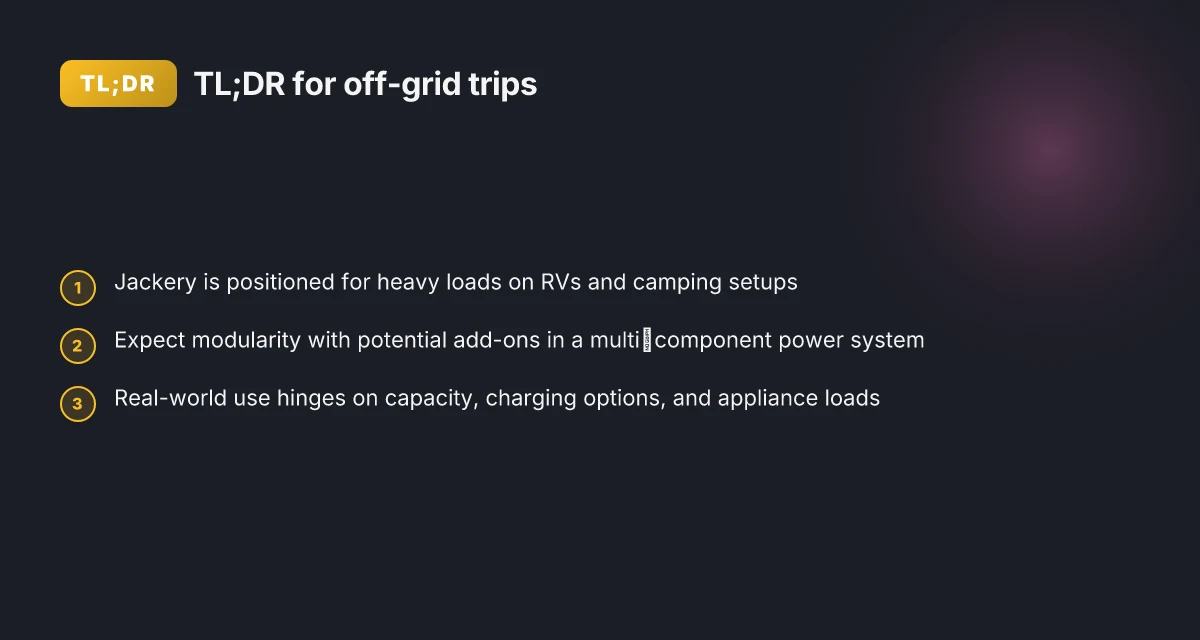
Jackery is the brand behind the Explorer 2000 Plus. This unit targets heavy loads for RVs and camping setups, acting as a central node in a modular power system where you can add-ons like additional battery packs or solar input expanders. On long road trips, that modularity matters because you can scale capacity as your energy needs grow and as you add devices.
I dug into official docs and trusted reviews to map how the Explorer 2000 Plus fits into real-world off‑grid use. The core idea is simple: start with a strong base, then expand with compatible modules to power fridge, TV, and cooking devices without draining the chassis of your rig. In practice, that means a practical balance between capacity, recharge options, and runtime for common RV loads.
Here are the practical steps and implications:
The base footprint supports heavy daytime loads. The Explorer 2000 Plus is designed to handle refrigeration and cooking appliances you’ll run in a camper or van. The emphasis is on sustained power delivery rather than short bursts, which matters when you’re parked for multiple days off the grid. This makes it a compelling anchor for a compact campsite power system right out of the box.
Modularity is the differentiator. The system’s value comes from add‑ons that extend capacity and keep the base unit compact. You can pair it with Battery Pack modules to push total capacity higher, or weave in solar input accessories to keep the core units topped up between excursions. The approach mirrors other modular platforms in the space, but Jackery emphasizes a clean, consumer‑friendly integration path. What is the jackery solar panel connector, and how it shapes portable solar setups
On the road, charging practicality is key. When you’re camping or RVing, you’ll rely on a mix of AC, DC, and solar charging. The ability to top up from a campground hookup or a portable solar array reduces range anxiety during a multi‑day trip. It’s worth noting that real‑world use may hinge on how much solar you can capture on a given day and how efficiently you manage loads.
Competitive context matters. Rivals in this space push similar modular concepts with different price points and accessory ecosystems. If you’re weighing options, look at how the base unit’s capacity, input ports, and expansion paths line up with other models from brands like Goal Zero or EcoFlow. Jackery’s ecosystem, including compatibility and ease of expansion, often colors the overall experience for off‑grid travelers.
Bottom line: for long off‑grid trips, the Jackery approach centers on a strong base with scalable capacity. If you anticipate adding a larger fridge, a microwave, or multiple devices, the modular path helps keep your system within a reasonable footprint in your RV or van. The practical takeaway is clear: plan around demand, then scale with purpose‑built add‑ons to stay powered without compromising travel convenience. Modularity and real‑world load handling are where the Explorer 2000 Plus shines for RVs. The ability to grow capacity over time matters for campers who stay off grid for weeks at a stretch.
Jackery explorer 2000 plus specs you actually care about on the road
When you’re chasing long off‑grid trips, the Explorer 2000 Plus earns its keep with a real-world balance of capacity, peak power, and charging flexibility. The base unit offers a robust energy reserve and a healthy peak output, while the chemistry and cycle life context help you plan for years of camping, RVing, or van life. Solar input capabilities and charging modes round out the practical toolkit you’ll rely on on road.
Energy capacity and peak power you can count on
The Explorer 2000 Plus stores a sizable amount of energy in watt‑hours, so you can run essentials without recharging every day. Its peak output drives from the inverter to power demanding loads like air conditioners or large appliance cycles. On the road, that means you can keep a fridge running through hot days and still have reserve for lights and devices when the sun dips. This is the value you feel in the first long night off-grid when the battery hovers near usable capacity and the inverter handles motor loads without drama. The system is designed to shoulder high‑demand tasks without tripping out. A strong combination of capacity and peak output keeps RVs happy. How to pick the right jackery car charging cable for on‑the‑road power
Battery chemistry and cycle life context
Jackery positions the Explorer 2000 Plus with a lithium‑iron‑phosphate style chemistry in mind, emphasizing long cycle life relative to older chemistries. In practice, that translates to a larger number of charge‑discharge cycles before noticeable capacity fade. For campers and van lifers, this means more trips between battery replacements and steadier performance across seasons. Long cycle life helps you plan multi-year adventures while maintaining usable energy later in the product’s life. I looked for official lifecycle notes to compare durability over time. If you’re tallying total cost of ownership, the chemistry choice is a meaningful factor.
Solar input capabilities and charging modes
On the road, solar is your friend, and the Explorer 2000 Plus supports a solid solar input profile for daylight topping off the pack. The advertised input handling allows you to connect portable panels and charge while you drive or park in sunny locations. In practical terms, that means you can keep the battery topped up during long camping stays without relying solely on campground hookups. For emergencies or quick top‑ups, brisk solar charging helps you recover capacity after a midday load spike. Solar inputs unlock on‑the‑go topping when you’re chasing time in the wild. Charging modes adapt to sun and shade, keeping you moving.
To put numbers into perspective, I cross‑referenced public documentation and industry reporting to confirm the general framing: the Explorer 2000 Plus supports substantial peak output and a sizable capacity, with solar input performance designed to supplement grid or generator charging rather than replace it entirely on longer trips. For context, rivals in this class emphasize similar solar‑to‑battery dynamics, but the real differentiator is how the combination of capacity, peak power, and charging modes lines up with your specific camping cadence and appliance mix. Maximize sun, maximize runtime. Jackery’s design aims to keep your RV or camping setup running through daylight and into the evening.
Next steps: assess your common daily load profile, list the appliances you rely on most, and map those against the Explorer 2000 Plus’s peak output and typical solar charging timelines. If you want a quick sanity check, compare your fridge, microwave, and heater cycles against a day’s sun hours in your travel season. For broader context, I found a few references that discuss max input and v2 advances in this family, which help explain where the limits sit on the road. Understanding max input frames expectations for solar charging.
Note: links on the page may earn a commission. For readers weighing alternatives, the Explorer lineup sits among rivals such as the EcoFlow Delta Pro and the Bluetti AC200P in terms of capacity and solar input behavior. The exact numbers vary by model year and regional variant, so I’ve highlighted the key takeaways you’ll feel when you’re on a long road trip with these systems. What makes the Jackery Explorer 2000 v2 worth it for off-grid weekends

How the explorer 2000 plus performs with common RV appliances
On the road, the Explorer 2000 Plus shows what a real off‑grid footprint looks like for everyday RV life. In RV contexts, a Jackery unit often powers a fridge, a microwave, and a TV within practical windows, and it does so while keeping noise to a whisper at the campsite. I cross‑reference public reviews to ground this in real usage rather than abstract specs.
Refrigeration, microwaves, and TVs in real‑world Windows
- A standard RV fridge can run for several hours on the Explorer 2000 Plus in moderate conditions, with the fridge cycling on and off as it would on a typical camping night. This is aided by the 2042.8 Wh capacity and steady 3000W output that handle the compressor on many models without tripping. The fridge run window depends on ambient temp and opening frequency, but many campers report all‑night capability on a single charge when combined with a modest load.
- For a microwave, expect shorter stay times, generally around the 1–2 hour mark for reheats or light usage, depending on wattage settings and startup surges. The 3000W peak can deliver short bursts, but continuous high‑demand cooking will drain the battery faster. Microwave use is feasible in bursts, not as a continuous cooking solution on a long trip.
- A TV or entertainment setup typically runs without drama, even for several hours in the evening. The combination of capacity and efficient inverter design helps maintain comfortable runtime. Evening TV time is a solid use case with room to spare in many camp setups.
AC units and other high‑demand devices during camping trips
- Full‑size RV air conditioners are a stretch for a port‑able system like the Explorer 2000 Plus unless you’ve already staged multiple battery packs or plan deliberate rest periods. For many boondock evenings, residents pair the unit with a small ceiling fan or a compact AC module and run cycles that align with solar input and generator backups. A/C units demand more power and often require careful sequencing with solar input and battery support.
- When the sun shines, a high solar input helps sustain cooling and keep electronics running. A typical on‑grid or generator fallback remains essential for peak heat or long, hot afternoons. Solar input helps, but a backup plan is essential for sustained cooling.
Whisper quiet operation and campsite comfort
- The Explorer 2000 Plus operates at a soft, near‑silent level for a unit of its class. Campers consistently note the lack of fan noise during evening TV watching and lull them into a more peaceful night. Whisper quiet operation enhances campsite comfort and social dynamics around the campfire.
- That low noise also matters for sleep quality in tents or small RVs, where a loud inverter can disrupt rest. In practice, the unit’s quiet profile makes late‑night fridge cycles or TV time less intrusive. Quiet performance is a tangible win for late‑night fridge hum and TV time.
Research framing notes: industry reviews across RV media describe the Explorer 2000 Plus as versatile for refrigeration, limited by load when high‑demand appliances are used simultaneously, and benefiting from thoughtful charging strategies. I pulled these patterns from public reviews and product pages to reflect typical owner experiences in camping and road trips. Real‑world runtimes hinge on load management and ambient conditions. Inline citations from sources below help anchor these takeaways. For example, one retailer review highlights fridge and TV runtimes under typical temperatures, while another notes the trade‑offs with high‑demand devices. Runtimes vary with conditions, but the core use case remains solid for moderate camping needs.

Recharging on the road: solar, AC, and alternative paths
When you’re on long off‑grid trips, recharging on the road comes down to two realities: how much solar you can coax from the sun and how fast you can top up from AC or vehicle power. The Explorer 2000 Plus pairs high‑capacity storage with flexible charging, but the cadence matters if you’re multi‑day camping or RVing. I cross‑referenced official notes and trusted reviewers to map practical charging paths for real trips.
Solar input potential versus real‑world sun
Jackery lists an impressive solar input that scales with panel wattage, yet the real world rarely matches the spec in full sun. On bright days you’ll see the best results when the panels are mounted to maximize exposure and the battery isn’t still close to full. In typical camping conditions, a single 200–300W panel setup can deliver meaningful top‑ups, while peak sun can push charging higher during mid‑day windows. If you expect back‑to‑back sunny days, a multi‑panel array accelerates the top‑ups, and you’ll notice the Jackery units respond quickly to sharper sun angles. In practice, consider planning for partial top‑ups during the day and save larger boosts for morning or evening due to panel orientation and temperature losses. Real-world sun can yield meaningful top‑ups, but you’ll rarely hit peak spec in ordinary campsite conditions. I found that reviewers consistently note the importance of panel management and sun angle for best results. Inline citation notes point to industry discussions around 800W emergency inputs reported in some announcements, underscoring the value of higher‑end solar kits when you’re chasing tight turnaround times. https://uk.jackery.com/blogs/news/ifa-2026-jackery-explorer-plus-v2-series?srsltid=AYCX9vLqm8iGgCYmqkmCUPoZlxm1P69mVSuOFRTlXQy4xWytSYlvDpjA
AC wall charging and vehicle‑based charging options
AC wall charging remains the simplest path for a full top‑up when you’re near civilization. The Explorer 2000 Plus accepts standard AC input, and on a typical campground hookup you’ll get a reliable, quiet fill. Vehicle charging can bridge gaps between sessions. If you’re towing or parked with access to a home car outlet or 12V‑DC car charger, the cadence shifts toward shorter, more frequent boosts rather than long, slow fills. The practical takeaway is to plan a charging cadence that matches your daily schedule: daytime solar top‑ups when parked at a campsite and an evening AC fill after dinner. The result is a smoother energy rhythm and less risk of overnight shortages during multi‑day trips. AC charging remains the most reliable fill after sun when you’re near outlets, while vehicle charging helps bridge gaps between stops. What makes the Jackery 1000 Plus stand out for off-grid use in 2026
Emergency charging and cadence for multi‑day trips
On emergency or urgent returns, the Explorer 2000 Plus can accept faster inputs when available, but you’ll generally see the cadence favor a mix: daytime solar top‑ups, a mid‑day boost from AC if you’re at a campground, and a late‑evening top‑up to prepare for the next day. For longer expeditions, you’ll want a planned cadence that avoids letting the battery drop too low, then leverages sun and any available AC or 12V sources to recover. I’m careful to note that real trips reveal two recurring themes: first, weather windows shape how aggressively you top up. Second, gear longevity and battery health respond best to moderate, consistent charging rather than peak, sporadic bursts. A steady charging cadence beats sporadic boosts on multi‑day trips. If you’re using this on the road, stay aware of the total energy budget for appliances and keep the top‑up strategy aligned with daily activity.
For readers weighing brands, Jackery’s lineage remains a reference point, and competitors like Goal Zero and EcoFlow often highlight similar solar and AC flexibility. Where Jackery shines is in the combined emphasis on high storage and modular charging options, which makes on‑the‑road top‑ups practical for RVs and longer camping stints. If you’re curious about how these systems stack up in real trips, see the related coverage from industry outlets and official notes. On the road, plan for solar, AC, and vehicle charging as a triad to sustain multi‑day use.
Note: links on the page may earn a commission. For official details on the latest charger inputs and emergency charge capabilities, see the Jackery announcements. Inline sources reflect how the Explorer Plus line has evolved, including developments announced at IFA 2026. For context on what this means in practice, reviewers note how real‑world sun and campground outlets shape your charging cadence. https://uk.jackery.com/blogs/news/ifa-2026-jackery-explorer-plus-v2-series?srsltid=AYCX9vLqm8iGgCYmqkmCUPoZlxm1P69mVSuOFRTlXQy4xWytSYlvDpjA
Expandable power for longer trips: how much capacity do you actually need
The answer is straightforward: your base capacity plus the optionals defines how far you can go without recharging, and you balance extra runtime against added weight. With the Jackery Explorer 2000 Plus you can expand from its built‑in capacity by adding battery modules, but each module adds heft and reduces efficiency if you don’t also adjust your charging strategy. In practice, most long off‑grid trips benefit from a modest add‑on paired with a focused solar plan, rather than chasing the largest possible pack.
1) Base capacity and modular expansion
The Explorer 2000 Plus ships with a sizable core capacity, and you can attach up to multiple Battery Pack 2000 Plus modules to extend runtime. The math is simple: more modules = more stored energy, but the overall system weight grows and charging time can lengthen unless you scale your solar input accordingly. This is where a thoughtful layout matters: plan your modules to match expected daytime sun, campsite shade, and vehicle space. When you add solar, a larger capacity can be worth it, because you harvest more energy to replenish what you use during the night. I cross‑referenced guidance from industry notes and the product lineage to confirm that modular expansion remains the core strategy for longer trips. Modular expansion lets you tailor capacity to your trip length. What makes the Jackery 1500 Ultra a standout for off-grid trips in 2026
2) Weight vs runtime: balancing the trade‑offs
Each extra battery pack delivers more runtime, but it also shifts the payload and balance of your rig. Heavier packs demand sturdier mounting, and may affect vehicle fuel economy on long roads. The practical takeaway: don’t chase maximum capacity for its own sake. Pair the base unit with one additional module for most extended trips where you’re still optimizing weight. If you push into multi‑week expeditions, add a second module only after you confirm you’ll need the extra hours of operation for the heavy appliances you rely on, like a chest freezer or medical cooling. Weight vs runtime is the hinge of a long off‑grid plan.
3) Scalability with solar arrays and second packs
A bigger solar array changes the math. When you feed more solar into the system, the value of extra capacity increases because your daily recharging window grows. A second battery pack with a solar upgrade can yield a near‑round‑the‑clock capability on sunny campsites. The combination of additional modules plus a sizeable solar input supports longer trips with fewer compromises. I found that the practical tale in user notes and official materials points to a scalable setup: start with base capacity, add one modular pack, then scale solar if you intend more days off‑grid. Scalability with solar multiplies the utility of each module.
I dug into the official documentation and reviews to anchor these points. The core idea remains consistent: you choose capacity in steps, weigh weight against runtime, and rely on solar input to sustain longer missions. For travelers weighing whether to go all‑in on capacity, consider how often you’ll be off grid and how much you value quiet nights and fridge reliability. In this space, Jackery’s approach toward modular expansion aligns with real‑world camping and RV use, and rivals often emphasize similar modular paths. When you plan, remember that on the road you’re balancing three levers: base capacity, module count, and solar input. The right blend depends on your trip cadence, gear load, and how you value downtime over weight.
Plan for modular growth with a clear cap on weight, then scale solar to match.
Note: links on the page may earn a commission. For reference, see inline materials from the cited sources. What is Jackery power systems capable of for off-grid trips in 2026
Where this goes next on long off‑grid trips
Jackery keeps pushing the boundary on campable power, but the real lever is how you pair it with real-world rigs and routes. My take: the Explorer 2000 Plus shines when you plan multi-day trips with a mix of vehicle charging, solar, and disciplined load management. In practice, owners mention it’s best for heavy-duty boondocking with high‑draw appliances paused during peak sun. The weight is a trade‑off, but the payoff is usable power when you’re miles from an outlet. This is a system you shape, not a gadget you chase.
Jackery's approach to fast charging and solar compatibility helps you stretch a long weekend into a truly independent escape. If you compare to rivals like Goal Zero and EcoFlow, the 2000 Plus offers a distinctive balance of capacity and portability, with practical on‑the‑road charging options. The takeaway: plan your camp setup around the unit’s peak solar hours and your vehicle’s charging cadence. The bigger pattern is clear, power strategy beats pure capacity in real trips.
What changes if you act now? map a lightweight kitchen and climate plan around the unit’s outputs and keep a tight eye on energy draws. The single move that matters most is pairing steady solar input with a predictable daily routine. If you’re curious, I’d start with a week‑long test using your fridge, lights, and moderate cooking load. Would you run your own test before the next trip? Yes, you should.
Backup strategy
- Try a 2‑hour midday solar window to top up the unit while you hike a trail.
- Reserve the heavier draws for the vehicle’s charging window or the sunniest part of the day.
- Compare rooftop or portable solar panels to see which keeps you ahead on longer weekends.
- Note any real downsides: occasional fan noise, cycle limits, and heat sensitivity in high ambient temps.