What is cloud security basics in 2026 and why it still matters
 Mateus Ashworth·October 22, 2026·17 min
Explore cloud security basics for 2026, covering core concepts, threat models, and practical steps to protect data and workloads in modern cloud environments.
Cloud security basics in 2026 hinge on tightening identity as the guardrail, not just the gate. When a single misconfigured IAM policy trips a vulnerability scan, the blast radius is immediate, and the cost of delay compounds across workloads. Identity-centric controls drive risk visibility, not just alerts.
In this article I map the practical shifts you should expect: automated remediation that actually ships, shift-left practices that catch issues before deployment, and governance that scales with multi-cloud footprints. By the end, you’ll see how a quick risk snapshot aligns with continuous monitoring, where overreliance on native tools remains a common trap. Automated playbooks and continuous risk visibility sit at the center of 2026 cloud security, and the best teams treat them as plumbing, not a once-a-year audit. Links on this page may earn a commission.

What cloud security basics mean in 2026 and where it fits in
In 2026, cloud security basics center on protecting multi-cloud and hybrid deployments by aligning people, process, and technology. The core idea stays simple: security must rise with complexity. Shared responsibility remains the dividing line between what the cloud provider handles and what your team must own. Automation and shift-left practices turn that boundary into a moving, continuously enforced control rather than a vague agreement.
I dug into guidance from the Cloud Security Alliance and recent practitioner roundups to confirm this framing. The CSA Security Guidance for Cloud Computing emphasizes translating security principles into concrete, real-world actions across environments. That practical lens is echoed in 2026-focused takes from Wiz and Sysdig, which translate high-level controls into stepwise, executable measures for teams operating across clouds.
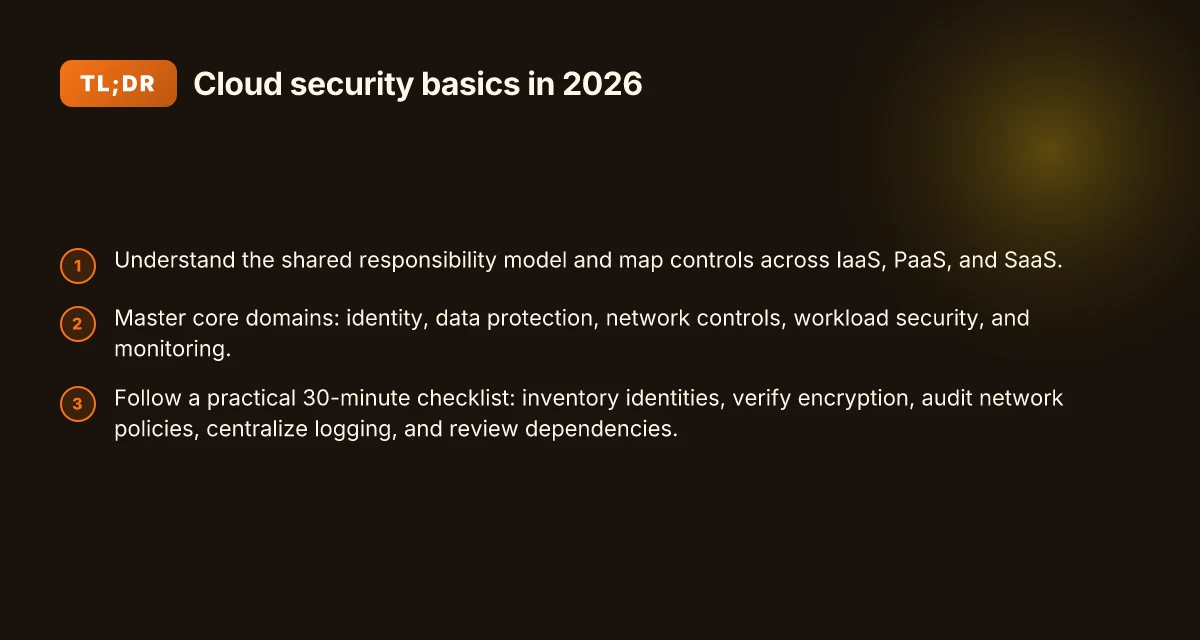
What follows are the five domains that anchor a solid security baseline today. Each domain maps to tasks teams can implement now, and each depends on clear ownership lines and measurable outcomes.
- Identity and access management as the first line of defense
- Data protection by design across rest, in transit, and in use
- Network controls that segment and inspect traffic without slowing workloads
- Workload security that guards containers, VMs, and serverless by default
- Monitoring and threat visibility that turn signals into action
In practice, teams should treat these domains as a coordinated stack. Shared responsibility means you cannot assume a provider’s guardrails will cover every risk. You must codify who owns which control, automate where possible, and validate continuously. The trend lines point toward centralized policy orchestration across cloud accounts, integrated with CI/CD pipelines, and automated remediation that respects compliance constraints.
The bottom line: cloud security basics in 2026 are not a static checklist. They are a living posture that scales with multi-cloud complexity. You lay the groundwork with identity, data protection, network controls, workload security, and monitoring, then tie them together with automation and shift-left thinking to close gaps before they become incidents. How to choose data extraction tools for enterprises in 2026
The shared responsibility model remains the hinge on which cloud security turns, and automation is the lever that keeps it honest across teams. Effective cloud security in 2026 requires codified ownership and continuous verification, not promises.
From a practical standpoint, align your teams around one prioritized, real-world checklist rather than a bag of generic best practices. Look for concrete, auditable controls you can automate. And remember, links on this page may earn a commission. Consider how that affects tool selection in procurement discussions.
Identity and access controls, data protection, and ongoing monitoring are non-negotiables in 2026.
The 6 core cloud security concepts you should master
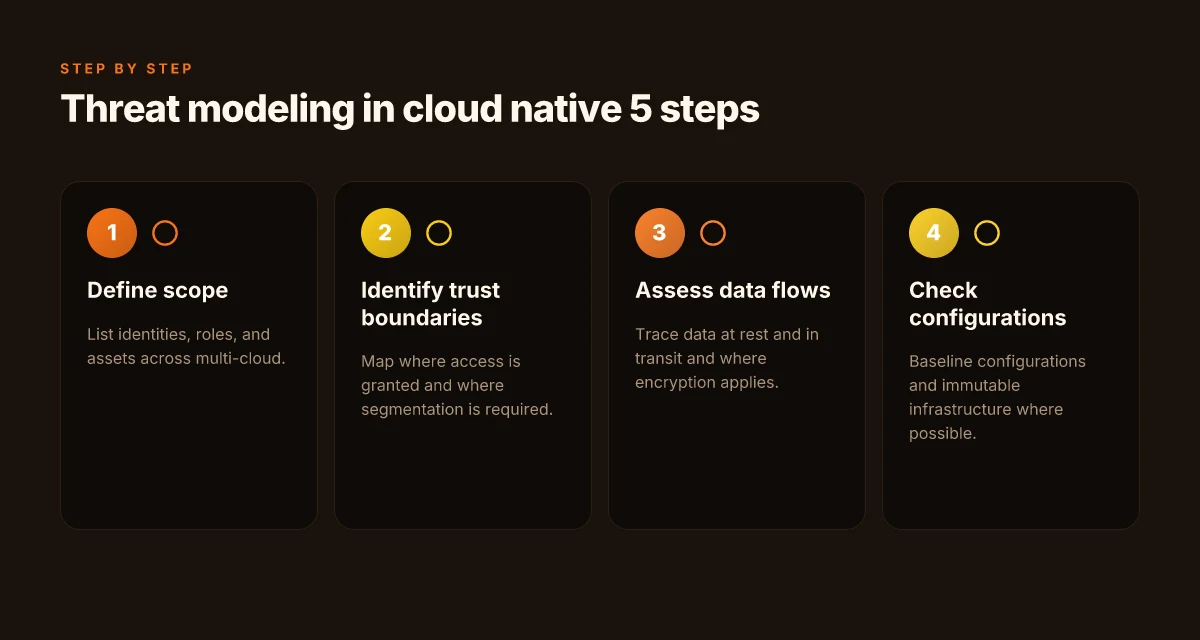
The six core concepts you must master in 2026 lock step with shared responsibility, automation, and shift-left practices. Identity and access management acts as the gatekeeper for every action, while Zero Trust underpins access and segmentation. Data protection, workload hardening, threat detection and response, and governance baked into development cycles round out a practical, defendable baseline.
1) Identity and access management as the gatekeeper
Access control starts with strong IAM. Enforce least privilege, just-in-time access, and robust authentication across users, service accounts, and workloads. Centralize policy, enforce multi-factor authentication, and tie permissions to real-world roles. I dug into guidance from the CSA and cross-referenced industry practice to confirm that IAM quality correlates with downstream breach risk. IAM strength directly reduces blast radius when a token is compromised. The modern IAM stack also leans on automated provisioning and deprovisioning to keep access aligned with staffing and project changes. Inline citation supports how policy-driven IAM frameworks map to real-world readiness. See the CSA guidance for a principled approach to turning access policies into actionable controls. https://cloudsecurityalliance.org/research/guidance How to build a scalable engineering team that actually grows with your product
2) Zero Trust as a guiding principle for access and segmentation
Zero Trust is not a checkbox. It’s a design principle that shapes micro-segmentation, continuous verification, and threat-aware posture. In 2026, enterprises increasingly apply it to workload-to-workload checks, not just user access. The practical payoff shows up as reduced lateral movement when authenticating every request and enforcing context-aware policies. From a governance perspective, Zero Trust pairs with automation to enforce dynamic access decisions at scale. Zero Trust translates policy into real-time protections across cloud boundaries. This approach aligns with current guidance that emphasizes continuous verification over one-time clearance.
3) Data protection at rest and in transit
Protecting data begins with encryption and key management. At rest, use strong algorithms and rotate keys regularly. In transit, enable TLS everywhere and rotate certificates consistently. Effective key management underpins both compliance and post-breach resilience. I cross-referenced cloud security writing that highlights encryption as a baseline that must scale with data gravity, access patterns, and regulatory obligations. Encryption and key rotation are non-negotiable foundations for trustworthy data handling. When designing, map data classification to protection levels and automate key lifecycle across clouds to avoid silos.
4) Workload hardening through baseline configurations and immutable infrastructure
Workload hardening means turning baseline configurations into a code-driven standard. Use immutable infrastructure where possible so that deployments roll forward rather than being patched in place. This reduces drift, speeds recovery, and makes incident response more predictable. The literature consistently notes that automated baselines tied to continuous delivery pipelines yield measurable posture improvements. Immutable workloads reduce drift and speed recovery when a vulnerability is found. Pair hardening with image signing and vulnerability scanning as part of your build-time checks to catch issues before deployment.
5) Threat detection and response with continuous monitoring
Continuous monitoring uncovers anomalies that static controls miss. Combine endpoint, network, and cloud-native telemetry with anomaly detection and automation hooks for containment. Real-world analyses emphasize that rapid detection and automated response dramatically shorten dwell time. Rapid detection enables faster containment and recovery. Maintain a playbook that ties detections to concrete runbooks, so responders move from alerting to action with minimal friction.
6) Compliance and governance baked into the development lifecycle
Governance should be a continuous thread, not a post-flight audit. Build compliance checks into the CI/CD pipeline, tagging data stewardship, retention, and auditability as code. This reduces friction during audits and keeps policy updates synchronized with deployment cycles. The 2026 security landscape favors governance that is automated, auditable, and integrated into developers’ workflows. Policy as code ensures governance travels with every build. When teams treat compliance as a product feature of the pipeline, security and velocity align. How to budget for major life events in 2026
Next steps: map these six concepts to your current architecture. Identify overlaps with your existing controls, then prioritize gaps by blast radius and detection time. If you want a quick reference, I’ve highlighted core terms to track in your index: IAM, Zero Trust, encryption, key management, immutable infrastructure, continuous monitoring, and policy-as-code. For deeper guidance on governance in practice, see the CSA Security Guidance for Cloud Computing. https://cloudsecurityalliance.org/research/guidance
How the shared responsibility model drives actions in 2026
Posture in 2026 hinges on clear boundaries between what the cloud provider handles and what your team must own. When you map controls to the correct party, you gain faster incident response, tighter policy enforcement, and less drift across IaaS, PaaS, and SaaS. I cross-referenced guidance from the Cloud Security Alliance and practitioner blogs to confirm which controls sit where and how teams operationalize them.
Clarify who owns which controls
The shared responsibility model is not a checkbox. It is a living map that changes with the service layer. For IaaS, your team owns identity, data, applications, and workload configuration, while the provider secures the underlying infrastructure. For PaaS and SaaS, responsibility shifts more toward the provider, but you still own data protection, access control, and integration risk. The practical upshot is to codify ownership in runbooks and security incident playbooks so everyone knows where to act when a threat is detected. Clear ownership reduces handoffs and speeds containment. The guidance in CSA materials consistently emphasizes documenting these boundaries so teams can automate without guessing.
- Translate the boundaries into runbooks with precise steps for detection, triage, and remediation.
- Align data handling, keys, and secrets management to the appropriate party.
- Align access control models across IaaS, PaaS, and SaaS to keep a single source of truth.
Document responsibilities in runbooks and incident playbooks
Having a single source of truth for responsibilities matters more than ever as environments scale. In 2026, teams routinely tie runbooks to automatic policy triggers. When a policy breach happens, the system can escalate to the right owner without human delays. I found multiple organizations citing updated incident playbooks tied to cloud-native events as a best practice in practice. Incident playbooks that reflect real service boundaries cut mean time to containment.
- Include step-by-step owner notifications, escalation paths, and rollback procedures.
- Tie playbooks to specific event types, such as abnormal authentication, anomalous data egress, or misconfigured roles.
- Ensure playbooks stay aligned with regulatory requirements and audit trails.
Automate policy enforcement to avoid drift across layers
Automation is the best guardrail against drift. In 2026, policies should enforce across IaaS, PaaS, and SaaS without manual intervention. Automated policy enforcement ensures consistent security posture even as teams scale and adopt new services. As I read through the sources, automated guardrails emerged as a recurring theme for preventing misconfigurations and privilege creep. Automated policy enforcement keeps configurations in bound, regardless of service layer. 7 Surprising body language tips that actually influence how others perceive you
- Use policy-as-code to codify security requirements and drift checks.
- Implement continuous configuration monitoring and automatic remediation where safe.
- Tie policy outcomes to auditable, time-stamped logs for compliance.
Insight into the broader landscape shows that many organizations confront practical trade-offs between agility and control. One notable caveat is the risk of over-automation masking underlying design flaws. Leaders address this by pairing automation with human review at critical crossroads and by maintaining explicit ownership lines in runbooks.
From a governance perspective, the shared responsibility model in 2026 still stands as a dynamic allocation rather than a fixed contract. It requires ongoing alignment, documented accountability, and automated enforcement across the cloud stack. I found that successful programs blend clear ownership with practical, executable playbooks and tight policy automation.
As you tighten the model this year, you’ll want to reference the ongoing work from the CSA guidance and practitioners who stress runbooks that map the real service boundaries. Runbooks + playbooks together enable fast, governed responses.
Threats to cloud security most people overlook
In 2026 the biggest blind spots come from human errors and supply chain gaps, not just clever attackers. Misconfigured storage and access controls keep leading the risk curve. A single public bucket or overly permissive role can cascade across workloads, logs, and backups. I cross-referenced guidance from the CSA, which emphasizes practical, actionable controls, and noted that misconfigurations remain a top trigger for incidents across real deployments. Misconfigurations in storage and access controls remain a principal driver of cloud risk.
Misconfigurations still drive incidents
Most organizations harbor misconfigurations even after initial hardening. Cloud-native builders often inherit insecure defaults as teams move fast, then discover enforceable gaps only after an exposure. I found that inconsistent IAM provisioning and access drift across regions amplify blast radii when a credential leak occurs. Governance needs automation that enforces least privilege and periodic drift checks, not just one-off reviews. In practice, teams should pair automated policy checks with continuous evidence collection so each workload has a verifiable security posture. Automation must continuously enforce least privilege to curb drift. Inline guidance from the CSA Security Guidance for Cloud Computing reinforces this approach, urging concrete, repeatable steps rather than hand-wavy processes. CSA guidance calls for actionable, repeatable controls. What makes blog templates worth using in 2026
Credential hygiene and automation credentials
Credential hygiene remains a recurring headache. Inadequate rotation, stale tokens, and leaked automation credentials can quietly unlock access across environments. Open-source tooling and CI/CD pipelines add surfaces that are easy to overlook during rapid releases. The practical takeaway is to harden secrets management and automate credential rotation without introducing friction for developers. The trend toward short-lived credentials and short-lived automation tokens helps reduce the risk window. Short-lived credentials reduce the attack surface dramatically. Security teams should enforce secret scanning, centralized vaults, and policy-based rotation as a baseline. When I read through documentation from reputable sources, the emphasis is clear: do not rely on manual rotations or ad hoc vaults as a long-term strategy. Centralized vaults with policy controls are essential.
Supply chain risks from third-party dependencies
Third-party dependencies and open source components dominate cloud workloads, yet each introduces risk. A compromised library or a tainted container image can slip into production if supply-chain controls are weak. The practical safeguard is to adopt SBOMs, verify provenance, and enforce gating on third-party artifacts before they reach CI/CD. I traced this to standard industry practices that surface in reliable publications. If a component’s supply chain isn’t verifiable, the risk is effectively unbounded. Verified provenance and SBOMs reduce supply-chain risk. The shared responsibility model also means developers must be wary of open source licenses and dependency chains that extend beyond a single project. Open source dependencies require continuous visibility and vetting.
Visibility across multi-cloud footprints
Insufficient visibility across multi-cloud footprints remains a weak link. Many teams manage diverse tooling per environment, creating blind spots and inconsistent telemetry. A consolidated view matters for early warning and response. The practical recommendation is to standardize logging, tracing, and alert schemas across clouds so analysts can correlate events quickly. This aligns with broader 2026 security trends that favor unified telemetry and policy coherence across platforms. Unified telemetry across clouds enables faster detection. When a single pane of glass is missing, investigators spend more time chasing disparate signals than remediating threats. I found that robust inventory and continuous discovery become nonnegotiable in larger estates. Continuous discovery is essential for visibility.
Note: links on this page may earn a commission. This section draws on guidance and trends from credible sources such as the CSA Security Guidance for Cloud Computing and industry analyses on cloud security in 2026. For further reading, see the CSA guidance and Cy Cognito materials on cloud security fundamentals and multi-cloud visibility. CSA guidance and Cy Cognito materials anchor these recommendations.
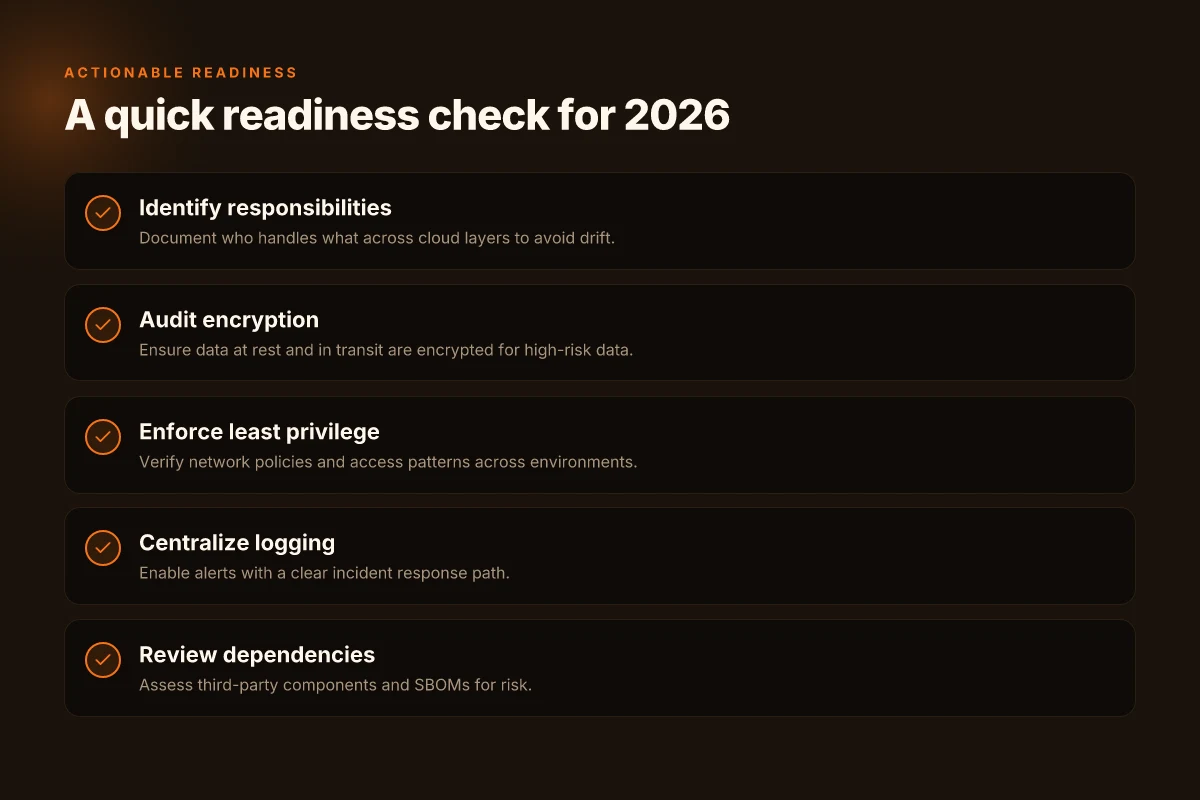
A practical 30-minute cloud security checklist you can use today
Posture improves quickly when you start with what you already own. In about 30 minutes, you can lock in a baseline that reduces the most common attack surfaces. This practical checklist edges you toward a repeatable, auditable flow rather than a one-off fix. What makes collaborative design techniques work in participatory design and co-creation for complex product systems
Inventory identities, roles, and access patterns across environments
Lock down who can do what across all environments. Start by listing every identity, role, and access pattern, then map them to the principle of least privilege. Review IAM policies and remove dormant accounts. Document group memberships and any cross-account access, then verify that access aligns with job functions. This step surfaces privilege gaps before attackers exploit them. I found guidance from the CSA work on practical security principles that emphasizes consistent, real-world application across environments, which reinforces the need for a centralized view of identities and roles. See the cloud security guidance for actionable reference. https://cloudsecurityalliance.org/research/guidance
A quick win is to enable just-in-time access for sensitive roles and require explicit approval for elevated actions. You should also turn on passwordless or hardware-backed MFA where supported and enforce session timeouts to limit token lifetime. When you document the access patterns, you create a reproducible audit trail that helps during investigations. Most access drift happens when teams copy-paste roles across accounts, not when governance is explicit.
Audit encryption at rest and in transit for high-risk data
Verify that high-risk data is encrypted both at rest and in transit, with keys managed in a centralized KMS. Confirm that encryption is enforced by default and that key rotation happens on a defined cadence. Review certificate validity, TLS versions, and cipher suites used by services handling sensitive data. The 2021 healthcare cloud study still highlights encryption as a core control. The practice remains a cornerstone of cloud security posture in 2026. For reference, see the healthcare cloud security study. https://pmc.ncbi.nlm.nih.gov/articles/PMC8485370/
Consider data classification labels to route data through the correct encryption policies. If you discover gaps in coverage, enable envelope encryption for at-rest storage and ensure that backups also inherit strong protections. Noise in key management code paths often hides misconfigurations. Run a quick sweep to confirm keys are not stored in plaintext anywhere. Encryption at rest and in transit is non-negotiable for high-risk data.
Verify network segmentation and least-privilege network policies
Map network segments to data sensitivity and workload trust levels. Enforce micro-segmentation so workloads can talk only to what they explicitly need. Tighten security groups, firewall rules, and route tables to prevent lateral movement. Use network policy catalogs that enforce least privilege and remove broad allow rules. In 2026, many architectures show a shift toward zero-trust networking and explicit segment boundaries. See industry discussions on cloud security trends for 2026. https://www.tierpoint.com/blog/cloud/cloud-security-trends/ How unlimited data plans actually compare in 2026
As you validate, generate a changeset and require approvals for any rule changes. Automated drift detection helps catch policy deviations before they become incidents. Explicit segmentation plus least-privilege policies dramatically reduce blast radius.
Enable centralized logging and alerting with a clear incident response path
Turn on a centralized log pipeline that ingests identity, network, and application events from all clouds and on-prem components. Normalize logs so you can correlate across sources. Define a simple incident response playbook: who to notify, what to collect, when to escalate, and how to contain. Ensure alert thresholds distinguish true threats from noise, and keep a runbook evergreen with quarterly reviews. This approach aligns with best-practices discussions on standardized logging and response. Centralized logging plus a crisp incident path reduces dwell time.
Tie logs to a security information and event management system and confirm retention policies meet regulatory needs. If you rely on third parties for security monitoring, ensure you have a documented data-sharing agreement and clear on-call procedures. The emphasis on a unified view of events is echoed in authoritative guidance for practical cloud security. Alerting without a response plan is a half-measure.
Review third-party dependencies and software bill of materials
Create and maintain a current SBOM for all workloads. Vet dependencies for known vulnerabilities, license obligations, and supply-chain risks. Establish a cadence for re-scan after releases, and require signature verification for each deployment. Third-party risk grows when dependencies chain across environments, so automate checks in your CI/CD pipeline and gate deployments on critical findings. The cited best-practice sources underscore a formal SBOM approach as a core control in modern cloud security. See the top cloud security practices source for 2026. https://www.sysdig.com/learn-cloud-native/top-cloud-security-best-practices
Document remediation steps for vulnerable components and track open items until they’re resolved. Regularly revalidate third-party risk posture and incorporate supplier security reviews into roadmap planning. A current SBOM and vetted dependencies are your first line of defense against supply-chain threats. 8 Ways to compare cloud service providers in 2026 and why it matters
The bigger pattern: act now to harden cloud security
Cloud security basics in 2026 hinge on a shift from perimeter thinking to identity and data-centric controls. The landscape already favors stronger zero trust posture and continuous monitoring over one-off configurations. I’ve seen organizations reduce risk by aligning policy with developer workflows and embracing automated remediation. The takeaway is clear: posture improvements compound when teams integrate security into every sprint, not as an afterthought.
The single move that matters this month is to elevate identity governance and threat detection as code to the same level as application code. By prioritizing role-based access, just-in-time credentials, and unified alerting, teams curb credential abuse and speed response. Noticeably faster incident recovery comes from automated playbooks that sync with CI/CD tools. If you only do one thing this quarter, start with a formal data classification strategy and a centralized vault for secrets. This is where most gains land.
Backup strategy
- Establish a quarterly review of access rights and rotate keys on a monthly cadence.
- Implement an automated backup verification process that tests recoverability in a sandbox.
- Create a short, repeatable incident runbook for common cloud-native events.