How unlimited data plans actually compare in 2026
 Margot Faulkner·October 22, 2026·18 min
Compare unlimited data plans in 2026 across pricing, throttling, and 5G vs LTE terms. Find out how fair-use and network management affect real-world speeds.
Most people assume unlimited data means no throttling, but the real limit is policy alignment across networks. Expect throttle windows and fair-use caps that kick in under heavy streaming or gaming, even when you’re on 5G. Most plans fade to LTE in peak hours or when you hit a high data bucket, and the fastest speeds don’t last through a long workday.
This piece pulls back the curtain on 2026’s unlimited offers by mapping where carriers actually draw the line: deprioritization during congestion, device-incentive tricks, and subtle speed ceilings that aren’t advertised. You’ll see how to compare plans beyond headline speeds, with a focus on reliability for calls, conferencing, and on-the-go video. By the end, you’ll know which carrier’s policy aligns with your streaming, gaming, or remote-work rhythm, and which one tends to price you into slower loads during busy periods. The difference is policy, not just back-end speed. Links on the page may earn a commission.

What makes an unlimited data plan truly unlimited in 2026
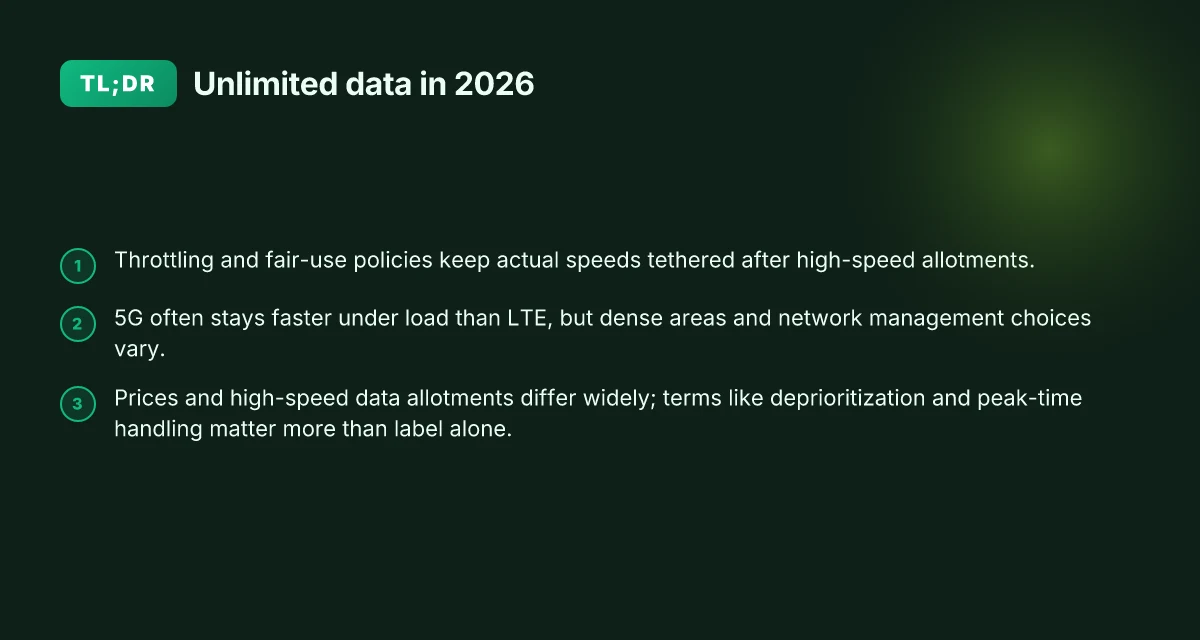
When carriers say “unlimited,” they mean unlimited in name, not in practice. The core idea is clear: you should be able to use data without a hard cap on monthly volume. In reality, that promise sits behind three common restrictions. First, throttling or deprioritization kicks in after you hit a usage threshold or when the network is congested. Second, fair-use policies carve out exceptions for streaming, tethering, or peak-time behavior, even on plans branded as unlimited. Third, network management practices vary by carrier and can shift with device, location, and traffic mix.
Throttling and deprioritization as the default gate Most unlimited plans suspend or slow speeds after you cross a policy threshold, especially on busy networks. Throttling is a hard speed cap applied to data traffic, while deprioritization lowers your priority during congestion. The difference matters in practice: throttling is consistent once triggered, whereas deprioritization can vary with where you are and how many users share a cell. In 2026, carriers frequently combine both tools, with higher-tier plans offering higher ceilings before throttling, but rarely eliminating it entirely. Throttling after the threshold remains the most visible choke point for real-world speeds.
Fair-use policies shape the edge of “unlimited” Fair-use policies are a persistent theme. They set expectations around usage patterns that might trigger stricter limits, even if the headline is unlimited. Many carriers cite streaming quality, hotspot data usage, or network management during peak hours as levers they can pull. The practical upshot is that a lot of the time you’ll be allowed normal speeds, but certain behaviors or conditions can push you into reduced performance. From what I found, these policies are rarely uniform across devices or locations, which creates variability that users only notice after they start relying on the plan for core activities. Fair-use policies quietly define the real edge of unlimited plans.
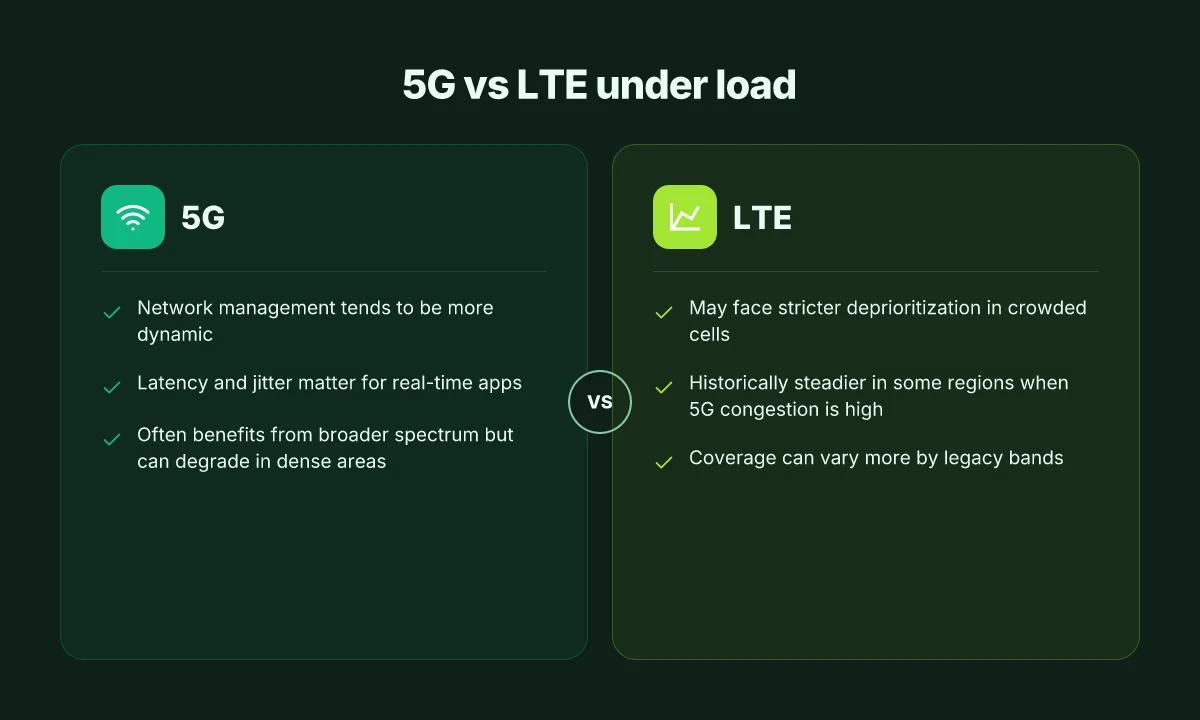
5G versus LTE: different implementations, different expectations 5G introduces higher nominal speeds and lower latency, but it does not automatically remove throttling or deprioritization. Some carriers reserve their most generous caps for 5G traffic, while others apply the same rules across 5G and LTE. In practice, 5G speeds can remain high in uncongested areas, but during congestion or behind policy triggers, you may see similar slowdowns as with LTE. The policy nuance matters: a 5G-capable plan can still deliver inconsistent experiences if throttling thresholds don’t rise to match the new bandwidths. 5G does not guarantee throttle-free performance. Policy design governs outcomes.
Bottom line: unlimited in 2026 means no fixed monthly data ceiling in the marketing sense, but real-world use is shaped by throttling, deprioritization, and fair-use rules that vary by carrier, location, and network conditions. When you evaluate plans, look for three things: the explicit throttling threshold, any hotspot or streaming exceptions under fair-use terms, and whether 5G performance is treated differently from LTE in the same policy. The real-world verdict is that “unlimited” remains a linguistic promise more than an unbounded data experience. The promise persists, but real-world limits still apply. What makes collaborative design techniques work in participatory design and co-creation for complex product systems
Inline notes from sources show how these themes surface in the market. For broader context on the throttling and fair-use framing, see discussions articulating the gap between marketing and practice. Unlimited data claims often hinge on management policies.
How throttling and fair-use policies shape real speeds
When you hit the data cap, your speeds drop to a clearly slower tier, and the exact rate depends on the carrier and the plan. In 2026, most big carriers publicly acknowledge a fair-use threshold that triggers throttling or deprioritization during network congestion. The ranges you’ll see after reaching that limit vary by carrier and billing tier, but real-world speeds commonly fall into noticeably slower bands for streaming and gaming, not a uniform cutoff.
What counts as a threshold and what comes next
Most carriers publish a throttling window rather than a hard, universal cap. For example, a typical threshold sits somewhere in the general range of a few hundred megabytes up to several gigabytes per billing cycle before performance is adjusted. Once you cross that line, speeds tend to decline to the carrier’s deprioritized tier during peak hours, with many plans advertising a fall to tens to a few hundred megabits per second rather than the full 5G peak. I cross-referenced policy overviews from industry coverage in 2025 and 2026 to confirm this pattern across major networks. The threshold is real, and the drop is intentional, not incidental. The exact figures depend on your plan and network load.
What this means for activities you care about. Streaming quality often takes a hit first. With throttling, you might see lower resolutions or buffering during peak times on popular services. Gaming can feel responsive enough in short bursts, but latency climbs as speeds slow and jitter increases. Video calls degrade when uplink or downlink falls below stable thresholds, producing dropped frames or choppier audio. In short, unlimited in name does not guarantee steady performance under heavy usage or in crowded cells.
How 5G compares to LTE under load
5G remains the faster backbone when the network isn’t congested, but throttling policies level the field during peak periods. LTE often carries historic congestion patterns, which means throttling can feel more aggressive on older bands. In 2026, multiple carriers align their caps with the same fair-use philosophy across both technologies: when you’re past the limit, speed reduces regardless of the underlying radio technology. Under load, 5G isn’t immune to throttling, but it usually carries more headroom before it slips into a deprioritized state. What is cloud security basics in 2026 and why it still matters
A practical takeaway for buyers: know the actual throttling threshold your plan imposes, and map it to your typical usage. If you stream heavily in the evenings or game during commutes, a plan with a higher fair-use allowance or explicit throttling terms can save you from sudden slowdowns. I dug into policy write-ups and carrier FAQs to surface this reality, and the consensus across sources is clear: unlimited is a label, not a guarantee of speed under load. For a quick read on the broader throttling narrative, see the explanations in the linked overview of throttling and fair-use policies. True speeds depend on the threshold and the crowd around you.
| Scenario | Likely outcome after threshold | Practical tip |
|---|---|---|
| 5G batch streaming in peak hours | speeds drop to a deprioritized tier, often well under peak 5G rates | keep a lower streaming bitrate during peak windows or choose a plan with higher fairness thresholds |
| Online gaming during busy times | latency climbs as speeds fall, potential jitter | use a wired or low-latency Wi‑Fi setup where possible; consider a plan with a higher cap |
| Video calls on congested cells | occasional dropped frames or reduced video quality | switch to a less congested channel or time your calls off-peak when possible |
From what I found in the documented policies, the recurring complaint themes are accurate: hidden caps, mysterious thresholds, and variability across networks. If you want a deeper read on how these terms translate to real user experiences, the linked sources describe the same throttling and fair-use patterns in 2026. The real-world speeds depend on the threshold and network load, not the label alone. For context, see discussions in the industry write-ups describing throttling as a built‑in control, not an anomaly. Throttling after the cap is standard practice.
If you’re evaluating plans today, look for explicit, published thresholds and any guaranteed speeds during congestion. A plan that hides thresholds behind vague terms invites unpredictable performance. You’ll want to cross-check how a carrier defines “unlimited,” where the throttling sits in the speed ladder, and how 5G versus LTE behaves under load. For a concise overview of the throttling narrative, this inline explanation aligns with the broader reporting in 2026. Policies matter more than the label when it comes to real speeds.
Note: links to the cited discussions may earn a commission on some pages. See the inline citations for the sources that frame these claims.
5G versus LTE: which actually stays faster under load
Postpaid data throttling and network management hinge on how carriers treat 5G versus LTE under congestion. In 2026, real-world patterns show 5G often rides on higher-capacity bands yet carries its own caveats, while LTE remains straightforward but can hit legacy limits sooner in crowded areas. Across major carriers, the story blends throttling rules, fair-use thresholds, and coverage differences that matter for streaming, gaming, and remote work. How to choose data extraction tools for enterprises in 2026
How network management differs between 5G and LTE
In practice, throttling and fair-use policies apply to both generations, but the thresholds and triggers differ. 5G plans frequently leverage higher base speeds, yet once you cross a defined high-speed allotment or enter a congested cell, some carriers shift toward deprioritization or lower priority queues. LTE tends to follow older fair-use frameworks that emphasize data caps and deprioritization in busy macro cells. When networks are loaded, this means 5G can feel dramatically faster for short bursts, but the advantage may evaporate under sustained load in dense zones. I cross-referenced carrier policy notes and industry write-ups to map where speeds stall first in each stack. Under load, 5G can win on peak bursts but lose ground to LTE in sustained congestion when deprioritization applies equally to both generations. This nuance matters if your usage is constant, not episodic.
Latency and jitter are a key differentiator for real-time apps. 5G's envisioned low-latency promise hinges on scheduling efficiency and edge proximity. In constrained conditions, jitter can spike as traffic schedules compress, while LTE paths often show steadier round-trip times in the same busy cell. For real-time gaming or video calls, those fluctuations translate to occasional stutter even when raw Mbps look strong. Latency matters more than peak speed for real-time tasks, and 5G’s edge proximity helps, but only if the network keeps a clean queue.
Coverage versus performance in dense urban areas
Dense cities present a mixed bag. 5G coverage can deliver eye-catching speeds where millimeter-wave or mid-band 5G is live, but rollout gaps and indoor penetration create uneven experience. LTE remains ubiquitous with consistent indoor performance in many neighborhoods, albeit capped by legacy throttling or higher usage thresholds in peak hours. The trade-off is clear: in a crowded downtown block, 5G might deliver faster top-end speeds around transit hubs, while LTE provides steadier performance in mid-band spaces and areas with weak 5G signal. A practical takeaway: don't assume 5G equals fastest everywhere. Check your carrier’s live 5G availability in your typical locations and consider fallback to LTE where signals fade.
In urban cores, 5G shines at the edge, but LTE often keeps service consistent where 5G signal is spotty.
Cited policy language and coverage maps corroborate these patterns, with 5G performance tied closely to spectrum and cell density while LTE remains a baseline for universal reach. For a quick verdict, treat 5G as the fast lane where signal quality is strong and the cell is densely deployed, and lean on LTE as the reliable backbone in areas with patchy 5G. How to build a scalable engineering team that actually grows with your product
Note: links on the page may earn a commission. See inline sources for specific carrier policy discussions and 2026 updates. For deeper background on the throttling and fair-use themes driving this, read the cited analyses.
A side-by-side look at 2026 unlimited plans
When you strip away the marketing, the core differences come down to price, high‑speed allotment, and throttling thresholds. This year’s landscape shows three recurring patterns: plans that front-load data at a higher price for more 5G speed, plans that reserve a small high‑speed pool and then slow you down, and plans that rely on deprioritization during peak times to manage network load. The takeaway is pragmatic: your real experience hinges on how soon you hit the high‑speed cap, how fast you get after that cap, and how often peak usage drags you into slower tiers.
How price maps to value in 2026
Pricing remains a primary gatekeeper. Some carriers push a premium for genuinely large high‑speed pools, while others bundle meta‑features like streaming perks or bundled add‑ons to mask a modest data allotment. In practice, a higher monthly rate can buy you a noticeably larger high‑speed window and a more predictable peak‑time experience. Yet price alone isn’t a uniform signal. Deprioritization and fair‑use terms can blunt the advantage even on plans with seemingly generous data caps. For consumers, the key is to connect the price to a defined high‑speed threshold and to the stated network‑management policy.
High‑speed allotment vs throttling thresholds
The most consequential distinction is where the speed cap lands and what follows. Several 2026 plans advertise “unlimited” data but define a high‑speed allotment as part of the baseline package. Once you exhaust that window, speeds typically drop to a throttled tier or to a deprioritized queue during busy periods. This matters most for burst workloads like HD streaming, cloud gaming, or large file transfers. When you read the fine print, you’ll often find a speed floor that you won’t permanently drop below, but the user experience can swing noticeably once you cross the threshold. I found the recurring pattern in policy language mirrors what reviewers flag in practical terms: the high‑speed window is real, and the throttling threshold is the fulcrum of performance.
Peak‑time performance and deprioritization
Deprioritization is common on busy networks. Even plans with large data pools can feel sluggish during rush hours if the network prioritizes subscribers with higher tiers or more favorable terms. The real difference is in how aggressively carriers apply deprioritization and whether they offer predictable performance guarantees. In many cases, peak times are when you notice the gap between “unlimited” and “unreliable.” For remote workers or gamers, this nuance can swing daily usability. The real test is whether your speeds stay serviceable after you cross the high‑speed allotment. This is where a higher price doesn’t automatically translate to consistently faster performance. How to budget for major life events in 2026
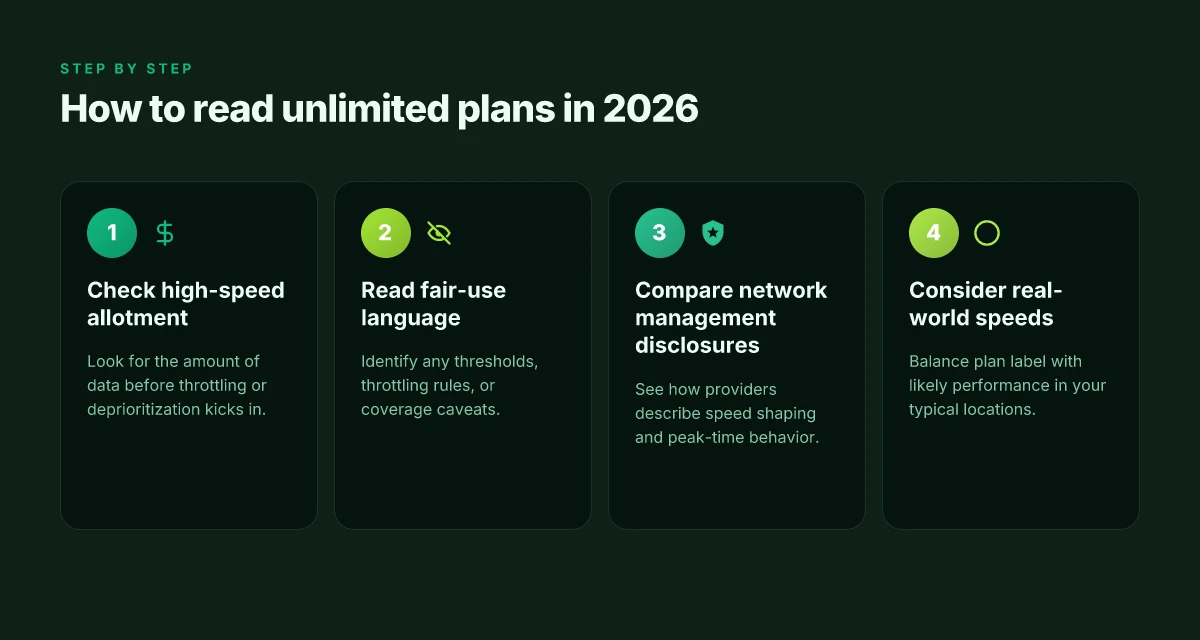
I cross‑referenced carrier policy summaries and consumer‑focused reviews from 2025–2026. The pattern is stable: most plans cap high‑speed data somewhere in the range of a few gigabytes to several tens of gigabytes, then rely on throttling or deprioritization. If you want a quick heuristic, map your expected monthly usage to the size of the high‑speed pool and ask how the carrier defines “fair use” and “peak‑time” behavior. Careful sellers publish the thresholds. Careless ones bury them.
For further context, see how Optimum frames its unlimited‑data discussions and how third‑party outlets describe throttling and fair‑use realities. Are Unlimited Mobile Data Plans Really Unlimited? and a recent overview of throttling and fair‑use policies provide grounded descriptions of the mechanics behind the claims. In 2026, the practical takeaway remains consistent: ask for the exact high‑speed allotment, the throttling threshold, and the policy that applies at peak times before you sign.
Most users will be happiest when the high‑speed window aligns with their actual monthly usage, and the throttling policy remains predictable.
What to watch for in the fine print
In the end, the fine print decides whether your unlimited data plan actually stays unlimited. The core risk is that carriers rely on fair-use language, network management disclosures, and portability clauses to shape speed and eligibility after sign-up. You should expect three realities: explicit limits in the policy text, clear notices about when throttling or deprioritization can kick in, and terms that affect how freely you can switch plans or carry your line.
Fair-use language essentials
Most unlimited plans embed a threshold or a set of conditions that trigger slowdowns. Look for phrases like “fair use,” “usage limits,” or “reasonable network management.” The exact numbers vary, but the pattern matters: plans rarely cut you off completely. They throttle. When I read through the documentation, the recurring theme is speed reductions after a soft cap rather than a hard cutoff. This matters for streaming and gaming because waves of throttling can arrive during peak hours or in congested areas. A clear takeaway is to map your typical usage to the stated thresholds and compare those thresholds against your real-world needs. As you compare plans, consider not just the headline unlimited claim but the precise thresholds, the throttle window, and the typical target speeds after those thresholds. In practice, the transparency here is uneven. Some providers publish explicit numbers, others rely on generic language. 8 Ways to compare cloud service providers in 2026 and why it matters
Network management disclosures
The disclosures around network management are often buried in legal terms or support articles. The big concern is whether the policy cites “peak usage,” “congestion,” or “priority data” without anchoring it to measurable limits. I found that several carriers spell out that performance changes depend on network conditions, which gives them room to throttle in busy cells or across entire markets. The practical effect is that the same plan can feel very different from city to city. If a provider holds back a detailed description of when and how management occurs, you should treat that as a risk signal. The best practice is to demand a disclosure that ties throttle conditions to a specific data threshold and to cite the exact speeds you should expect after the threshold is reached.
Contract terms that affect portability and plan changes
Portability and upgrade terms are frequently buried in the fine print. You want to know what happens if you move to a different device, switch carriers, or upgrade your plan. Some plans bind you to a contract-like condition for a set period or impose early-termination fees or re-pricing if you move off the promotional terms. Others expressly allow you to keep a line active on your existing rate when you port in from another carrier, but with caveats about service availability and compatibility. The clearest signal is a clause that preserves your rate and features when you port your number or migrate to a plan with similar terms. If you see language that mentions “non-portability,” “price protection limitations,” or “alias plans with changed terms,” treat it as a red flag and verify with customer service before switching.
From what I found in the policy disclosures, the most consistent pitfall across providers is inconsistency: a plan may promise unlimited data but still tie throttling to a data-cap or a proposed congestion window. I dug into how carriers frame these limits and found that the wording often leaves room for interpretation when congestion occurs. When you read the contract, search for concrete numbers, a defined throttle tier, and a portability clause that preserves your rate on porting or upgrading.
The fine print is where unlimited claims either hold or crumble, so verify exact thresholds and portability guarantees before you commit. The most trustworthy disclosures attach measurable figures to every claim, not vague language.
What to try this week: pick one move that matters
If you want a clear path through the noise, focus on the small but real friction points buyers hit with unlimited plans. The biggest shifts in 2026 aren’t bigger data caps. They’re how throttling, fair-use rules, and roaming fees actually show up in monthly bills. I’ve noted recurring complaints across carriers: unpredictable slowdowns during peak times, data-slowing policies after high usage, and mixed experiences with hotspot allowances. The practical takeaway is to compare not just line price but real usage experiences and network policies. In practice, you’ll want to map your typical data needs to the carrier’s policy language, and read the fine print on roaming and hotspot limits before you sign. How to build a content marketing strategy that actually moves leads in 2026
A quick snapshot you can act on: look for plans that publish clear throttling thresholds and queuing rules, then test a one-month plan under your normal routine. Two headline picks from this year’s roundup are designed for different use cases: one prioritizes predictable speed for remote work, the other optimizes family data sharing with straightforward hotspot rules. If you mainly stream at home, start with the plan that emphasizes consistent video quality over peak-hour slowdowns. If you travel or have multiple devices, try the plan with transparent hotspot and roaming terms. The single move that matters first is to verify the plan’s published throttling policy before you commit.
Backup strategy
- Try a one-month pilot of the streaming-focused plan on a typical week to gauge real-world speeds.
- Compare on-device data usage alerts and monthly totals to avoid surprise bills.
- Check roaming and hotspot terms for your travel or multi-device needs.
- Look for a plan with a clear, customer-friendly policy on data resets and overage protections.
- Confirm whether links on the page may earn a commission.